
Polytechnic Stakeholders Slam JAMB’s Discriminatory Admission Cut-Off Marks
ASUP and educational stakeholders have strongly condemned JAMB’s 2026 policy of setting lower admission cut-off marks for polytechnics than universities, asserting that this discrimination drives away top talent and undermines national industrial growth.

Stakeholders across Nigeria’s technical education sector have expressed deep outrage over persistent inequalities in national tertiary admission policies, warning that the systemic marginalisation of polytechnics is actively strangling the country's industrial development. The sharp criticism was formalized in a detailed communiqué issued at the conclusion of the maiden International Conference of the Academic Staff Union of Polytechnics (ASUP), Federal Polytechnic, Ekiti State Chapter. Participants explicitly targeted the Joint Admissions and Matriculation Board (JAMB) for its decision regarding the 2026 academic calendar, which set the minimum baseline for university admissions at an aggressive 150 points while pegging polytechnics and colleges of education significantly lower at a baseline of 100 points.
Signed by Conference Organising Committee Chairman Dr Peter Ajewole and Secretary Dr Ige Ayeni, the document argued that the arbitrary score disparity reinforces a false, damaging public perception that polytechnic education is an inferior, secondary choice compared to universities. This systemic stigma has triggered a massive talent drain, severely discouraging academically brilliant candidates from enrolling in technical institutions despite the equivalent, if not superior, real-world applicability of the vocational curriculum. The academic union warned that by continually treating polytechnics as second-class platforms, the regulatory frameworks are starving the nation of the essential technical and engineering manpower required to build sustainable local manufacturing ecosystems. To rescue the sector from ongoing decay, the conference fiercely urged the Federal Government to implement a uniform, merit-based admission cut-off policy across all tertiary institutions while substantially increasing funding structures to align with UNESCO’s recommended allocation of up to twenty percent of national budgets.
Sponsored

Related stories
 Tech & Education
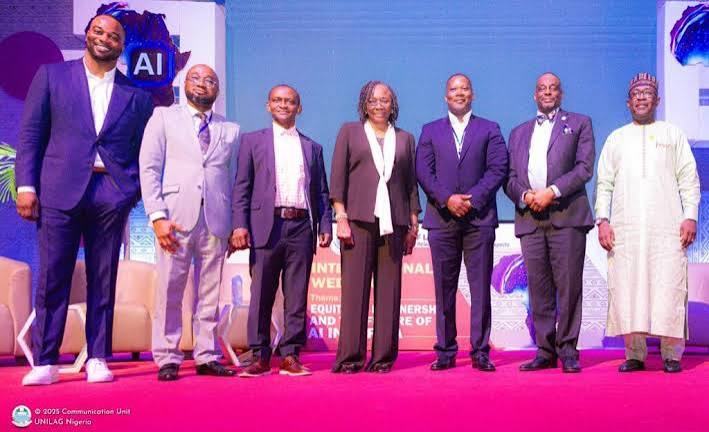
African Universities Urged to Rethink Teaching in AI Era
At UNILAG's International Week, leaders from the University of Ghana, UNILAG and UNDP argued that AI makes memorisation-based teaching obsolete and urged universities to reform curricula, assessment and incentives to reward critical thinking and innovation.
 Tech & Education
Otti’s Wife Supports 1,000 Abia Pupils With School Materials
The wife of the Abia State Governor, Mrs. Priscilla Otti, has distributed back-to-school materials to 1,000 indigent pupils from 50 public schools across the state's 17 local government areas, declaring that a child's background should never be a barrier to greatness. The intervention, organised by the Safe Tent Care Initiative in collaboration with the Abia State Universal Basic Education Board, is designed to support families struggling to provide essential educational materials for their chil
 Tech & Education
AI Era: Experts Warn Nigerian Graduates Face Skills Gap
Education experts have warned that Nigerian universities risk producing graduates who are ill-prepared for an AI-driven global job market unless curricula are urgently overhauled. At the StudyIn Global Study Conference 2026 in Lagos, stakeholders called for proactive curriculum reform, ethical AI adoption, and a shift from producing AI users to nurturing AI innovators who can solve real-world problems.
 Tech & Education
YABATECH, Threatremeter Launch Filmmaking Centre
Yaba College of Technology has signed a partnership with Threatremeter Nigeria Limited to establish a Centre for Filmmaking and Production, offering certified training in acting, directing and film production for students and the public.
Comments (0)
Leave a comment
All comments are moderated before publishing. Your email is never published.