
African Universities Urged to Rethink Teaching in AI Era
At UNILAG's International Week, leaders from the University of Ghana, UNILAG and UNDP argued that AI makes memorisation-based teaching obsolete and urged universities to reform curricula, assessment and incentives to reward critical thinking and innovation.
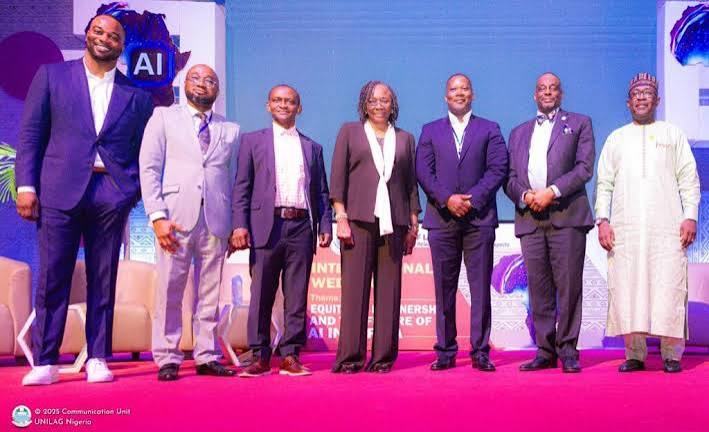
African universities have been urged to overhaul how they teach, assess, and reward academic work, as artificial intelligence (AI) and automation change what employers and societies expect from graduates.
The call was made at the International Week of the University of Lagos (UNILAG), themed "Re-imagining Pedagogy and Teaching for Higher Education in the 21st Century." Speakers included the Vice-Chancellor of the University of Ghana, Prof. Nana Aba Appiah Amfo, who delivered the keynote, UNILAG Vice-Chancellor Prof. Folasade Ogunsola, and the United Nations Development Programme (UNDP) Resident Representative in Nigeria, Elsie Gyekyewaa Attafuah.
In her keynote, Amfo said institutions must go beyond traditional lectures and examinations and focus instead on critical thinking, creativity, ethical judgment, problem-solving, and the practical application of knowledge. She argued that universities should first settle what higher education is for in the 21st century, and what responsibilities they owe the societies that fund them, before debating which technologies to use in the classroom.
According to Amfo, forces such as AI, climate change, public health threats, migration, demographic change, and geopolitical uncertainty are transforming professions faster than curricula can be updated. African universities, she noted, must respond while also tackling long-standing development problems, expanding access, and working with limited resources.
She acknowledged that a degree remains an important route to jobs, social mobility, and intellectual growth, particularly in societies where families make heavy sacrifices to educate their children. But she said employability is only part of the picture. Graduates, she added, should be able to question information, investigate problems, devise solutions, work with people of different views, and keep learning after they leave university. African institutions, she said, also carry a particular duty to produce the knowledge and leadership needed to address health systems, food security, environmental sustainability, inequality, democratic governance, and technological inclusion.
Declaring the week open, Ogunsola said the spread of AI has changed higher education so fundamentally that universities must rethink how they teach, assess, and certify students. Students now have tools that can summarise material, calculate, translate, and draft essays within seconds, she said, so the real question is what it means to teach and certify learning when such tools exist. She called on universities to move away from conventional lectures and rote learning towards methods that build critical thinking, creativity, innovation, and adaptability.
Ogunsola added that employers now look for much more than recall of facts. In demand, she said, are AI and machine learning literacy, analytical and critical thinking, problem-solving, adaptability, communication skills, emotional intelligence, and creativity.
For her part, Attafuah turned attention to the incentives that shape academic behaviour. She urged Nigerian universities to reform student assessment, criteria for promoting lecturers, and research funding so that innovation, entrepreneurship, and practical solutions to national problems are rewarded. She warned that universities risk putting new facilities into systems that still reward old ways of working.
To illustrate possible models, Attafuah pointed to University College London, which recognises enterprise and external engagement in its academic career frameworks, and the University of Cambridge, where inventors and their departments share income from research licensing. She encouraged Nigerian institutions to consider similar approaches, along with small, accessible grants that let students and staff test ideas, and innovation hubs where research can be refined.
She stressed, however, that innovation should not come at the expense of standards. Rigorous testing and a clear contribution to knowledge, she said, should remain central to research, including doctoral work. The aim, she explained, is to align incentives with the future while preserving academic rigour.
The discussion fits into a wider conversation across Nigerian and African higher education about how to adapt to generative AI. Institutions are wrestling with questions about assessment integrity, the role of lecturers, and whether traditional examinations still measure real understanding. At the same time, many face funding gaps, large class sizes, and strained infrastructure that make rapid change difficult.
What the speakers agreed on was direction rather than detail. Moving from memorisation to judgement, creativity, and application will require changes not only in classrooms but in how lecturers are evaluated, how research is funded, and how graduates are certified. Whether African universities can make those changes at the pace the speakers urged will depend on leadership, funding, and willingness to rework long-established academic structures.
Sponsored

Related stories
 Tech & Education
Otti’s Wife Supports 1,000 Abia Pupils With School Materials
The wife of the Abia State Governor, Mrs. Priscilla Otti, has distributed back-to-school materials to 1,000 indigent pupils from 50 public schools across the state's 17 local government areas, declaring that a child's background should never be a barrier to greatness. The intervention, organised by the Safe Tent Care Initiative in collaboration with the Abia State Universal Basic Education Board, is designed to support families struggling to provide essential educational materials for their chil
 Tech & Education
AI Era: Experts Warn Nigerian Graduates Face Skills Gap
Education experts have warned that Nigerian universities risk producing graduates who are ill-prepared for an AI-driven global job market unless curricula are urgently overhauled. At the StudyIn Global Study Conference 2026 in Lagos, stakeholders called for proactive curriculum reform, ethical AI adoption, and a shift from producing AI users to nurturing AI innovators who can solve real-world problems.
 Tech & Education
YABATECH, Threatremeter Launch Filmmaking Centre
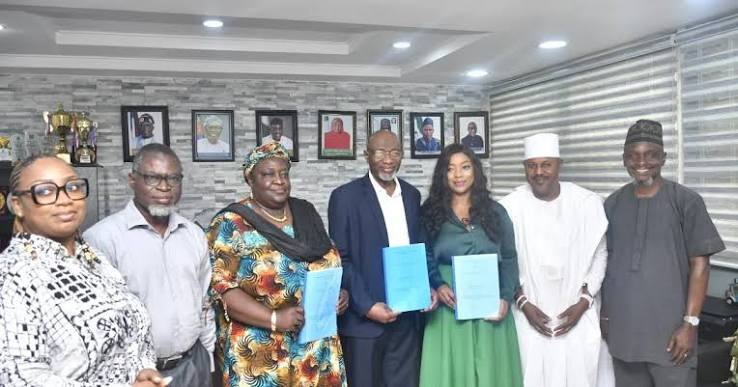
Yaba College of Technology has signed a partnership with Threatremeter Nigeria Limited to establish a Centre for Filmmaking and Production, offering certified training in acting, directing and film production for students and the public.
 Tech & Education
Trinity University Yaba Graduates 323, 79 First Class
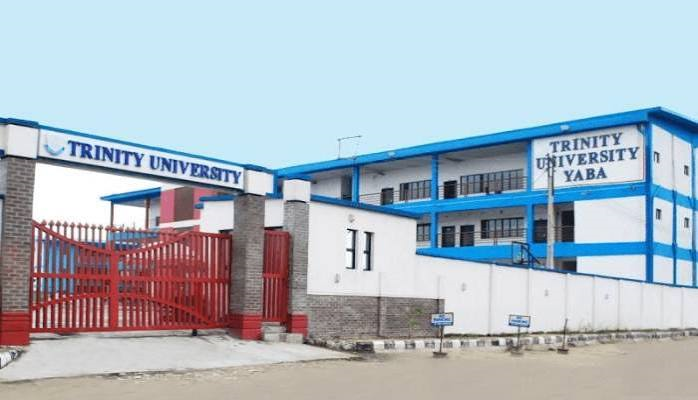
Trinity University, Yaba, will confer degrees on 323 graduands at its fifth convocation on October 16, with 79 earning First Class honours and two finishing with a perfect 5.00 CGPA.
Comments (0)
Leave a comment
All comments are moderated before publishing. Your email is never published.