
Day 1 of the GNA CAA Governance Model Series: No Community Should Be Forgotten
Discover why every village, ward and neglected street in Nigeria deserves a voice, and how the GNA CAA Governance Model can make that possible.
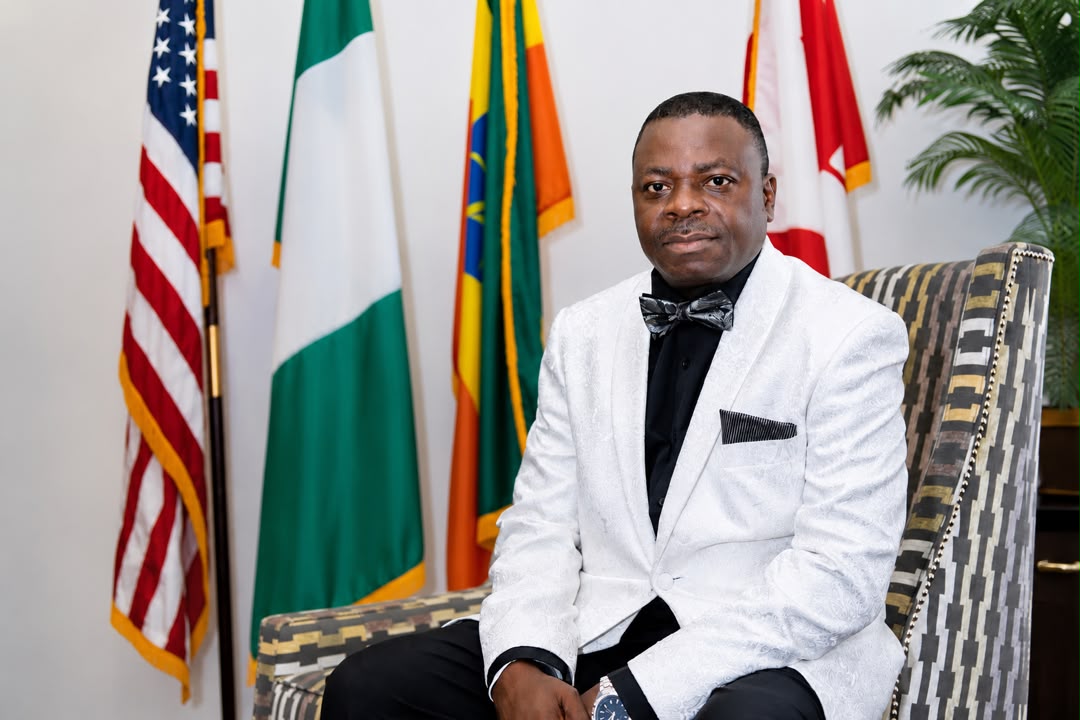
By GN (Dr.) Kayode Elusoji
I have spent most of my adult life thinking about one question: Why do so many Nigerian communities keep waiting for a future that never seems to arrive?
That question has followed me throughout my life. From Ile-Ife, the town that shaped me, I moved to Lagos, where I established Computer Powerhouse International (CPI) in 1996. We built it into a company with an international reputation, providing world-class IT services to global organisations. Through that experience, I learned that Nigerians can compete with the best in the world when they have the right structure, standards and tools.
Twenty years later, circumstances led to my relocation to the United States. I left Nigeria, but Nigeria never left me. I have continued asking the same question in boardrooms, diaspora meetings and during long conversations back home. Over time, the answer has become clearer. Our communities are not short of people who care. They are short of a system that connects those who need help with those who have the capacity to provide it.
This week, GNA News & TV begins a seven-day series examining the benefits of the GNA Coverage Area Administrator (CAA) Governance Model. Each day, we will focus on a different group of Nigerians and partners, explaining what the Model offers them. I want to begin where everything begins: with the community itself.
The Nigeria We Must No Longer Ignore
Across Nigeria’s 774 Local Government Areas, millions of people live with needs that have remained unmet for years. Children learn under leaking roofs. Farmers watch their produce spoil because roads to markets have collapsed. Mothers travel long distances to health centres that have buildings but lack essential equipment. Some communities still depend on water sources that should never be their only option.
I know what it means to love a place and watch it wait. Ile-Ife, the cradle of Yoruba civilisation and home to one of Nigeria’s great universities, experienced years when meaningful infrastructure seemed to be promised more often than it was delivered. When the Lagere Flyover was finally completed, many of us experienced something we had almost forgotten: the simple joy of seeing government work.
That experience taught me two lessons I have never forgotten. First, development is possible. Second, it should never depend on luck, personal connections or whether a community happens to be politically important.
Here is the painful truth I have come to accept: many of these problems persist not because nobody is willing to help, but because those who could help do not know that the problems exist.
A philanthropist in Lagos may be willing to rebuild a classroom in a village in Osun State but may never hear about it. A Nigerian doctor in Houston may want to support a rural clinic but have no reliable information about its needs. An elected representative may have access to constituency resources but lack a complete picture of the most urgent challenges facing the communities represented.
Meanwhile, the community continues to wait.
Let me be honest. We all know that there are wicked and selfish individuals among political office holders and those in positions of authority. I will never pretend otherwise. However, I am convinced that many of the problems facing our people could have been prevented or addressed earlier if adequate and up-to-date information about every community were available to the public, including sons and daughters of those communities living in the diaspora.
When a need remains hidden, those unwilling to act can ignore it, while those willing to help cannot find it. When that need is properly documented and made visible to the world, neglect becomes harder to conceal and assistance becomes easier to mobilise.
“Many of the problems facing our people would have been averted if there had been adequate, up-to-date information about our communities, accessible to the whole world.”
Why I Stopped Waiting
On November 10, 2018, a group of us launched the Nigeria Diaspora Foundation because we were tired of watching from a distance. We had skills, networks and goodwill, but lacked an organised system for putting them to work back home.
That foundation grew into the Great Nigerian Assembly, a global professional coalition for nation-building. Along the way, I learned that passion alone does not transform communities. Structure does. Evidence does. Follow-through does.
That conviction gave birth to the GNA CAA Governance Model.
My company, CPI Technologies Inc., designed, developed and fully funded the Digital Platform behind the Model. This means that communities, Certified Citizen Reporters and local governments do not have to pay for the technology.
I did not undertake this because it was easy. I did it because I could no longer accept a situation in which the future of a community depended on whether someone influential happened to notice it.
“A better Nigeria will not emerge from complaints alone. It will come from organised citizens, credible information, responsible leadership and collective action.”
What the Model Is and What It Is Not
The GNA CAA Governance Model is non-political, non-governmental, non-religious, not-for-profit and people-driven.
It does not replace government. Government has constitutional responsibilities, and it must fulfil them. However, the development of a community should not depend solely on the goodwill or political calculations of those in public office.
Individuals, professionals, businesses, foundations, diaspora associations and development partners can all contribute to community development when they have reliable information about where help is needed and credible evidence showing the impact of their contributions.
That is the missing link the Model is designed to provide: a coordinated, credible and transparent system that connects genuine community needs with those who have the responsibility or capacity to address them.
Certified Citizen Reporters: The Eyes and Ears of the Community
At the heart of the Model is the Certified Citizen Reporter (CCR).
A CCR is a trained and certified young Nigerian who documents community needs on the GNA CAA Digital Platform. Reports include photographs, short videos, GPS locations and factual descriptions of identified conditions, such as a damaged classroom, an abandoned health centre, a community without access to clean water or a road that has become impassable.
Every report goes through verification and approval before publication.
It is important to understand what a CCR is not. A CCR is not a police officer, judge, prosecutor or government agent. CCRs do not arrest, intimidate or compel anyone to act.
Their strength lies in credible evidence and the ability to ensure that genuine community needs do not remain hidden.
From a Forgotten Classroom to a Coordinated Rescue
Imagine a primary school where hundreds of children sit under a damaged roof, use broken furniture and lack proper toilet facilities. Parents have complained for years, but nothing has changed.
Now imagine a trained CCR documenting the school’s condition on the Platform.
The report is verified by the relevant Special Development Committee and approved by the Local Government CAA Committee. Suddenly, the need becomes visible to the Local Government Chairman, state education authorities, elected constituency representatives, the community’s diaspora association, foundations and companies with social responsibility programmes.
One partner could repair the roof. Another could supply desks. The diaspora association could provide learning materials, while the relevant government authority addresses the sanitation problems.
The CCR documents each stage. When the intervention is completed and verified, every contributor receives recognition through their Record of Performance.
This is an illustration of how the Model is designed to work, not a report of a completed project. However, it captures the heart of what we are building.
The objective is not merely to expose what is wrong. It is to create the conditions that make it possible to put things right.
Seven Ways Communities Stand to Benefit
1. Every community gains a voice.
No community should be forgotten because it is remote, poor or politically insignificant. Through the Model, community needs can reach audiences and potential partners far beyond local boundaries.
2. Community needs can attract national and international attention.
A problem that nobody knows about is unlikely to attract assistance. A village’s need for clean water may attract the attention of a humanitarian foundation, while a rural clinic may receive support from healthcare professionals abroad. Visibility does not guarantee intervention, but it creates opportunities that might otherwise never exist.
3. Communities can engage different categories of Responsible Parties.
Statutory Responsible Parties, including elected and appointed office holders and public institutions, can be engaged alongside Non-Statutory Responsible Parties, such as individuals, businesses, foundations, professional bodies, NGOs and diaspora groups.
Communities are therefore not limited to a single source of assistance. The Model encourages collaboration and constructive engagement.
4. Infrastructure can be monitored rather than forgotten.
Development is not only about constructing new facilities. It is also about maintaining existing ones and ensuring they continue to serve their intended purposes.
Every infrastructure asset is graded using a standard condition scale. This helps identify roads that have deteriorated, water projects that are no longer functioning and other facilities requiring attention.
5. Citizen participation continues beyond election day.
Children need schools every day. Patients need healthcare throughout the year. Farmers need accessible roads regardless of the political calendar.
The Model encourages continuous civic participation. Good governance should be a daily responsibility, not merely an election-season promise.
6. Young people become agents of change.
GNA is working towards training and certifying one million young Nigerians as CCRs across all 774 Local Government Areas, with pathways into digital journalism, healthcare, agriculture, cybersecurity and artificial intelligence.
Our young people should not have to leave the country because of poor governance. They should have opportunities, skills and the tools to contribute meaningfully to building their communities and nation.
7. Results are tracked and recognised.
The Record of Performance recognises verified and completed interventions, while the People’s Accountability Index provides a broader picture of community conditions and responsiveness.
Through these mechanisms, communities can better distinguish between promises, activities and delivered results. They can also recognise and appreciate those who make meaningful contributions.
The objective is not to embarrass anyone. It is to encourage responsible performance and honour meaningful service. Recognition must be based on actual performance, not the political calendar.
Silence in the face of successful delivery can be as damaging as silence in the face of failure.
Ile-Ife: Where the Journey Has Begun
On October 24, 2026, we formally inaugurated the GNA CAA Governance Model in Ife Central and Ife East Local Government Areas, with the royal blessing of His Imperial Majesty, Oonirisa, Arole Oodua, Oba Adeyeye Enitan Ogunwusi, Ojaja II, the Ooni of Ife.
I cannot fully describe what it meant to see this vision take root in the soil that raised me.
Our first 30 Certified Citizen Reporters have completed their training and graduated. Watching these young men and women take their place gave me a glimpse of what Nigeria can become: a nation of informed, disciplined and solution-oriented citizens who refuse to remain spectators.
The work ahead is to build on this foundation through consistent community engagement, credible documentation and measurable results. We also intend to take the lessons learned in Ife to every Local Government Area in the country.
Imagine What Becomes Possible
Imagine a community in Sokoto making its water needs visible to a sponsor in Canada.
Imagine a rural school in Benue receiving support from an alumni association in the United Kingdom.
Imagine Nigerian healthcare professionals in the United States discovering a genuine opportunity to equip a primary healthcare centre in Ekiti.
Imagine public office holders receiving a clear and verified picture of the most urgent needs in their constituencies and working alongside citizens and development partners to address them.
None of this happens automatically. It requires credible reporting, responsible leadership, transparent processes and committed partners.
But the starting point is simple. Someone must identify the need. Someone must document it. Someone must make it visible. And someone with the responsibility or capacity to help must be encouraged to act.
Stop Waiting. Start Building.
For years, I have watched well-meaning Nigerians at home and abroad wait. We wait for the next government, the next election and the next promise.
I understand that waiting because I have done it myself. But I have come to believe that one of the most dangerous things a nation can do is to wait for someone else to build it.
That conviction is at the heart of my forthcoming book, Stop Waiting, Start Building: A Citizen’s Blueprint for Nigeria and the Rise of the Fourth Tier.
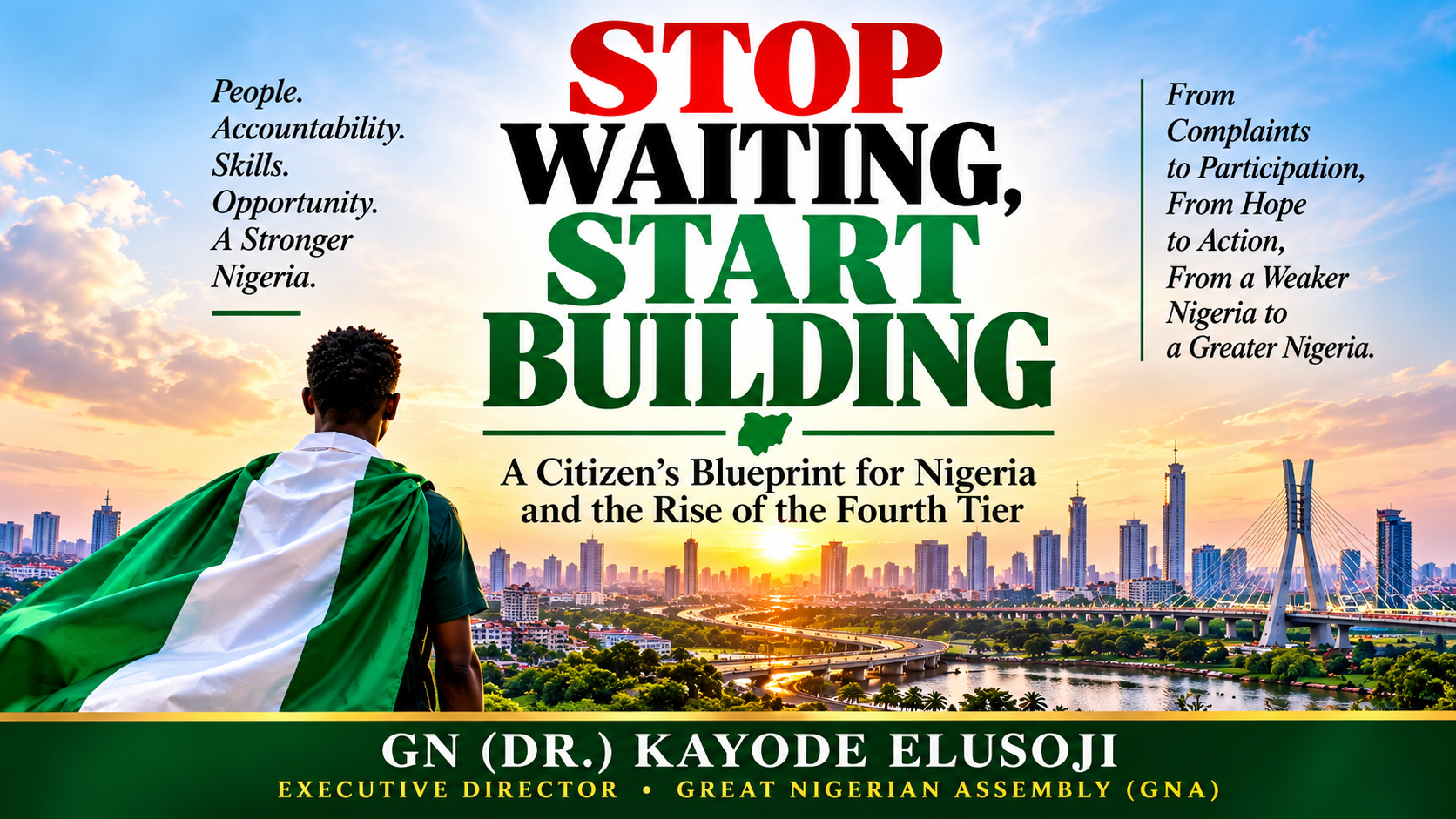 Cover of Dr. Kayode Elusoji’s forthcoming book, Stop Waiting, Start Building: A Citizen’s Blueprint for Nigeria and the Rise of the Fourth Tier.
In the book, I share the experiences that shaped my thinking, examine why so much of Nigeria’s development remains stalled and present the architecture of the citizen-driven model we are now putting into practice.
It is an invitation to every Nigerian who has ever said, “Somebody should do something,” to become that somebody.
So, here is my message to every Nigerian community, from the creeks to the savannah: you do not have to remain invisible.
Your needs deserve to be documented. Your challenges deserve to be heard. Your community deserves the opportunity to attract meaningful development.
And every Nigerian, wherever they live, has a role to play.
Tomorrow, we turn our attention to political office holders and examine how the Model can help those who genuinely want to serve build a legacy that outlives their time in office.
A New Nigeria Starts With YOU!
• GN (Dr.) Kayode Elusoji
Executive Director, Great Nigerian Assembly (GNA)
Chairman, GNA TV & News · GNA Weekly · GNA
Global Pacesetter
Sponsored
Related stories
 News
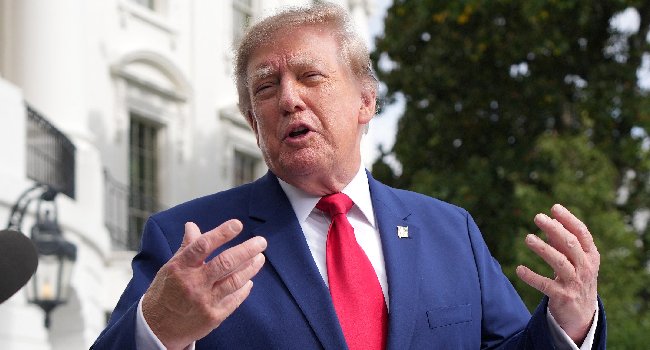
Trump Congratulates Democrats on Midterm Victory, Says Iran War Played a Role
Trump congratulates Democrats on their midterm victories, acknowledging that the Iran war contributed to Republican losses and influenced voters’ decisions.
 News
Police Warn Politicians Against Campaign Poster, Billboard Destruction, Vow Arrest, Prosecution
The Nigeria Police Force has directed commissioners across the 36 states and FCT to investigate the destruction of campaign materials and prosecute those found responsible.
 News
‘America’s Election Shows Nigerians Can Change Direction of Government’ — Charly Boy
Veteran entertainer Charly Boy urges Nigerians to use their votes to hold political leaders accountable, drawing lessons from the 2026 US midterm elections.
 News
N’Assembly to Transmit State Police Bill to Tinubu Today
The National Assembly is preparing to forward the proposed state police constitutional amendment to President Tinubu after 28 state assemblies approved it, exceeding the required threshold.
Comments (0)
Leave a comment
All comments are moderated before publishing. Your email is never published.