
Beyond Election Promises: How the GNA CAA Governance Model Helps Political Office Holders Turn Power into Lasting Community Development
The GNA CAA Governance Model helps political office holders identify community needs, demonstrate performance, attract development partnerships, strengthen accountability and build lasting legacies through measurable results.

By GN (Dr.) Kayode Elusoji
Yesterday, I wrote that no community should be forgotten. Today, I want to address an uncomfortable truth: some communities are not forgotten because their needs are unknown. Their roads, schools and healthcare facilities have been seen. Their challenges have been reported. Yet, meaningful action remains absent.
I have been asked whether the GNA CAA Governance Model is designed only for leaders who lack information about their communities. It is not. It is also designed to make genuine community needs more visible and much harder to ignore.
In this second article of our seven-day series, I want to speak directly and fairly to those who hold political office in Nigeria.
The Uncomfortable Reality
Across Nigeria, citizens continue to question why essential infrastructure remains neglected while enormous resources are committed to political activities, administrative expenses and the privileges associated with public office.
For some political actors, the pressure to retain power, secure the next party ticket and satisfy influential sponsors, sometimes described as godfathers, can compete with the responsibility to serve the people. When political survival takes priority over public service, an important question arises: whose interests are being represented?
There are longstanding public concerns about elected representatives becoming disconnected from the people who elected them. Some citizens believe that certain office holders spend much of their time in Abuja or state capitals and return to their constituencies mainly when elections approach.
Public debate has also raised questions about unexplained wealth, luxury properties and the use of public resources for private benefit.
However, fairness and due process matter. Such concerns must be examined through credible evidence and appropriate legal procedures. Owning property or educating one’s children abroad does not, by itself, establish wrongdoing.
The more fundamental questions are these: Are public responsibilities being fulfilled? Are public resources being used lawfully and appropriately? Can citizens identify meaningful improvements resulting from the representation they receive?
What is the value of representation if the people being represented cannot point to improvements in their communities?
Public Money Must Produce Public Benefit
Few issues generate as much public concern as constituency projects and other publicly funded interventions. These projects are intended to bring infrastructure and essential services closer to the people. Yet, the Independent Corrupt Practices and Other Related Offences Commission (ICPC), through its constituency and executive project tracking exercises, has documented concerns involving abandoned projects, poor execution, inflated contracts and inappropriate project selection.
An important distinction must be made: constituency project appropriations are not legislators’ personal allowances. They are ordinarily budgeted and implemented through government Ministries, Departments and Agencies. Responsibility for any failure must therefore be established according to the actual roles of legislators, government agencies, contractors and other parties involved.
But the principle is straightforward:
- A classroom budget should produce a functional classroom.
- A healthcare budget should improve healthcare delivery.
- A water project should provide water that people can actually use.
- A road project should improve transportation and access.
This is why I recently commended the President’s directive to the Economic and Financial Crimes Commission (EFCC) to begin monitoring how states and local governments use their federal allocations, alongside transparent disclosure of the amounts received by each state and local government.
It is a welcome development. When citizens know what was received, they can ask what was delivered. The GNA CAA Governance Model provides communities with tools to contribute to answering that question through verified evidence from the ground.
For twenty years in Lagos, I ran Computer Powerhouse International, serving organisations that judged our work by one essential standard: delivery. If a system we installed did not work, no press release could change that reality.
I have never understood why public service in Nigeria should be held to a lower standard than private business. Public resources are entrusted for public benefit, not private accumulation.
“Money appropriated for community development should deliver community development. Anything less is a betrayal of public trust.”
Not Every Office Holder Has Abandoned the People
It would be unfair and inaccurate to suggest that every political office holder is motivated by personal gain.
I have encountered public servants who genuinely want to build schools, improve healthcare, support farmers and create opportunities for young people. Others have good intentions but face limited resources, competing demands, institutional delays or inadequate information about the needs of the communities they represent.
I learned an important lesson from my own experience. For years, Ile-Ife waited for meaningful infrastructure development. When the Lagere Flyover was eventually completed, it was delivered under a governor who was not from Ife.
That experience reinforced a principle I now carry into everything GNA does: recognition should be based on performance, not geographical origin, political party or election timetable.
Ignoring genuine achievements is as unhelpful as ignoring genuine failures.
This is why, through the GNA Global Pacesetter Awards, we publicly recognise individuals whose contributions and performance deserve acknowledgement.
Our 2025 honours included:
- GNA Man of the Year: Alhaji Aliko Dangote.
- Governor of the Year: Governor Babajide Sanwo-Olu of Lagos State.
- Senator of the Year: Senator Natasha Akpoti-Uduaghan of Kogi Central.
- Minister of the Year: Hon. Olubunmi Tunji-Ojo.
- Local Government Chairman of the Year: Hon. Alabi Kolade David of Bariga.
One category had no winner. We did not name a House of Representatives Member of the Year because we could not verify a qualifying completed project supported by sufficient public documentation.
That decision was not intended as a personal insult to any legislator. It reflected our position that recognition must be supported by evidence.
The GNA CAA Governance Model is designed to make such evidence easier to obtain. It provides a framework for recognising good work while giving those whose communities remain underserved an opportunity to respond and improve.
Recognition of genuine achievements is not flattery. It shows leaders that responsible service is noticed. Accountability, equally, should be based on facts and fair assessment.
Seven Ways the Model Can Change the Narrative
1. It makes community needs difficult to ignore.
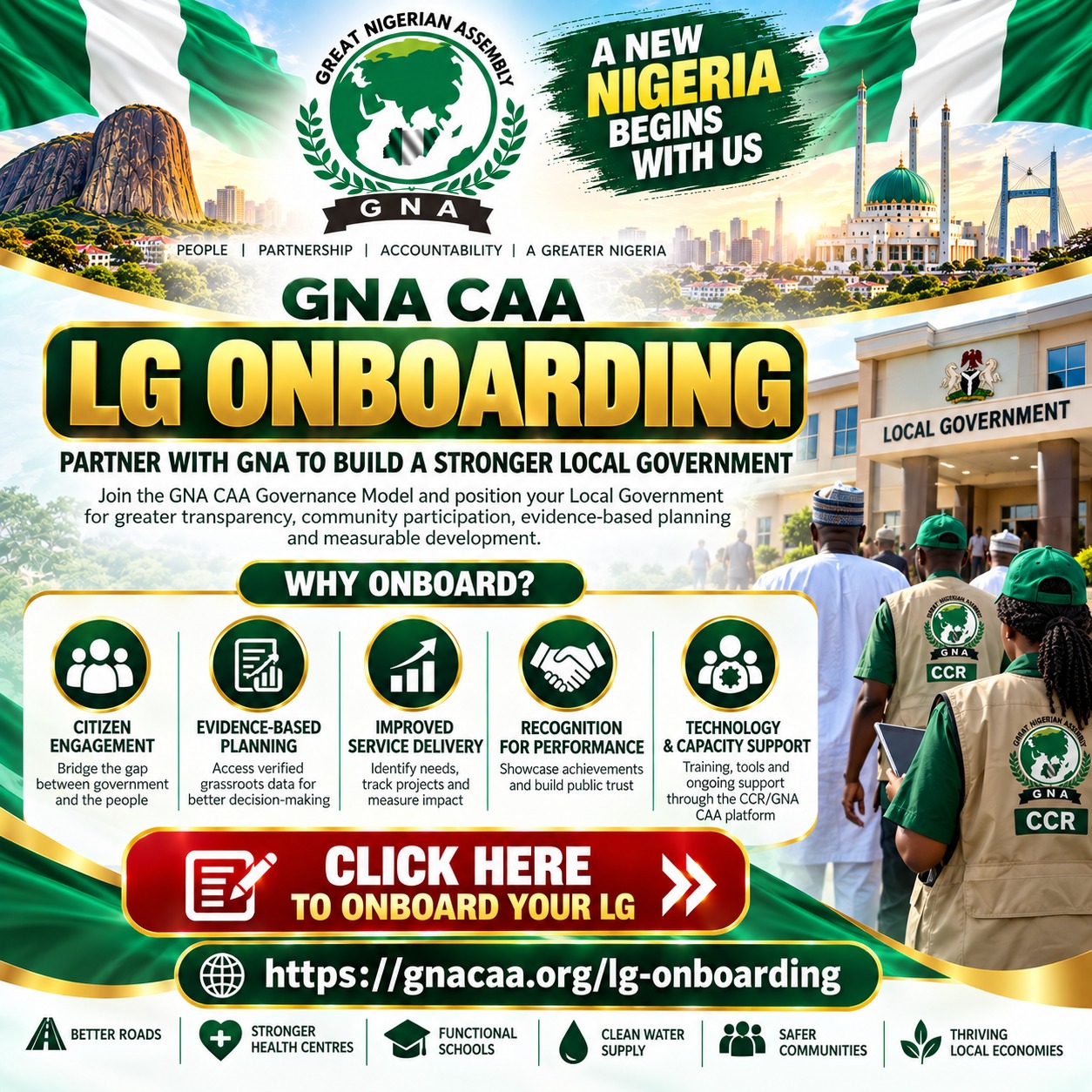
Trained Certified Citizen Reporters (CCRs) document damaged schools, failed roads, poorly equipped clinics and other infrastructure challenges using photographs, videos and GPS location details. Following verification and approval, the evidence can be made available to relevant Responsible Parties and potential development partners.
The objective is not to embarrass office holders. It is to ensure that genuine community needs are properly documented and brought to the attention of those who can respond.
2. It helps committed leaders identify meaningful projects.
A public office holder who genuinely wants to serve should not have to depend exclusively on political associates or occasional constituency visits to understand what matters to the people.
The GNA CAA Digital Platform provides verified grassroots information that can help leaders identify underserved communities and prioritise interventions according to documented needs rather than political influence.
3. It encourages responsiveness through constructive engagement.
The Model is non-partisan. It is not designed to fight political office holders or promote any political party.
A CCR is not a police officer, prosecutor, judge or enforcement agent. Where a documented need remains unresolved, the Model supports constructive engagement and requests for clarification.
Through regular visibility, communication and engagement, office holders have an opportunity to become more responsive to the communities they serve.
4. It recognises genuine performance.
The Record of Performance (RoP) credits verified completed interventions to the Responsible Parties who contributed to making them happen.
For example, where a senator facilitates a project, a government agency executes it and a private organisation provides additional support, the respective contributions can be recorded fairly.
This helps ensure that achievements are not unfairly attributed to one person while the contributions of others are overlooked.
The emphasis is on completed and verified interventions, not campaign slogans.
5. It connects political office holders with development partners.
The Model brings together Statutory Responsible Parties, including government institutions and public office holders, and Non-Statutory Responsible Parties, such as philanthropists, businesses, diaspora associations, NGOs and professional organisations.
For example, the improvement of a community health centre could involve government funding, diaspora medical expertise and support from private organisations.
Political office holders can therefore become facilitators of development partnerships, not merely managers of public budgets.
6. It creates a lasting and factual legacy.
Political power is temporary, but records of meaningful service can endure.
The Platform preserves information about documented infrastructure conditions and verified interventions. This creates a factual record of achievements and can help future office holders continue useful projects rather than abandon them.
7. It builds a culture of service rather than political survival.
When public conversation is dominated by appointments, party loyalty and the next election, community development can lose attention.
Structured civic reporting helps keep the needs of ordinary people in view. It also helps citizens distinguish between completed projects, ongoing interventions, unfulfilled promises and challenges that may fall outside the direct responsibility of a particular office holder.
Fair Assessment Is Non-Negotiable
Alongside the Record of Performance, the People’s Accountability Index (PAI) provides a structured view of verified infrastructure conditions and the responses of Responsible Parties across participating local government areas.
However, these tools must be applied fairly.
No office holder should be held personally responsible for every problem within a constituency simply because the problem exists there. Responsibilities differ across federal, state and local institutions. Budgeting, procurement, project execution and maintenance may also involve different agencies.
Credible accountability requires reliable evidence, accurate attribution of responsibility, an opportunity for affected parties to respond and transparent procedures for correcting errors.
The GNA CAA Governance Model complements existing public accountability institutions. It does not replace official audits, anti-corruption agencies, the courts or statutory oversight mechanisms.
Its purpose is to strengthen the information available to citizens and encourage constructive engagement based on verified facts.
My Message to Political Office Holders
My message is not one of hostility. It is an invitation.
To those who genuinely want to serve, the Model offers an opportunity to identify real community needs, attract development partners, document interventions and build a lasting record of service.
To those who may have become disconnected from the people who elected them, it offers a practical way to reconnect.
To those navigating political pressure, competing interests and limited resources, it provides better information and opportunities for collaboration.
And to citizens, it offers a responsible way to participate in community development without assuming the powers or responsibilities of government and law enforcement.
In my forthcoming book, Stop Waiting, Start Building: A Citizen’s Blueprint for Nigeria and the Rise of the Fourth Tier, I explore the idea of an organised, evidence-driven citizenry that I describe as the Fourth Tier.
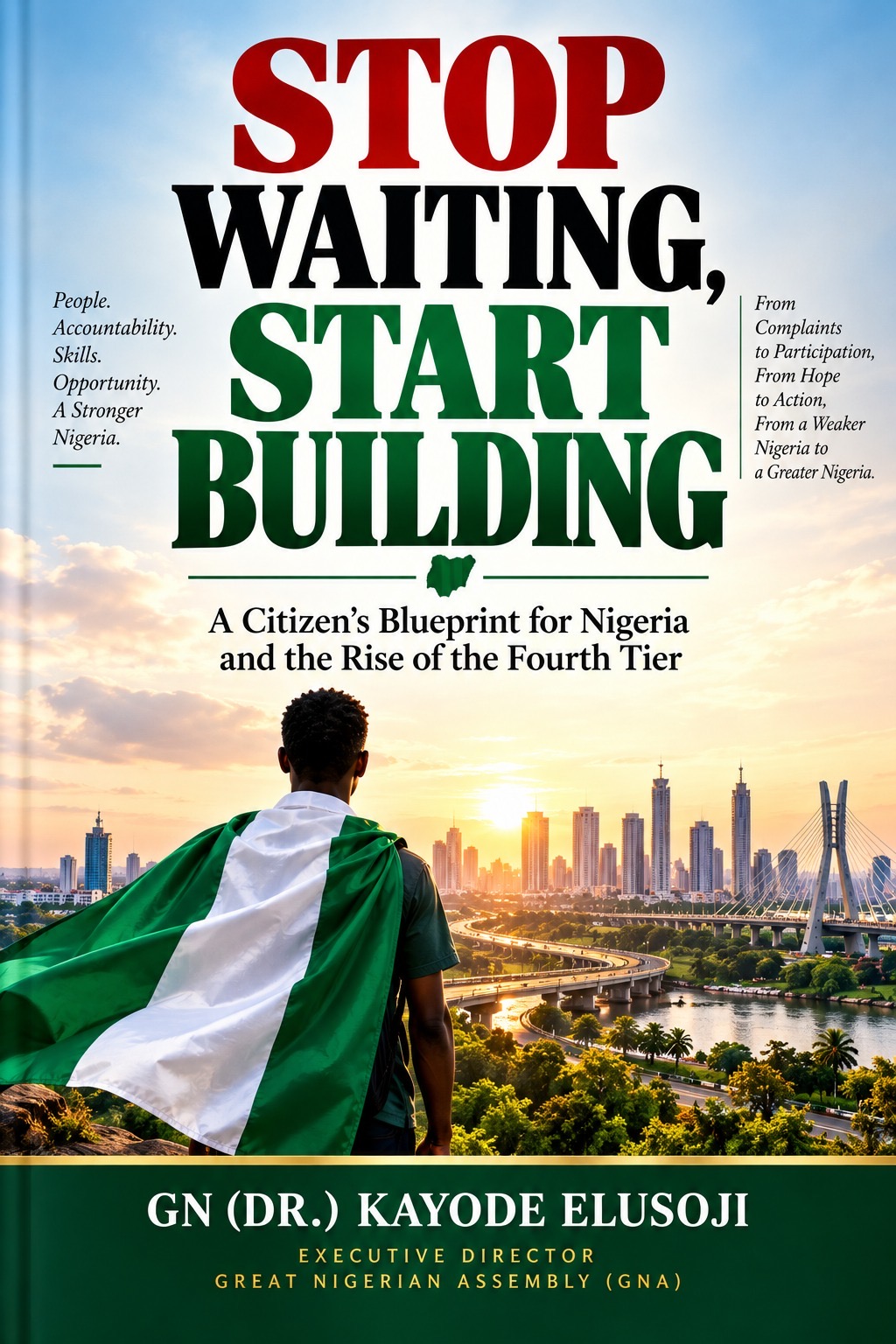 Cover of Dr. Kayode Elusoji’s forthcoming book, Stop Waiting, Start Building: A Citizen’s Blueprint for Nigeria and the Rise of the Fourth Tier.
This Fourth Tier stands alongside the federal, state and local tiers of government, not against them. It represents citizens who are informed, organised and actively involved in identifying community needs, documenting evidence, encouraging accountability and supporting development.
The Fourth Tier does not require leaders to be perfect. Rather, it creates an environment in which good leadership becomes easier to identify, achievements become easier to verify and unresolved needs become harder to overlook.
That is the kind of partnership I am inviting political office holders across Nigeria to embrace.
The Greatest Legacy Is a Life Improved
Political office is temporary. Wealth and influence can be transient. Titles change hands. But a child who receives an education because a classroom has been rebuilt may remember that opportunity for a lifetime.
A mother who gives birth safely in a properly equipped health centre will never forget the difference it made. A farming community connected to its markets by a good road will continue to benefit long after the public office holder associated with the intervention has left office.
Nigeria does not need a political culture in which every office holder is automatically condemned. Neither does it need one in which leaders are celebrated without evidence of service.
What we need is responsible leadership, informed citizens, constructive engagement and measurable community development.
“Let our leaders be remembered not for the positions they held or the wealth they gathered, but for the lives they improved and the communities they helped transform.”
Tomorrow, I turn my attention to fellow Nigerians in the diaspora, people like me who left home but never stopped loving it. I will examine how the GNA CAA Governance Model invites them not merely to donate, but to participate, contribute their expertise and help lead community development.
Stop Waiting. Start Building. A New Nigeria Starts With YOU!
• GN (Dr.) Kayode Elusoji
Executive Director, Great Nigerian Assembly (GNA)
Chairman, GNA TV & News · GNA Weekly · GNA
Global Pacesetter
Sponsored
Related stories
 News
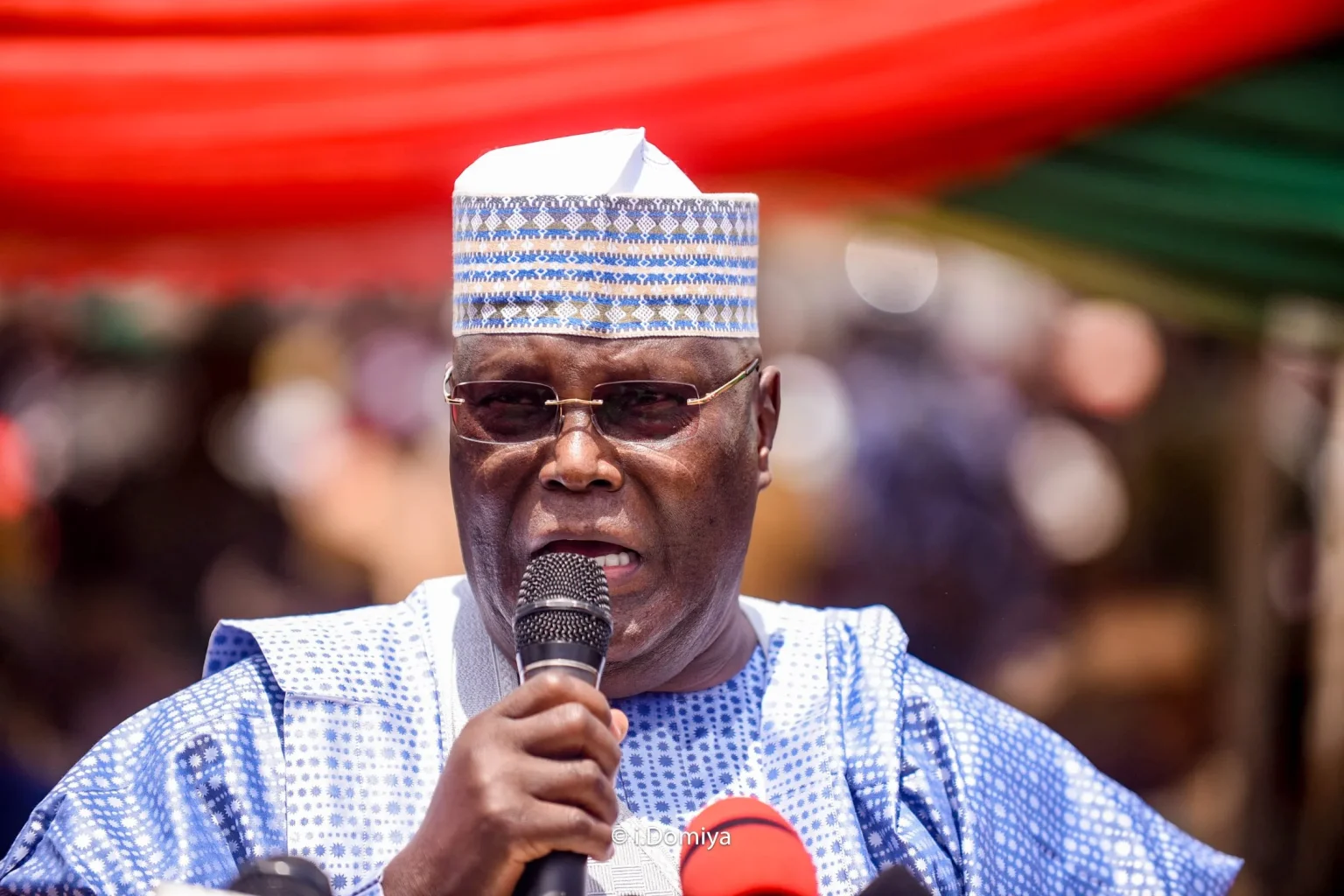
Atiku Urges Senate to Reject Tinubu’s $7.7bn Loan Request
Former Vice-President Atiku Abubakar has urged lawmakers to reject President Tinubu’s proposed $7.7bn external loan, warning of a growing debt burden.
 News
Edo Signs Deal with Chinese Firms to Establish State-Owned Airline
Governor Monday Okpebholo has signed an agreement with China Express Airline and KDN Aero to advance plans for Edo Air.
 News
Aisha Yesufu Asks Nigerians to Fund Peter Obi’s 2027 Campaign
Activist Aisha Yesufu has urged Nigerians to contribute financially to Peter Obi’s 2027 presidential campaign, promising transparency in the management of donations.
 News
Reps Eject ALTON Officials from Hearing Over Poor Network, Threaten Sanctions
The House of Representatives has ordered ALTON officials out of a hearing on poor telecom services, warning operators of further sanctions for defying its summons.
Comments (0)
Leave a comment
All comments are moderated before publishing. Your email is never published.