
AI Era: Experts Warn Nigerian Graduates Face Skills Gap
Education experts have warned that Nigerian universities risk producing graduates who are ill-prepared for an AI-driven global job market unless curricula are urgently overhauled. At the StudyIn Global Study Conference 2026 in Lagos, stakeholders called for proactive curriculum reform, ethical AI adoption, and a shift from producing AI users to nurturing AI innovators who can solve real-world problems.
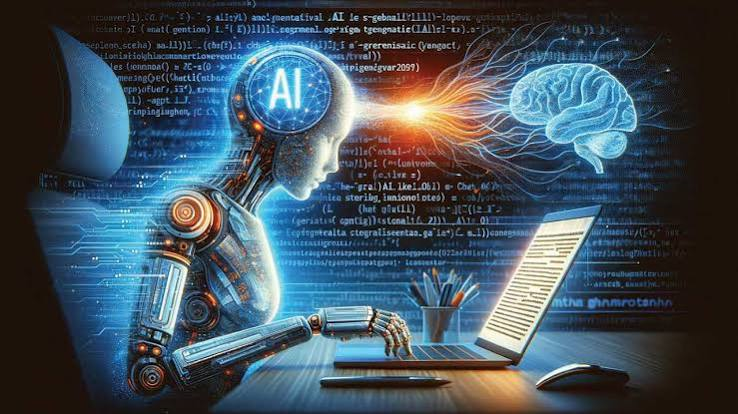
Education experts have called on Nigerian universities to overhaul their curricula to keep pace with the rapid development of artificial intelligence and prepare students for the changing demands of the global job market, warning that outdated curricula could leave Nigerian graduates at a disadvantage in an increasingly AI-driven world.
They spoke at the StudyIn Global Study Conference 2026, held at the Eko Hotel, Lagos, on Saturday. The conference brought together students, parents, education stakeholders and university representatives under the theme, "Future Ready: Succeeding in an AI-driven World," with participants stressing the need for educational institutions to equip students with relevant skills, critical thinking abilities and the capacity to develop solutions to real-world problems.
A Chief Artificial Intelligence Officer and founder of Bloom Academy for Artificial Intelligence, Dr Lola Olukuewu, said the rapid advancement of AI required Nigerian universities to rethink their curricula and prepare students for changes in the workplace. She said AI was becoming an integral part of different industries and could become a full-fledged co-worker within the next three to five years, making early preparation essential. "The world is changing, the educational system is being revamped as well, and so we need to let our learners, our students, know how to be future-ready, how to be well positioned so that the changes going on in the world and in the career space don't make them unprepared," Olukuewu said.
She said current curricula were not adequately keeping pace with developments in AI, adding that many universities were still operating outdated systems. "To be honest, at the moment, not exactly. No, it does not," she said when asked whether the current education curriculum matched the pace of AI development. Olukuewu called for a proactive approach to curriculum reform, urging policymakers and education stakeholders to establish clear plans and timelines for introducing new topics and learning models. "The hope is that it will pick up fast enough so that we are not reactive, but we are then proactive," she said.
She urged universities to go beyond teaching students how to use AI to improve productivity and encourage them to develop innovative solutions to societal problems. "It is one thing to be an AI user; it is another thing to be an AI innovator," she said, adding that students should learn to use the technology to address problems in their communities. Olukuewu also predicted that AI would increasingly handle end-to-end processes in sectors such as healthcare, agriculture and aviation, with humans providing oversight. She stressed that Nigerian students needed to begin preparing for the changes immediately to avoid being left behind.
On her part, the Country Director of StudyIn and Executive Director of First Multi-Plan Pathway College, Mary Agbu, stressed the need to balance the adoption of AI with ethical considerations and the values of education. Agbu said education stakeholders needed to improve awareness of the changing global landscape and help students make informed decisions about their studies and future careers. She said discussions on AI should involve parents, schools and other stakeholders to ensure that students understood the opportunities and challenges associated with the technology. Agbu added that education should continue to promote values and ethics as AI becomes more widely adopted. "One of the things that we really push out in the college is values," she said, noting that the integration of AI into education should be balanced with an understanding of the value system and the ethics of education.
Also speaking, the Chief of Staff and Director at StudyIn, Adiba Ofungwu, said there was a significant gap between the realities of education in Nigeria and the demands of the changing global learning environment. She said students needed adequate preparation to compete with their counterparts abroad, many of whom were already familiar with AI-driven learning environments. Ofungwu said StudyIn was seeking to bridge the gap by providing students with the information and guidance needed to navigate global higher education opportunities and prepare for changing educational demands. She added that students needed to understand their academic options, available scholarships and the relationship between their chosen courses and future career goals.
At a panel session featuring David Ogebe, Bolajoko Owolabi, Tolu Flosbach and Martha Okafor, speakers also called for the intelligent use of AI, warning that its adoption should not undermine human critical thinking. Ogebe criticised the slow pace of curriculum reform in Nigeria, saying it did not match the speed at which AI was transforming the world. "Curriculum must be tailored to meet today's world. Our education system does not prepare people to have the right experience. The industry should stop asking graduates for three years' experience. Our curriculum change does not match the pace of AI change," Ogebe said. Owolabi expressed concern that the growing use of AI was encouraging some people to rely on copying and pasting rather than developing their own ideas. "Let us not succumb our ability to think to AI. AI should not replace critical thinking, cognitive, soft, problem-solving skills," she said. She urged students to develop practical skills and create value rather than depend on AI to provide answers to every problem. Flosbach, meanwhile, said preparing people for an AI-driven future should begin from the early years of education.
The conference underscored a growing consensus among Nigerian education stakeholders that the country's universities must evolve rapidly or risk producing graduates whose skills are obsolete before they even enter the workforce. With AI poised to reshape industries from healthcare to agriculture, the pressure is on policymakers and institutions to move from rhetoric to action, ensuring that Nigerian students are not just consumers of technology but innovators who can compete on the global stage.
Sponsored

Related stories
 Tech & Education
YABATECH, Threatremeter Launch Filmmaking Centre
Yaba College of Technology has signed a partnership with Threatremeter Nigeria Limited to establish a Centre for Filmmaking and Production, offering certified training in acting, directing and film production for students and the public.
 Tech & Education
Trinity University Yaba Graduates 323, 79 First Class
Trinity University, Yaba, will confer degrees on 323 graduands at its fifth convocation on October 16, with 79 earning First Class honours and two finishing with a perfect 5.00 CGPA.
 Tech & Education
UK Visa Crackdown Hits Nigerian Students
Nigerian students are being forced to abandon their dreams of studying in the United Kingdom after universities began withdrawing admission offers en masse to avoid breaching a strict new 5 per cent visa refusal threshold. With study visa withdrawals among Nigerian applicants skyrocketing from 4.5 per cent to 22.7 per cent in the first half of 2026, thousands of prospective students now face an uncertain future—and some may be forced to leave the UK altogether.
 Tech & Education
Ekiti Tech Varsity Resumes, VC Promises Stable Calendar
The Federal University of Technology and Environmental Sciences, Iyin-Ekiti, has announced October 12, 2026, as the resumption date for returning students, with fresh students expected on November 2. Vice-Chancellor Prof. Gbenga Aribisala says the university is committed to a predictable academic structure that ensures students progress without disruption or delay.
Comments (0)
Leave a comment
All comments are moderated before publishing. Your email is never published.