
NiTERAC Sets Dec. 15 for 2026 Tertiary Rankings
Nigeria's national ranking of universities, polytechnics, and colleges of education is set to be published on December 15, 2026, subject to approval by the Minister of Education. Coordinated by the Nigerian Tertiary Education Ranking Advisory Committee, the exercise will assess institutions using 22 indicators, with 4,203 academics already trained in high-impact publishing to help close the research gap flagged in global rankings.
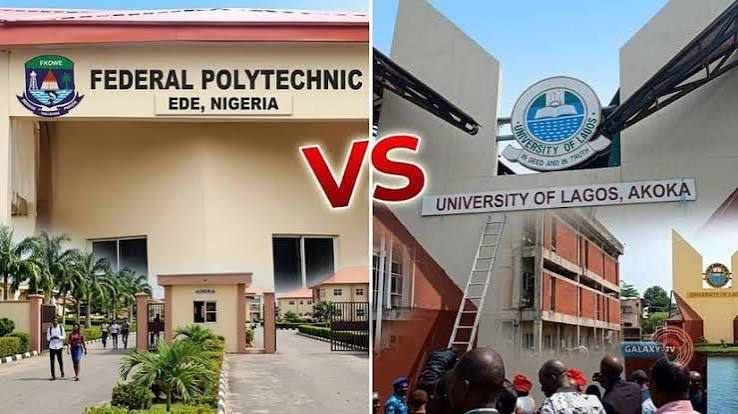
Nigeria’s national ranking of universities, polytechnics and colleges of education is expected to be published on December 15, 2026, subject to final approval by the Minister of Education, Dr Tunji Alausa, the Nigerian Tertiary Education Ranking Advisory Committee (NiTERAC) has said.
The committee’s chairman, Prof. Peter Okebukola, disclosed in Abuja that the exercise is moving through an approved 17-step process, with the committee set to submit its recommendations to the minister before the league tables are published. The Federal Ministry of Education had earlier announced that the framework would assess universities on 22 indicators of institutional performance, with weightings agreed with the League of Directors of Academic Planning.
Okebukola said the ranking is designed to do more than simply order institutions on a table. “The national ranking exercise is not just about positioning institutions on league tables. It is also about stimulating improvements in teaching, research and international competitiveness,” he said. The exercise, which commenced on September 1, covers public and private institutions across the country’s three major tertiary education subsectors, marking an expansion of the government’s assessment framework beyond universities to include polytechnics and colleges of education.
The push for a domestic ranking comes as Nigeria’s showing in the 2027 Times Higher Education World University Rankings draws renewed attention. The country’s ranked universities rose to 29 from 24 in the previous edition, making Nigeria the most represented country in sub-Saharan Africa, accounting for 42 per cent of the 69 universities from the region on the list. Another 32 Nigerian universities appear in the Reporter category, bringing the number of Nigerian institutions in the exercise to 61. Reporter status means an institution provided data but did not meet one or more requirements for inclusion in the ranked tables.
Despite the progress, the global ranking flagged weak spots in teaching quality, research environment, academic reputation, research productivity and international collaboration. The presentation noted that only 29 of the 328 universities listed by the National Universities Commission appeared in the ranked category. It identified research funding, publication productivity, institutional data management and international collaboration as areas requiring sustained attention.
To help close the gap, 4,203 Nigerian academics have been trained in publishing in high-impact international journals, Okebukola said. The three-day free masterclass, organised by the Virtual Institute for Capacity Building in Higher Education, NiTERAC’s training arm, ran from October 15 to 17, 2026, under the theme “Publishing in High-Impact Journals: What Editors and Reviewers Look For.” Lecturers included Prof. Olusola Adesope of Washington State University, Prof. Jibril Baba of Ahmadu Bello University, Zaria, and Prof. Obinna Onwujekwe of the University of Nigeria, Nsukka.
Participants acted as journal editors and reviewers, assessed manuscripts, identified weaknesses and practised responding to reviewers’ comments. They were also introduced to the Okebukola 12-C Test for High-Impact Publication, an assessment tool for evaluating manuscripts before submission, as well as techniques for identifying reputable journals and understanding their international rankings. Okebukola said the sessions were meant to familiarise academics with international publishing standards and cut avoidable rejections.
In the combined test and practical assessment, 23 participants jointly scored the maximum 3,060 marks. The scholars were drawn from institutions including the National Open University of Nigeria, Abia State University, Nigerian Defence Academy, Covenant University, Babcock University, Lagos State University, Yaba College of Technology, Rivers State University, University of Benin and Obafemi Awolowo University. Okebukola said Nigerian institutions must produce research that draws international readership and citations if they are to improve their positions in global rankings.
The national ranking is expected to provide institutions with a domestic benchmark against which they can measure their performance, identify gaps and plan improvements. With the three subsector rankings scheduled for completion before December 15, 2026, the exercise will involve data collection, validation and finalisation of the assessment framework. For a tertiary education system seeking to compete globally, the December 15 publication will offer the first comprehensive, home-grown measure of where its institutions stand and what must change.
Sponsored

Related stories
 Tech & Education
ASUU Begins Indefinite Strike at Zamfara University Over Unpaid Deductions, Funding
The Academic Staff Union of Universities (ASUU), Federal University, Gusau chapter, has declared an indefinite strike, grounding academic activities at Zamfara’s flagship federal university. The union is demanding the remittance of check-off dues, payment of outstanding Earned Academic Allowances, settlement of unpaid death benefits, and the release of intervention funds for infrastructure and research. With students stranded and the academic calendar frozen, the strike exposes a familiar patter
 Tech & Education
FG Targets 20 Universities for CNG Initiative to Cut Transport Costs
The Federal Government is targeting at least 20 universities for the installation of Compressed Natural Gas (CNG) facilities in a sweeping bid to cut transportation costs, stabilise campus economies, and accelerate Nigeria's transition away from petrol. Education Minister Dr Tunji Alausa revealed the plan in Abuja, naming UNILAG, UNN, and ABU as pilot beneficiaries. But with infrastructure gaps, safety concerns, and a tight implementation timeline, the question is whether this is a genuine energ
 Tech & Education
UNIOSUN Produces FUHSI’s Vice-Chancellor, Registrar, Bursar in Leadership Milestone
When the Federal University of Health Sciences, Ila-Orangun (FUHSI) named its new principal officers, three of the four came from a single institution: Osun State University (UNIOSUN). Professor Monsuru Adeleke, Dr Omowumi Abeke Ilori, and Dr Bolarinwa Feruke will assume office as Vice-Chancellor, Registrar, and Bursar respectively on January 27, 2027. For UNIOSUN’s Vice-Chancellor, Professor Clement Adebooye, it is both a source of pride and a validation of a quiet institutional philosophy: bui
 Tech & Education
Slum2School’s Solar-Powered River School Wins Global Environmental Award
A charity-run kindergarten and primary school in Epe, Lagos, has done what no Nigerian school has done before: Slum2School Green Academy has won the Environmental Action prize at the 2026 World’s Best School Prizes, beating finalists from across the globe. Built from bamboo, powered by the sun, and serving 250 children from river communities, the school is now headed to London to present its model to policymakers,proof that Nigerian education can lead the world, not just follow it.
Comments (0)
Leave a comment
All comments are moderated before publishing. Your email is never published.