
IMF Says Nigerians Still Face High Living Costs Despite Economic Growth
The International Monetary Fund has urged the Federal Government to introduce targeted cash transfers and temporary income support for vulnerable households as food and energy costs continue to strain Nigerians despite improved economic growth.
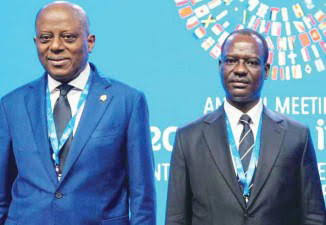
The International Monetary Fund (IMF) has called on the Federal Government to provide targeted cash transfers and temporary income support to vulnerable households as Nigerians continue to struggle with high living costs despite economic growth.
The Fund said the measures would help reduce poverty, improve food security and cushion the impact of rising prices of essential goods, particularly food and energy.
The IMF’s Research Department Division Chief, Deniz Igan, made the recommendation during a briefing on the Fund’s October 2026 World Economic Outlook at the ongoing IMF and World Bank Group Annual Meetings in Bangkok, Thailand.
Igan acknowledged that Nigeria’s economic growth had remained resilient, partly because of its position as an energy-exporting country. However, she said poverty remained high and many households continued to face difficulties meeting their basic needs.
She noted that rising prices of essential commodities had placed additional pressure on household budgets, particularly among low-income earners who spend a significant proportion of their income on food and energy.
The IMF stressed that governments needed to balance efforts to reduce public debt and strengthen fiscal stability with measures to protect vulnerable citizens from the effects of economic adjustment.
It recommended that cash transfers and temporary income support should be accompanied by improved public expenditure management and stronger revenue collection.
According to the Fund, better management of public resources would help governments provide targeted assistance without undermining efforts to place public finances on a sustainable path.
The IMF also urged Nigeria to ensure that economic reforms translate into improved living standards and broader development gains, rather than focusing solely on macroeconomic indicators.
Meanwhile, the Fund raised its forecast for Nigeria’s economic growth in 2026 to 4.2 per cent, an increase of 0.1 percentage point from its July projection. It retained its 2027 growth forecast at 4.3 per cent.
The revised projections were contained in the October 2026 World Economic Outlook report, titled Resilience Under Strain, Urgent Choices.
Despite the improved outlook for Nigeria, the IMF warned that global economic growth was expected to slow to 3.1 per cent in 2026 before recovering to 3.4 per cent in 2027.
It identified rising energy and food prices, geopolitical tensions and potential market corrections linked to artificial intelligence as risks to the global economy.
The Fund said Nigeria’s experience highlighted the need to combine economic growth and fiscal reforms with effective social protection measures to ensure that vulnerable households were not disproportionately affected by rising living costs.
Sponsored

Related stories
 News
News
NAFDAC Arrests Two over Suspected Fake Drinks Operation in Lagos
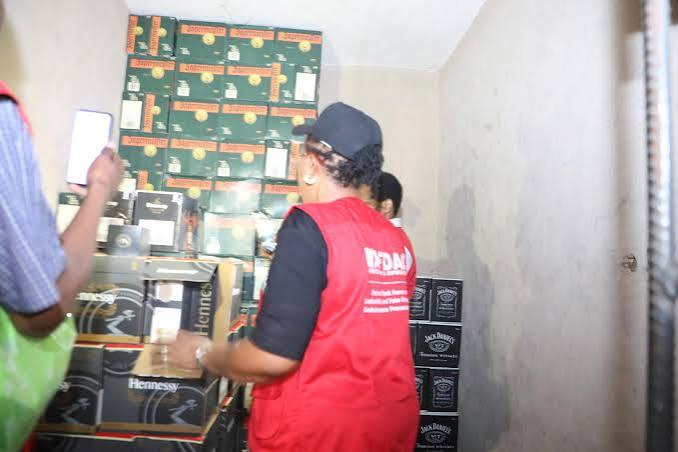
NAFDAC has arrested two suspects at a facility in Lagos’ Trade Fair Complex over the alleged revalidation and repackaging of expired energy drinks, wines and whisky, warning of the health risks posed by counterfeit beverages.
 News
News
LCCI Proposes 20% Petrol Price Cut Within Six Months
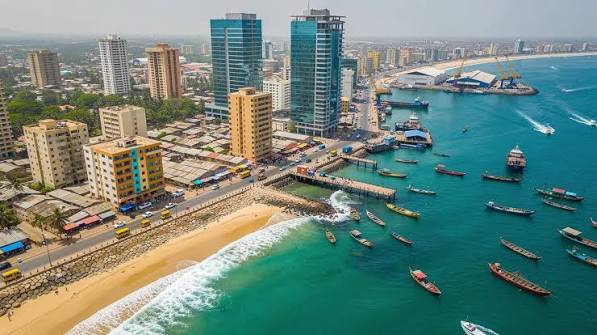
The Lagos Chamber of Commerce and Industry has urged the Federal Government to introduce a six-month programme targeting a 15 to 20 per cent reduction in petrol pump prices to ease rising energy, transport and operating costs.
 News
News
Nigeria’s Private Capital Inflows Rise to $6bn as Reforms Gather Pace
World Bank Group President Ajay Banga says Nigeria’s private capital inflows have risen from about $300 million in 2023 to nearly $6 billion in 2026, while the Federal Government reports an increase in the tax-to-GDP ratio to 12.5 per cent.
 News
News
INEC Gives Pantami, Adebutu October 24 Deadline to Challenge Omissions
The Independent National Electoral Commission has given political parties until October 24 to report alleged errors in its final list of candidates for the 2027 governorship elections, following the omission of PDP candidates Isa Pantami and Oladipupo Adebutu.
Comments (0)
Leave a comment
All comments are moderated before publishing. Your email is never published.