
Former Minister Osita Chidoka Accuses Nigerian Courts of Excessive Bail Conditions
Former Aviation Minister Osita Chidoka has criticised Nigerian courts for imposing unrealistic and excessive bail conditions, warning that it undermines the justice system and promotes corruption.
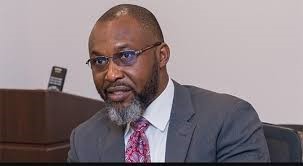
Former Minister of Aviation, Chief Osita Chidoka, has strongly criticised Nigerian courts over the imposition of excessive and unrealistic bail conditions, arguing that such practices effectively deny defendants their fundamental right to freedom.
A former Minister of Aviation, Chief Osita Chidoka, has voiced deep concern over the growing trend of Nigerian courts imposing stringent bail conditions, warning that the practice undermines the justice system and equates integrity with unexplained wealth.
Chidoka made his position known in a public statement titled, *"Bail and the Dignity of the Law: A Call For Judicial Restraint."*
In the statement, the former minister specifically condemned a recent ruling by a High Court in Abuja, which granted a defendant bail but attached conditions he described as practically impossible to meet.
According to him, the court required the defendant to produce sureties who must be serving federal civil servants on Grade Level 16 or above. Additionally, the sureties were ordered to own landed property in Abuja worth ₦500 million each and provide a bank guarantee of ₦15 billion.
Faulting the ruling, Chidoka lamented the financial expectations placed on honest civil servants.
"By the court's ruling, we are asking that officer to show assets worth five times his lifetime earnings — and to stand behind a liability of ₦15 billion, roughly 150 times everything an honest career could ever yield," he stated.
The former minister warned that such judicial demands send a dangerous message to the public and the civil service.
"What message does this send? It says, in the plainest terms, that lawful public service cannot produce the wealth the court now expects of a respectable citizen, and that the civil servant worth trusting is the one who has, somehow, acquired what his salary could never explain," Chidoka argued. "In an anti-corruption case, of all places, that is a strange proxy for integrity."
He also criticised the practice of seizing the international passports of civil servants acting as sureties, noting that senior officers frequently travel for national assignments, negotiations, and training. He stressed that stripping them of their passports merely to vouch for an accused person disrupts their official duties.
To back his argument, Chidoka referenced the Administration of Criminal Justice Act (ACJA) 2015, pointing out that Section 165 expressly commands that bail conditions "shall not be excessive." He also cited the landmark Court of Appeal decision in *Dasuki v. Director-General, SSS, which frowned upon unreasonable bail terms.
Chidoka's remarks align with recent concerns raised by the Nigerian Bar Association (NBA) and other human rights advocates, who have repeatedly warned that using excessive bail conditions as a tool for indirect pre-trial detention contributes to the worsening congestion across the country's correctional centres.
Sponsored

Related stories
 News
News
Police Arrest Three Suspects over Drug Possession, Child Defilement in Bauchi
Bauchi Police have arrested two men over suspected Indian hemp possession and a 20-year-old man over the alleged defilement of a seven-year-old girl in Dass.
 News
News
Oyo Government Denies Diphtheria Outbreak Claims, Says No Cases Confirmed
The Oyo State Government says no diphtheria cases have been confirmed, dismissing claims by an APC campaign organisation while outlining measures to manage suspected cases.
 News
News
Haitian-Canadian Novelist Denies Using AI to Write Debut Novel
Haitian-Canadian author Thélyson Orélien has denied using artificial intelligence to write his acclaimed debut novel, while admitting to past plagiarism and describing the controversy surrounding his work as deeply distressing.
 News
News
Fubara Commends IGP Disu for Neutrality During Rivers Crisis
Rivers State Governor Siminalayi Fubara has commended the Inspector-General of Police, Mr Olatunji Disu, for maintaining neutrality and professionalism while serving as Commissioner of Police in the state during its political crisis.
Comments (0)
Leave a comment
All comments are moderated before publishing. Your email is never published.