
Japan Grants $3.5 Million to Boost Rice Seed Production and Food Security in Nigeria
Japan has committed $3.5 million to support improved rice seed development and distribution in Nigeria through a partnership with the Federal Government and research institutions.
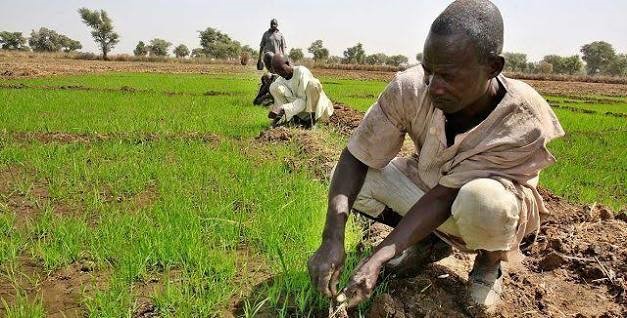
Japan has committed a $3.5 million grant to support large-scale rice seed production and distribution in Nigeria, in a move designed to strengthen the country’s agricultural self-sufficiency, reduce dependence on imported rice, and improve the livelihoods of smallholder farmers.
The funding, announced on Tuesday by the Japanese Ambassador to Nigeria, Mr. Matsubara Hiroshi, will be channelled through the Japan International Cooperation Agency (JICA) in partnership with Nigeria’s National Cereals Research Institute (NCRI) and the Federal Ministry of Agriculture and Food Security. The project aims to develop and disseminate high-yielding, climate-resilient, and disease-resistant rice varieties suited to Nigerian soil and climatic conditions.
Ambassador Matsubara described the initiative as a “practical demonstration of Japan’s commitment to supporting Nigeria’s food security agenda.” He noted that Japan has long recognised Nigeria’s enormous agricultural potential and is ready to share its advanced agricultural technology and expertise to help the country achieve self-sufficiency in rice production.
“Nigeria has the land, the water, and the people. What is needed is the right technology, quality seeds, and efficient farming systems,” the ambassador said. “This grant will help Nigerian farmers access improved rice seeds that can increase yields by up to 30 to 50 percent while reducing vulnerability to pests and climate change.”
Nigeria remains one of the world’s largest importers of rice, spending hundreds of millions of dollars annually on foreign rice despite having vast arable land suitable for cultivation. Successive governments have launched various rice intervention programmes, but progress has been hampered by poor seed quality, low farmer adoption of improved varieties, inadequate processing facilities, and weak market linkages.
The new Japan-funded project is expected to focus on strengthening seed multiplication centres, training farmers and extension workers, establishing demonstration plots, and improving seed certification and distribution systems. Officials say the intervention will target major rice-producing states including Kebbi, Kano, Niger, Ebonyi, Enugu, and Ogun.
The Minister of Agriculture and Food Security, Senator Abubakar Kyari, welcomed the Japanese support, describing it as “timely and strategic.” He said the partnership aligns with President Bola Ahmed Tinubu’s declaration of a state of emergency on food security and the administration’s drive to make Nigeria a net food exporter within the next few years.
“We cannot continue to import what we can produce in abundance,” Senator Kyari said. “This collaboration with Japan will help us build a sustainable rice seed system that puts quality seeds in the hands of our farmers, increases productivity, and reduces our huge import bill.”
A significant aspect of the project is its emphasis on smallholder farmers, particularly women, who constitute the majority of rice producers in Nigeria. The programme will include targeted training on good agronomic practices, seed handling, and post-harvest management. It will also support the establishment of women-led seed enterprises to ensure that improved seeds are locally produced and readily available in rural markets.
Agriculture experts say access to quality certified seeds remains one of the biggest constraints to higher rice yields in Nigeria. While improved varieties developed by research institutes exist, many farmers still plant recycled or adulterated seeds, resulting in low productivity. The Japan-funded initiative is expected to bridge this gap by professionalising the seed sector and creating a reliable supply chain.
Officials from both countries emphasised that the project is designed for sustainability. Japanese experts will work with Nigerian institutions to build local capacity so that the programme can continue independently after the initial grant period. The partnership also includes knowledge transfer in seed breeding, biotechnology, and climate-smart agriculture.
The Japanese government has been a consistent partner in Nigeria’s agricultural development for many years, supporting projects in rice, cassava, and livestock sectors. This latest intervention is seen as an expansion of that cooperation, particularly as Nigeria seeks to diversify its economy away from crude oil and strengthen food systems under the African Continental Free Trade Area (AfCFTA).
Stakeholders have welcomed the development. The President of the Rice Farmers Association of Nigeria (RIFAN), **Aminu Goronyo**, said the project would “transform the rice sector if properly implemented.” He called on the Federal Government to ensure that the benefits reach smallholder farmers rather than being concentrated among a few large-scale operators.
As food inflation continues to bite hard across the country, initiatives that focus on increasing domestic production of staples like rice are increasingly viewed as critical to Nigeria’s economic stability and national security. Japan’s support is expected to complement other ongoing interventions, including the Anchor Borrowers’ Programme and various irrigation projects.
For millions of Nigerian farmers and consumers, this partnership offers renewed hope that the country can finally reduce its dependence on imported rice and build a more resilient, productive, and self-sufficient agricultural economy.
The $3.5 million grant is expected to be disbursed in phases over the next three years, with clear milestones and performance indicators to ensure accountability and measurable impact on the ground.
Sponsored

Related stories
 Agriculture
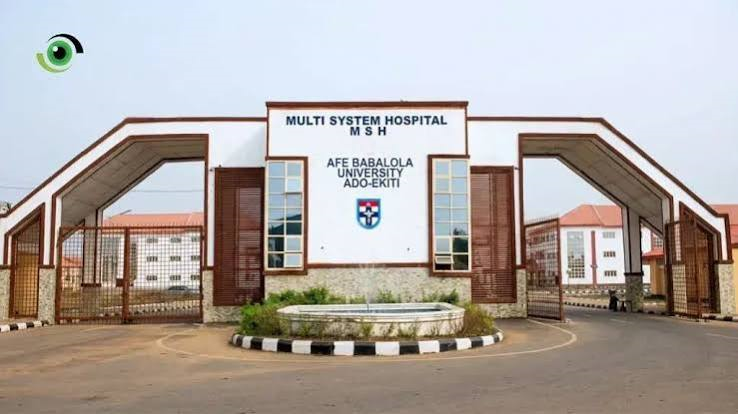
Babalola’s Farmer Support Hits N98m
Legal icon Aare Afe Babalola has disbursed N11.2 million to 81 outstanding farmers across Ekiti State's 16 local government areas, bringing total awards under his annual agricultural scheme since 2015 to N98 million.
 Agriculture
FG Launches African Swine Fever Control Campaign in Southwest
The Federal Government has launched a major African Swine Fever control and biosecurity campaign at the Oke-Aro Pig Farm Estate, distributing protective kits to farmers and pledging comprehensive training to prevent future outbreaks. The intervention by the Livestock Productivity and Resilience Support Project (L-PRES) targets one of Nigeria's largest pig production clusters, which has suffered devastating losses from the highly contagious disease in the past.
 Agriculture
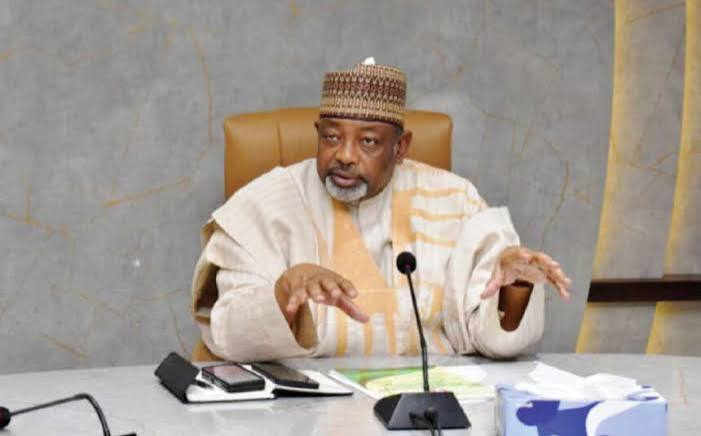
Kyari: More Farmland Won’t Feed 400 Million Nigerians
Agriculture Minister Abubakar Kyari says Nigeria must treat agricultural extension as critical infrastructure, disclosing that over 100,000 farmers already receive weekly digital advisories as the country's population heads toward 400 million by 2050.
 Agriculture
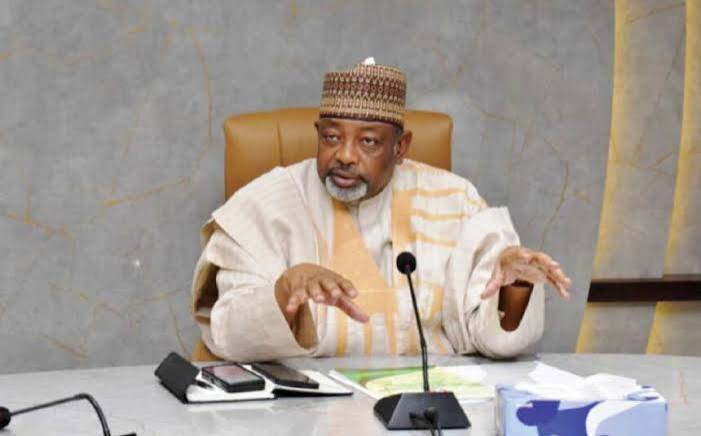
Farmland Expansion Alone Won’t Feed Nigeria
Agriculture Minister Abubakar Kyari says Nigeria must shift to demand-driven, AI-enabled agricultural extension services to boost farm yields, warning that expanding farmland alone can no longer feed the country's growing population.
Comments (0)
Leave a comment
All comments are moderated before publishing. Your email is never published.