
Seaweed Could Transform Nigeria’s Agricultural Energy Sector
SMEFUNDS CEO Dr. Femi Oye advocates for seaweed as a renewable energy source to power Nigeria’s food production, offering a circular solution for farmers and small businesses.

Seaweed, long associated primarily with coastal communities and international cuisines, could soon emerge as a transformative source of clean energy for farmers and food processors across Nigeria. According to Dr. Femi Oye, Chief Executive of SMEFUNDS, this marine resource holds immense potential to alleviate the crippling energy costs that currently stifle small and medium-sized enterprises (SMEs) in the agricultural sector.
Speaking on the need for sustainable economic interventions, Dr. Oye revealed that his organization has been actively exploring alternative energy sources to support grassroots economic activity nationwide. While solar-powered devices have been a traditional focal point, seaweed is now being identified as a highly promising addition to Nigeria’s renewable energy mix.
“Energy cost is one of the biggest burdens on small businesses in food production, from irrigation and drying to cold storage and processing,” Dr. Oye explained. “We have been looking at solar-powered household devices and other alternatives, and seaweed is one resource that deserves serious attention.”
The appeal of seaweed lies in its remarkable biological efficiency. Unlike traditional crops, seaweed grows rapidly without requiring arable farmland, fresh water, or chemical fertilizers. This makes it an exceptionally attractive renewable feedstock. Globally, seaweed has already been successfully utilized to produce biogas and biofuels. Furthermore, the organic residue left over after energy extraction can be repurposed as a natural, nutrient-rich fertilizer or as a vital protein ingredient in animal and aquaculture feed.
For a nation blessed with a long Atlantic coastline and an extensive network of creeks and lagoons, this dual benefit of energy generation and agricultural input could be profoundly significant. Dr. Oye emphasized that the greatest promise of this initiative lies in adopting a circular economic approach, where nothing goes to waste.
“If seaweed can generate energy and the by-products can feed our soils and our fish ponds, then we are not just solving one problem,” he stated. “We are building a system where each output becomes another producer’s input.”
He pointed to the growing global momentum in transforming underutilized biological resources into commercially viable products. For instance, the recovery of proteins and oils from seafood by-products for aquaculture feed serves as a proven model that circular systems can thrive when properly tested and scaled.
However, Dr. Oye was careful to temper expectations, cautioning that the commercialization of seaweed energy in Nigeria is still in its infancy. He stressed that the concept requires meticulous study and strategic planning before it can be rolled out on a national scale.
“We must be realistic. We need pilot projects, technical research, and the right partners to understand which species will thrive in our waters and what it will cost to produce energy at scale,” he noted. “But the potential is too important to ignore.”
To actualize this vision, Dr. Oye urged government agencies, academic research institutions, private investors, and coastal communities to collaborate on comprehensive pilot schemes. Crucially, he emphasized that small and medium-sized enterprises must remain at the very center of any such developmental effort.
“If this is going to work, it must work for the small processor, the fish farmer, and the household, not only for large industry,” he asserted.
SMEFUNDS has reaffirmed its commitment to backing grassroots innovations that lower operational costs and enhance productivity. “Our goal is simple: to make it easier and cheaper for Nigerians to produce food and grow their businesses,” Dr. Oye concluded.
As Nigeria grapples with food security challenges and volatile energy prices, the exploration of marine biomass like seaweed represents a forward-thinking, sustainable pathway. By harnessing the untapped potential of its coastal ecosystems, Nigeria could pioneer a resilient, circular agricultural model that empowers local farmers and secures the future of its food production industry.
Sponsored

Related stories
 Agriculture
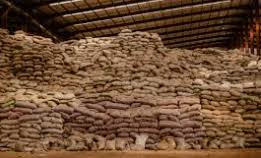
Abakaliki Rice Mill: Ebonyi’s N171bn Neglected Goldmine
Nigeria's largest rice mill, operating since 1967, processes 132,000 tonnes of rice annually—worth over N171 billion—yet operates without power, safe working conditions, or good roads. As the state's entire IGR sits at just N17.18 billion, analysts ask how a facility generating ten times that amount has been allowed to decay into a "prostrate goldmine."
 Agriculture
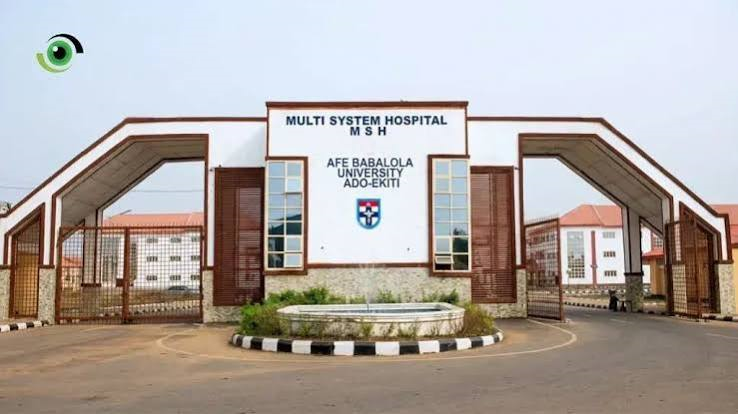
Babalola’s Farmer Support Hits N98m
Legal icon Aare Afe Babalola has disbursed N11.2 million to 81 outstanding farmers across Ekiti State's 16 local government areas, bringing total awards under his annual agricultural scheme since 2015 to N98 million.
 Agriculture
FG Launches African Swine Fever Control Campaign in Southwest
The Federal Government has launched a major African Swine Fever control and biosecurity campaign at the Oke-Aro Pig Farm Estate, distributing protective kits to farmers and pledging comprehensive training to prevent future outbreaks. The intervention by the Livestock Productivity and Resilience Support Project (L-PRES) targets one of Nigeria's largest pig production clusters, which has suffered devastating losses from the highly contagious disease in the past.
 Agriculture
Kyari: More Farmland Won’t Feed 400 Million Nigerians
Agriculture Minister Abubakar Kyari says Nigeria must treat agricultural extension as critical infrastructure, disclosing that over 100,000 farmers already receive weekly digital advisories as the country's population heads toward 400 million by 2050.
Comments (0)
Leave a comment
All comments are moderated before publishing. Your email is never published.