
China’s Smart Farming Revolution Offers Lessons for Nigeria
While China’s high-speed trains and skyscrapers dominate headlines, a quieter revolution is unfolding in its fields—one that Nigeria cannot afford to ignore. A visit to Yangling, Shaanxi Province, reveals a farming future built on data-driven greenhouses, spraying drones, and seed research, offering a stark contrast to Nigeria’s vast but underperforming agricultural sector. The lessons are practical, urgent, and within reach—if only the political will exists to act on them.
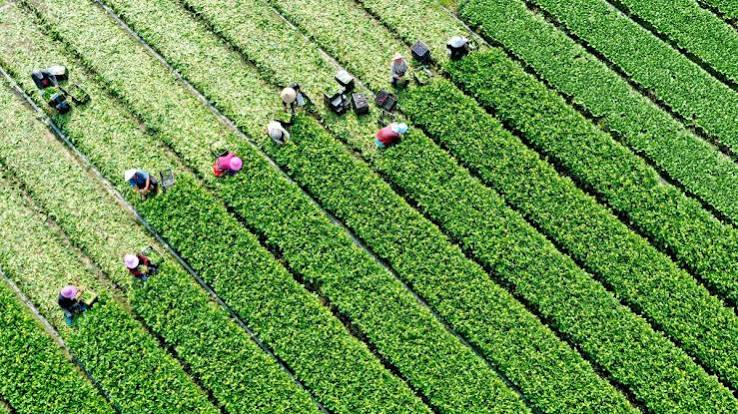
When the world looks at China, it sees high-speed trains, electric vehicles, and cities that scrape the sky. It rarely sees the revolution happening in the fields,a transformation that is just as consequential for the country’s future, and just as instructive for a country like Nigeria.
During a recent visit to Yangling in Shaanxi Province, a hub for agricultural science and innovation, this correspondent encountered a farming model that bears little resemblance to the rain-fed, hoe-and-cutlass agriculture that still defines much of Nigeria’s rural economy. At the Yangling Smart Agriculture Demonstration Park, plants are monitored through screens rather than solely by physical inspection; growing conditions are tracked centrally, turning farming into a data-driven activity. Vegetables are cultivated indoors in controlled environments, reducing dependence on weather and making production more predictable. Agricultural drones, designed to spray farmland with precision, illustrate how technology can help farmers cover large areas efficiently—provided there are trained operators, maintenance systems, and appropriate regulation.
The visit also took in the SCO Demonstration Base for Agricultural Technology Exchange and Training, a platform for sharing knowledge with countries across the Shanghai Cooperation Organisation framework and other developing economies. At Yangling Liangke Agricultural Science and Technology Co Ltd, the focus was on the science behind the seeds—research, crop improvement, and the development of varieties suited to specific conditions, particularly for staple crops like wheat and maize.
The broader lesson from Yangling is that agricultural transformation begins long before a farmer enters the field. It starts in laboratories, research centres, and demonstration farms that invest in understanding crops and improving the science behind production.
For Nigeria, the contrast is painful. The country does not lack agricultural potential: it has vast arable land, diverse agro-ecological zones, a large farming population, and crops—rice, maize, sorghum, cassava, yam, sesame, cocoa, cashew—that are in demand locally and internationally. Yet it continues to struggle with low productivity, post-harvest losses, inconsistent quality, inadequate storage, and limited processing capacity. The challenge is not simply to produce more, but to produce better, preserve more of what is grown, process more locally, and connect farmers to profitable markets.
The Yangling experience offers five practical lessons. First, Nigeria must invest more seriously in agricultural research and improved seeds, with stronger funding for research institutions, better facilities, and closer links between scientists, farmers, and the private sector. Second, technology must be made accessible to ordinary farmers. Drones, digital monitoring systems, and modern irrigation equipment cannot remain exhibits in demonstration centres; they must reach farming communities, ideally through cooperatives, private service providers, and government-backed schemes that allow smallholders to pay for services rather than purchase expensive equipment outright. Third, irrigation and water management must become central to agricultural strategy, ending the heavy dependence on seasonal rainfall. Fourth, the post-harvest crisis demands urgent investment in warehouses, processing centres, cold-chain facilities, and logistics, because producing more food means little if large quantities are lost after harvest. Finally, Nigeria must take agricultural exports seriously, moving beyond raw commodity exports to build industries around the crops it already produces, with the consistency, quality control, packaging, traceability, and standards compliance that international markets demand.
Crucially, modernising agriculture does not require abandoning Nigeria’s agricultural heritage. The country’s millet, sorghum, sesame, cowpea, rice, cassava, yam, ginger, and hibiscus have enormous potential; the task is to improve their production through research, better seeds, mechanisation, processing, and market access. Technology must be adapted to Nigerian realities,its climate, crops, land tenure systems, farm sizes, infrastructure, and economic conditions—rather than copied wholesale from a Chinese model.
The bigger picture is that food security is not achieved by agriculture alone. It requires a system that connects research, technology, farmers, finance, infrastructure, processing, logistics, and markets—a system that treats agriculture as a strategic sector deserving sustained investment in science and innovation. Nigeria has the land, the people, the crops, and the market. What it needs is a more deliberate effort to connect these advantages with research, technology, and commercial opportunity.
Yangling offered a glimpse of what becomes possible when science meets agriculture. The challenge for Nigeria is to turn the lessons into action—because food security is too important to be left to chance, and agriculture is too important to remain trapped in old methods when better possibilities are within reach.
Sponsored

Related stories
 Agriculture
Abiodun Deploys 39 Tractors to Boost Mechanised Farming in Ogun
Farmers across Ogun State’s settlements have praised Governor Dapo Abiodun after the government distributed 39 tractors and a suite of modern implements,ploughs, harrows, trailers, grain planters, boom sprayers, cassava planters, and harvesters,at the Cultural Centre, Kuto, Abeokuta. The intervention, part of the World Bank-backed OGSTEP and SAPZ programmes, is designed to end the tyranny of manual labour, accelerate planting after rainfall, and crash food prices. But farmers are already asking
 Agriculture
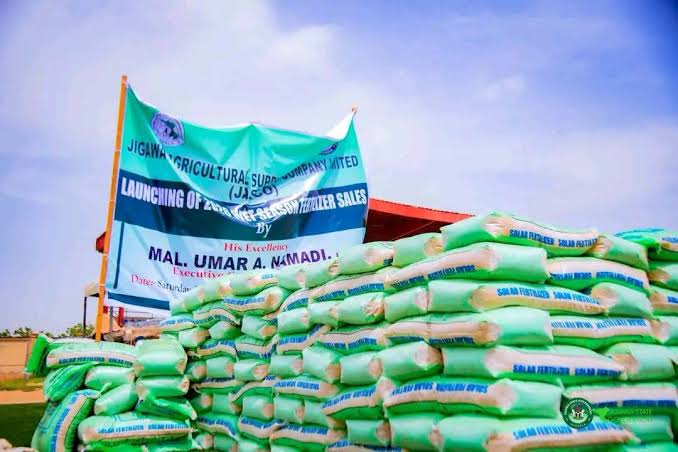
FG Launches Jigawa Fertiliser Support to Boost Farming, Curb Food Inflation
The Federal Government has moved to boost farming activities in Jigawa State by making cheap, subsidised fertiliser available to smallholder farmers,a targeted intervention aimed at raising yields, cushioning the impact of food inflation, and pulling rural households back from the brink of hunger. Officials say the programme is part of a broader national push to make Nigeria self-sufficient in food production, but farmers warn that without sustained supply, timely delivery, and credit support, t
 Agriculture
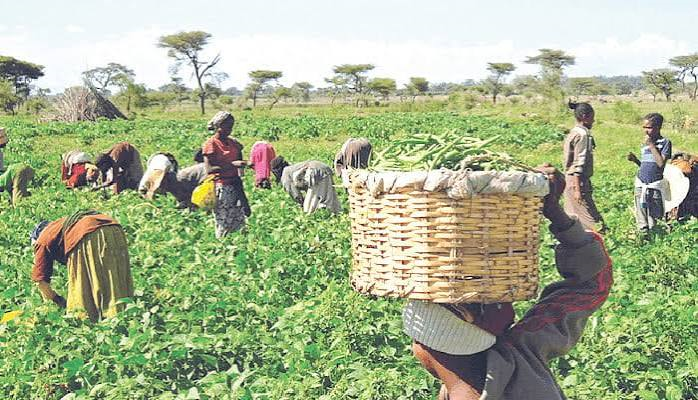
Poor Harvest May Worsen Nigeria's Food Crisis, AFAN Warns
The All Farmers Association of Nigeria has warned that poor harvests caused by devastating floods, insecurity and farmer displacement could plunge the country into a severe food crisis, with millions facing famine-like conditions in early 2027. AFAN President Kabir Ibrahim says the situation could mirror the 2024 hardship protests unless urgent interventions are made to support farmers and stabilise food production.
 Agriculture
Abakaliki Rice Mill: Ebonyi’s N171bn Neglected Goldmine
Nigeria's largest rice mill, operating since 1967, processes 132,000 tonnes of rice annually—worth over N171 billion—yet operates without power, safe working conditions, or good roads. As the state's entire IGR sits at just N17.18 billion, analysts ask how a facility generating ten times that amount has been allowed to decay into a "prostrate goldmine."
Comments (0)
Leave a comment
All comments are moderated before publishing. Your email is never published.