
Abiodun Deploys 39 Tractors to Boost Mechanised Farming in Ogun
Farmers across Ogun State’s settlements have praised Governor Dapo Abiodun after the government distributed 39 tractors and a suite of modern implements,ploughs, harrows, trailers, grain planters, boom sprayers, cassava planters, and harvesters,at the Cultural Centre, Kuto, Abeokuta. The intervention, part of the World Bank-backed OGSTEP and SAPZ programmes, is designed to end the tyranny of manual labour, accelerate planting after rainfall, and crash food prices. But farmers are already asking

Farmers across Ogun State have commended the state government for providing tractors and modern agricultural equipment to farm settlements, describing the intervention as a major boost to mechanised farming, increased productivity, and food security.
The commendation came during the presentation of tractors and other agricultural implements distributed by the state government at the Cultural Centre, Kuto, Abeokuta. Speaking on behalf of the beneficiaries, the Public Relations Officer of the Ogun State Farm Settlers Council and Chairman of Ajegunle Farm Settlement, Mr Oluwarotimi Shogunle, praised Governor Dapo Abiodun for responding to the needs of farmers, particularly their calls for improved mechanisation, cassava processing facilities, and other agricultural support services. He described the intervention as a significant milestone in the state’s agricultural development.
Shogunle disclosed that the government had provided 39 tractors, alongside various implements, including ploughs, harrows, trailers, grain planters, boom sprayers, cassava planters, and harvesters. According to him, the equipment would significantly improve farming operations across the settlements, while access to tractors would enable farmers to begin land preparation and planting promptly after rainfall, thereby reducing delays caused by inadequate mechanisation. He added that the provision of at least one tractor to each farm settlement would promote timely planting, increase agricultural productivity and food supply, and ultimately help reduce food prices.
The farm settlers’ spokesperson also acknowledged other agricultural interventions by the Abiodun administration, including support for poultry production, efforts to reduce the cost of arable crop production, the provision of fertilisers and other farm inputs, as well as investments in agricultural processing facilities and the Special Agro-Industrial Processing Zones (SAPZ).
While appreciating the government for its support, Shogunle appealed for the extension of interest-free revolving loans and machinery grants to other farm settlements, similar to the assistance provided to farmers in Eriwe, to strengthen their production capacity and financial stability. He said the Farm Settlers Council had put measures in place to ensure the sustainability of the newly distributed equipment through the establishment of management companies in each farm settlement to oversee their operations and maintenance. According to him, the arrangement would ensure proper management, profitability, and eventual expansion of the facilities, with the goal of enabling each settlement to acquire additional tractors and equipment in the coming years.
Shogunle also commended the Commissioner for Agriculture and Food Security, Bolu Owotomo, for his commitment to ensuring the successful distribution of the equipment to farmers. Recalling other government projects in the settlements, including warehouses, cassava processing plants, dryers, and a 5,000-capacity broiler pen provided for his settlement, he said he named the facility the Dapo Abiodun Chicken Processing Centre in recognition of the governor’s contributions to agricultural development. He expressed confidence that sustained government support, coupled with effective management of the newly provided equipment, would further strengthen Ogun State’s position as one of Nigeria’s leading agricultural producers.
Also speaking, the chairmen of Ikenne, Ago-Iwoye, and Ibiade Farm Settlements, Messrs Seun Kehinde, Musiliu Dada, and Tunde Ola-Buraimoh, respectively, jointly commended the state government for its consistent support for farmers since the inception of the Abiodun administration. They said the provision of tractors and agricultural implements would significantly improve farming operations, reduce the burden of manual labour, expand cultivated land, and enable farmers to achieve higher yields. The farm settlement chairmen added that the intervention would strengthen farmers’ capacity to contribute to the state’s food security agenda.
The distribution is part of a broader mechanisation drive under the Ogun State Economic Transformation Project (OGSTEP), a World Bank-assisted programme that has already supported thousands of farmers with training, inputs, and equipment. The state has procured 39 tractors and four self-propelled harvesters, alongside investments in solar dryers, warehouses, cassava processing centres, and a poultry processing plant at Ajegunle Farm Settlement with the capacity to process 5,000 birds daily. The government has also distributed 1,200 Android phones equipped with applications providing weather information, market prices, and guidance on best agricultural practices—a digital layer designed to complement the hardware on the fields.
For Ogun’s farmers, the tractors are more than machines. They represent time recovered, labour spared, and yields multiplied. But the appeal for revolving loans and grants signals that mechanisation alone is not enough. Without affordable credit, many settlements will struggle to fuel, maintain, and fully utilise the equipment they have received. The Abiodun administration has answered the call for tractors. The next test is whether it will answer the call for the financial infrastructure that makes those tractors sustainable.
Sponsored

Related stories
 Agriculture
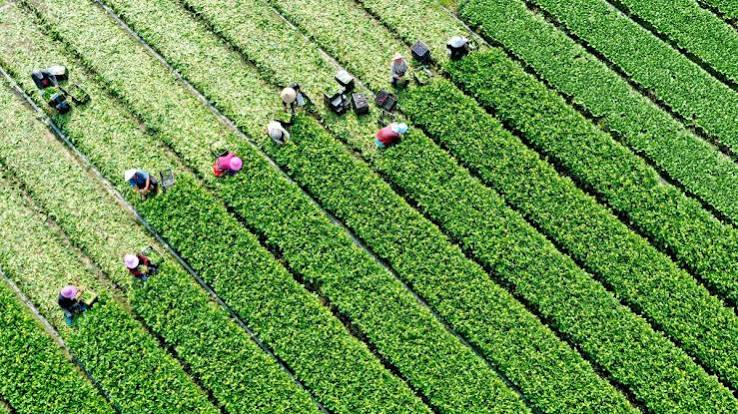
China’s Smart Farming Revolution Offers Lessons for Nigeria
While China’s high-speed trains and skyscrapers dominate headlines, a quieter revolution is unfolding in its fields—one that Nigeria cannot afford to ignore. A visit to Yangling, Shaanxi Province, reveals a farming future built on data-driven greenhouses, spraying drones, and seed research, offering a stark contrast to Nigeria’s vast but underperforming agricultural sector. The lessons are practical, urgent, and within reach—if only the political will exists to act on them.
 Agriculture
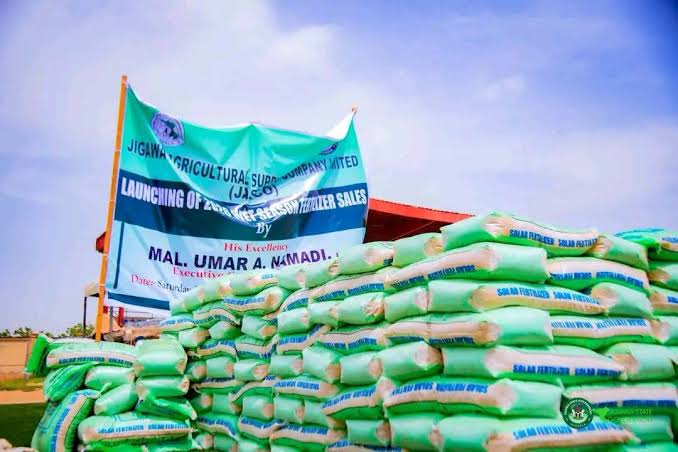
FG Launches Jigawa Fertiliser Support to Boost Farming, Curb Food Inflation
The Federal Government has moved to boost farming activities in Jigawa State by making cheap, subsidised fertiliser available to smallholder farmers,a targeted intervention aimed at raising yields, cushioning the impact of food inflation, and pulling rural households back from the brink of hunger. Officials say the programme is part of a broader national push to make Nigeria self-sufficient in food production, but farmers warn that without sustained supply, timely delivery, and credit support, t
 Agriculture
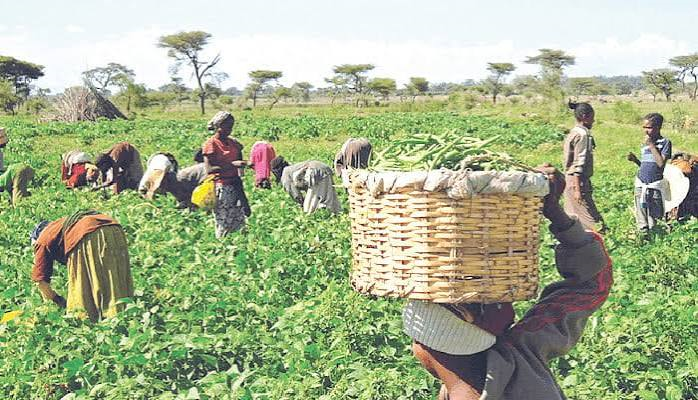
Poor Harvest May Worsen Nigeria's Food Crisis, AFAN Warns
The All Farmers Association of Nigeria has warned that poor harvests caused by devastating floods, insecurity and farmer displacement could plunge the country into a severe food crisis, with millions facing famine-like conditions in early 2027. AFAN President Kabir Ibrahim says the situation could mirror the 2024 hardship protests unless urgent interventions are made to support farmers and stabilise food production.
 Agriculture
Abakaliki Rice Mill: Ebonyi’s N171bn Neglected Goldmine
Nigeria's largest rice mill, operating since 1967, processes 132,000 tonnes of rice annually—worth over N171 billion—yet operates without power, safe working conditions, or good roads. As the state's entire IGR sits at just N17.18 billion, analysts ask how a facility generating ten times that amount has been allowed to decay into a "prostrate goldmine."
Comments (0)
Leave a comment
All comments are moderated before publishing. Your email is never published.