
INEC Says Court Judgment on Timetable Threatens 2027 Polls
INEC has warned that court judgments nullifying parts of its 2027 election timetable could disrupt preparations, create operational challenges, and threaten the smooth conduct of Nigeria’s next general elections.
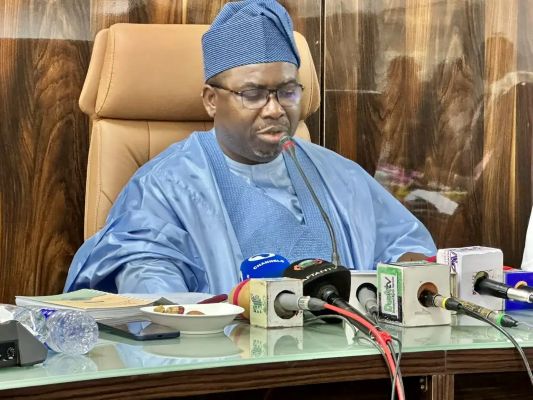
The Independent National Electoral Commission (INEC) has warned that recent Federal High Court judgments nullifying parts of its 2027 General Election timetable could significantly disrupt preparations for the polls and create operational challenges for the electoral process.
Speaking on Tuesday at the Commission’s Second Quarterly Consultative Meeting with leaders of political parties in Abuja, INEC Chairman, Prof. Joash Amupitan (SAN), disclosed that the Commission had already filed appeals against two court rulings affecting its Timetable and Schedule of Activities for the 2027 General Election.
According to Amupitan, the judgments challenge critical timelines contained in the electoral calendar and could undermine the orderly conduct of election preparations if allowed to stand. He stressed that the timetable is built around interconnected activities that cannot be separated without affecting the overall electoral process.
The first judgment, delivered on May 20, 2026, in a suit filed by the Youth Party against INEC, questioned certain timelines outlined by the Commission. A second ruling, delivered on May 26, 2026, in a suit filed by the Social Democratic Party (SDP), affirmed INEC’s authority to issue an election timetable but struck down specific timelines relating to the nomination and substitution of candidates.
Amupitan noted that the court, in its judgment on the SDP case, acknowledged that an election timetable without timelines for activities such as party primaries, submission of membership registers, and other preparatory processes would be incomplete and could create confusion within the electoral system.
While reaffirming INEC’s respect for judicial decisions and the rule of law, the chairman argued that the judgments raise important constitutional and legal questions regarding the Commission’s powers to regulate and coordinate electoral activities nationwide.
He explained that many electoral processes are not expressly assigned timelines under the Electoral Act but must still be accommodated within a structured electoral calendar to ensure transparency, fairness, and efficiency.
According to him, removing specific timelines from the election schedule could create uncertainty, disrupt planning, and affect the successful conduct of the 2027 general elections. He expressed confidence that the appellate courts would provide clarity on the issues raised and preserve the integrity of the electoral process.
Sponsored

Related stories
 News
News
IMF Says Nigerians Still Face High Living Costs Despite Economic Growth
The International Monetary Fund has urged the Federal Government to introduce targeted cash transfers and temporary income support for vulnerable households as food and energy costs continue to strain Nigerians despite improved economic growth.
 News
News
NAFDAC Arrests Two over Suspected Fake Drinks Operation in Lagos
NAFDAC has arrested two suspects at a facility in Lagos’ Trade Fair Complex over the alleged revalidation and repackaging of expired energy drinks, wines and whisky, warning of the health risks posed by counterfeit beverages.
 News
News
LCCI Proposes 20% Petrol Price Cut Within Six Months
The Lagos Chamber of Commerce and Industry has urged the Federal Government to introduce a six-month programme targeting a 15 to 20 per cent reduction in petrol pump prices to ease rising energy, transport and operating costs.
 News
News
Nigeria’s Private Capital Inflows Rise to $6bn as Reforms Gather Pace
World Bank Group President Ajay Banga says Nigeria’s private capital inflows have risen from about $300 million in 2023 to nearly $6 billion in 2026, while the Federal Government reports an increase in the tax-to-GDP ratio to 12.5 per cent.
Comments (0)
Leave a comment
All comments are moderated before publishing. Your email is never published.