
Food Security: Abia Shifts Focus to Commercial Agriculture, Empowers 18,000 Farmers
Abia State is pushing harder into commercial agriculture as part of its food security drive, with more than 18,000 farmers receiving support under a new state-backed programme. Officials say the plan is designed to increase food production, raise farmers’ incomes and attract investment into the agricultural value chain.
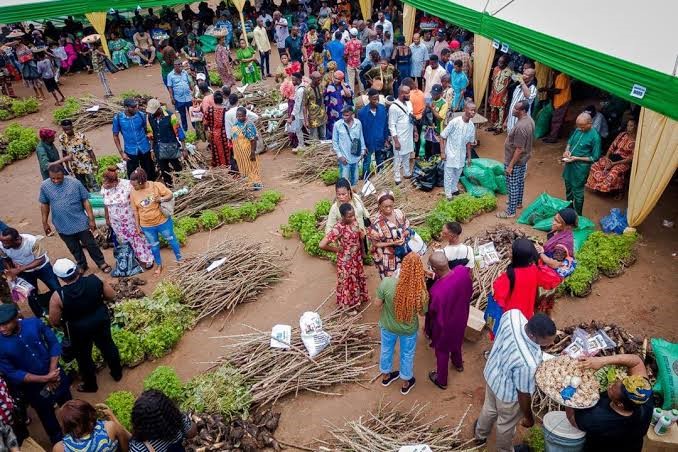
Abia State has shifted its food security strategy toward commercial agriculture, with the government empowering more than 18,000 farmers across the state.
The move is part of a broader effort to move farming away from subsistence production and turn it into a more profitable, scalable sector. By supporting farmers with inputs and technical backing, the state is aiming not only to improve food availability but also to make agriculture a real business for rural households.
Officials say the programme is intended to strengthen food security while also building a stronger agricultural economy. That means encouraging higher output, expanding the amount of land under cultivation and creating more opportunities across the value chain, from production to processing and distribution.
The support package for farmers is also expected to help reduce the cost and burden of farming inputs, which have become a major obstacle for many smallholders. For farmers, access to seedlings, fertilisers, equipment and transport can determine whether a season is productive or disappointing.
Abia’s strategy reflects a wider recognition that food security is no longer just about growing more crops. It also depends on commercial viability, investment, market access and the ability of farmers to earn enough to keep producing year after year.
The state government appears to be using agriculture as both a food policy and an economic policy. That approach could help create jobs, stimulate rural development and reduce dependence on imported food if it is sustained and properly implemented.
The empowerment of 18,000 farmers is significant because it suggests the programme is not symbolic or limited to a few pilot communities. It points to a large-scale intervention that could have real impact if the beneficiaries receive the right support and follow-through.
The challenge now will be execution. Commercial agriculture requires more than distributing inputs; it also needs storage, processing, roads, finance, extension services and reliable markets to prevent waste and raise profitability.
If Abia can connect these pieces, the state could become a stronger model for agricultural transformation in the South-East. For now, the programme signals a clear policy shift: food security through farming as enterprise, not just as survival.
Related stories
.jpeg) Agriculture
Agriculture
Farmers at the Table: Nigeria’s AGROW Policy Push to Boost Food Security and Rural Incomes
Nigeria’s government is moving to include farmers directly in policy through the AGROW initiative, aiming to boost productivity, food security and market‑oriented agriculture. GNA explains the strategy and its implications.
.jpeg) Agriculture
Agriculture
Food Security on a Knife‑Edge: Nigeria’s Farm Reforms, Fertiliser Costs and Fragile Recovery
Nigeria’s agriculture is showing early recovery, but experts warn fragile gains could collapse without sustained reforms, affordable fertiliser and better spending.
.jpeg) Agriculture
Agriculture
Tinubu’s Fertiliser Reforms: How 22 Million Bags and N61.6bn Savings Aim to Secure Nigeria’s Food Future
President Tinubu says fertiliser value‑chain reforms have shielded Nigeria from global supply shocks, securing millions of bags and saving N61.6bn. GNA explains the numbers, programmes and what they mean for farmers.
 Agriculture
Plateau State Agricultural Communities Plunged into Mourning Following Fatal Agrarian Attack
PLATEAU—Farming groups condemned a fatal attack in Foron District that killed a farmer and saw 50 cows rustled. They urged immediate security deployments to protect the agrarian economy.
Comments (0)
Leave a comment
All comments are moderated before publishing. Your email is never published.