
Tinubu’s Fertiliser Reforms: How 22 Million Bags and N61.6bn Savings Aim to Secure Nigeria’s Food Future
President Tinubu says fertiliser value‑chain reforms have shielded Nigeria from global supply shocks, securing millions of bags and saving N61.6bn. GNA explains the numbers, programmes and what they mean for farmers.
.jpeg)
President Bola Tinubu has declared that his administration’s reforms in Nigeria’s fertiliser value chain are shielding the country’s agriculture sector from global supply shocks and delivering measurable gains for food security. Speaking at a recent event, he credited key institutions with strengthening local fertiliser production, expanding access to inputs for farmers and generating significant financial savings.
Tinubu highlighted the roles of the Ministry of Finance Incorporated (MOFI) and the National Agricultural Development Fund (NADF) in driving interventions along the fertiliser supply chain. According to the President, more than 449,000 metric tonnes of fertiliser inputs—equivalent to about nine million bags—had been secured as of May 2026, with ten vessels either discharged or en route to Nigeria.
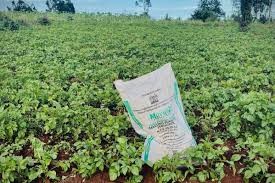
The administration is targeting a 1.1 million metric tonne fertiliser programme for the year, which translates to approximately 22 million bags nationwide. Tinubu said strategic contracting arrangements for key fertiliser inputs had generated savings of N61.58 billion in 2026 alone, helping to moderate prices for farmers and improve affordability.
He framed the reforms as part of the broader Renewed Hope Agenda’s commitment to food security and rural development.
A cornerstone of the effort is the Renewed Hope Farm Input Support Programme, implemented by NADF. Under this scheme, 515,720 bags of locally produced fertiliser are being distributed to 128,930 smallholder farmers across 25 states and the Federal Capital Territory during the current planting season. Officials say prioritising smallholders is critical because they produce a large share of Nigeria’s food but are often the most exposed to input price volatility.
Agricultural analysts note that fertiliser reforms come at a time when global supply chains remain fragile, with geopolitical tensions and climate impacts affecting production and trade. In previous seasons, disruptions and foreign exchange pressures contributed to sharp increases in fertiliser costs for Nigerian farmers, risking lower application rates and reduced yields.
The current strategy aims to buffer the sector from similar shocks by enhancing domestic production and securing input supplies ahead of planting cycles.
However, officials and experts caution that the reforms are not a complete solution. At a recent economic forum, representatives from the agriculture ministry pointed out that fertiliser remains the single biggest cost item for many farmers, with prices around N60,000 per bag still out of reach without targeted support. They warned that if subsidies and distribution programmes are not sustained, yields could fall from three to four metric tonnes per hectare to around 1.5 metric tonnes, reversing recent gains.
Smallholder farmers in various states have welcomed the input support but raised concerns about transparency and coverage. Some report that distribution exercises favour politically connected individuals or fail to reach remote communities, while others say quantities received are insufficient for their farm sizes. State governments and implementing agencies have responded by appointing coordinators and promising tighter oversight to ensure that subsidised fertiliser and seeds reach genuine beneficiaries.
Beyond fertiliser, stakeholders stress the importance of complementary investments in extension services, mechanisation, irrigation and storage. They argue that without improved agronomic practices and post‑harvest handling, the full benefits of higher fertiliser availability may not be realised. Environmental considerations, including soil health and balanced nutrient use, are also on the agenda as Nigeria seeks to boost productivity sustainably.
For many rural households, the impact of fertiliser reforms will ultimately be measured in terms of harvest volumes, income and local food prices. If input support programmes succeed, farmers could see better yields and more predictable production, helping to stabilise market supply and reduce the frequency of sudden price spikes. Conversely, gaps in implementation or funding could leave smallholders exposed, undermining national food security goals.
As the planting season progresses, attention will remain on how fertiliser and other inputs are delivered on the ground.
Tinubu’s administration is betting that strategic contracting, domestic production and targeted distribution can keep Nigeria’s farms resilient amid global uncertainty. For farmers from Sokoto to Cross River, the promise of 22 million bags of fertiliser is significant,but its true value will depend on whether those bags reach the right hands at the right time.
Related stories
 Agriculture
Plateau State Agricultural Communities Plunged into Mourning Following Fatal Agrarian Attack
PLATEAU—Farming groups condemned a fatal attack in Foron District that killed a farmer and saw 50 cows rustled. They urged immediate security deployments to protect the agrarian economy.
 Agriculture
Nutrition and Agricultural Stakeholders Call for Interventions to Close Worsening Food Gaps
LAGOS—Experts at the 2026 Nestlé Summit urged integrated food systems to fight malnutrition. They backed public-private investment in biofortification and storage to aid vulnerable families.
 Agriculture
Agriculture Minister Raises Regional Concern Over Global Fertilizer Supply Bottlenecks
NAIROBI, KENYA—Nigeria has raised an alarm over the escalating scarcity and cost of fertilizer inputs across Sub-Saharan Africa, blaming Middle East geopolitical instability and fractured global logistics. Speaking at the Africa-France Summit, Minister of Agriculture and Food Security Abubakar Kyari met with IFAD to evaluate West African supply chain vulnerabilities. With shipping disruptions driving up freight charges for nitrogen and phosphate bases, Nigeria is working with development partner
 Agriculture
Miyetti-Allah Urges Federal Government to Extend Credit Lines to Butchers to Lower Beef Prices
The Miyetti-Allah Fulaku Yeso Yeso Development Association (MAFYDA) has urged the Federal Government to establish dedicated Bank of Agriculture (BOA) loan facilities for butchers to help crash rising meat prices. MAFYDA revealed a stark market disparity where middlemen buy cows from pastoralists for ₦500,000 to ₦750,000 and resell them to capital-constrained butchers on credit for up to ₦1.5 million. The association stated that direct capital intervention would empower butchers to bypass these p
Comments (0)
Leave a comment
All comments are moderated before publishing. Your email is never published.