
Dangote Dumps Naira, Begins Petrol Sales in Dollars
Dangote Refinery has ended naira payments for petroleum products, fixing petrol at $0.779 per litre as it transitions to dollar-denominated transactions amid foreign exchange and crude supply pressures.
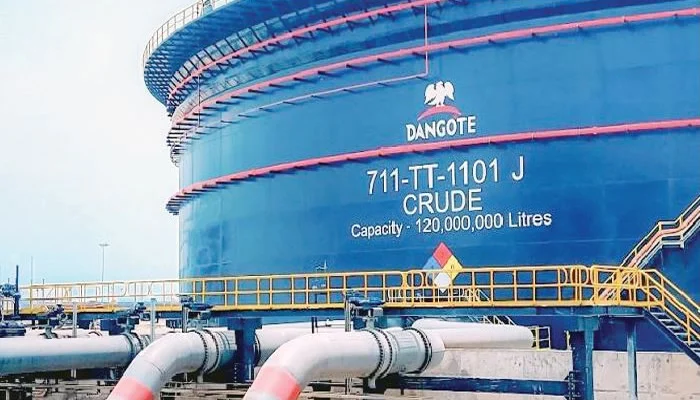
Dangote Petroleum Refinery has officially ended naira-denominated sales of refined petroleum products, introducing a new pricing template that fixes the ex-depot price of Premium Motor Spirit (petrol) at $0.779 per litre.
The revised pricing, which took effect on Monday, also places Automotive Gas Oil (diesel) at $1.087 per litre, Aviation Turbine Kerosene at $0.942 per litre, while coastal deliveries of petrol are priced at $1,044.62 per metric tonne.
The move signals a major shift in the refinery’s commercial operations and effectively ends the naira payment arrangement introduced after the commencement of the Federal Government’s naira-for-crude initiative on October 1, 2024.
In a notice issued to petroleum marketers and customers, the refinery announced that all previously issued naira-denominated Proforma Invoices and Deal Recaps had become invalid.
According to the notice, all future gantry and coastal transactions will now be conducted in United States dollars, although the new policy does not apply to Liquefied Petroleum Gas (LPG).
Industry sources said the transition was driven by the increasing proportion of crude oil supplied to the refinery under dollar-denominated agreements, creating a mismatch between the currency used to purchase crude and the currency received from domestic product sales.
A source familiar with the development explained that the refinery had become increasingly exposed to foreign exchange risks as more crude cargoes were supplied in dollars while refined products continued to be sold locally in naira.
“The resulting currency mismatch, coupled with exchange-rate volatility and fluctuations in global crude oil prices, made the transition to dollar pricing necessary,” the source said.
The decision is expected to significantly affect petroleum marketers who source products directly from the refinery for nationwide distribution.
Analysts also believe the move could influence pump prices across Nigeria’s deregulated downstream petroleum market, depending on exchange rates, logistics costs, transportation expenses, regulatory charges and marketers’ profit margins.
The refinery had initially embraced naira transactions under the Federal Government’s domestic crude supply programme, which was designed to reduce pressure on foreign exchange demand, strengthen local refining and stabilise fuel prices.
However, industry stakeholders say implementation challenges have gradually shifted crude supply arrangements back to dollar-based transactions, prompting the refinery’s latest policy change.
The development raises fresh concerns over the future of Nigeria’s naira-for-crude policy and its long-term impact on domestic fuel pricing and energy market stability.
Related stories
 News
News
Police Arrest Suspected Bandit, Recover Ammunition in Kano
Kano Police arrested a suspected bandit in Bichi, recovering ammunition, military uniforms and fake identification after intelligence suggested he was supplying items to armed bandits.
 News
News
NYSC to Blacklist Companies That Fail to Provide Transportation, Accommodation for Corps Members
NYSC warned it will blacklist employers who fail to provide accommodation and transportation for corps members, while urging improved welfare, security and financial discipline during service.
 News
News
Oyo Abduction: Submit Yourself for Investigation Over N7.7bn Surveillance Aircraft Deal, APC Tells Makinde
Oyo APC criticised Governor Seyi Makinde’s call for a UN investigation into the recent abduction, urging him to answer allegations involving major state projects instead.
 News
News
Trump Pays $5.6m to Writer Over Assault, Defamation Verdict
US President Donald Trump has paid $5.6 million to writer E. Jean Carroll after a jury found him liable for sexual assault and defamation.
Comments (0)
Leave a comment
All comments are moderated before publishing. Your email is never published.