
China Industrial Bank Backs Landmark Venture to Bring Digital Networks to 20 Million Rural Nigerians
The China Industrial Bank has committed to funding Nigeria's green NUCAP initiative, backing the deployment of 1,000 telecom towers this year to bring digital connectivity to 20 million underserved rural citizens.

Nigeria’s ambitious plan to connect over 20 million citizens living in isolated communities has received a major financial boost, with the China Industrial Bank (CIB) pledging substantial backing for a nationwide telecommunications rollout.
The landmark partnership will fund the Nigeria Universal Communication Access Project (NUCAP). The extensive infrastructure drive aims to construct 3,700 modern telecommunications towers across parts of the country currently completely cut off from digital networks.
Dr Bosun Tijani, the Minister of Communications, Innovation, and Digital Economy, announced the deal following a high-level meeting in Abuja with a CIB delegation led by Peng Shuang, the bank's General Manager of Strategic Emerging Industries Business Headquarters.
The venture represents CIB's debut investment within the Nigerian market. Crucially, the bank has committed to financing the delivery of at least 1,000 telecom towers before the conclusion of this calendar year.
"I am particularly encouraged by the Bank's commitment to supporting our ambition of delivering a minimum of 1,000 tower sites by the end of this year," Tijani shared via a statement on social media. He added that the initiative would bring "connectivity, opportunity, and economic inclusion closer to millions of Nigerians."
Unlike older, diesel-dependent setups that have traditionally powered remote stations across the region, NUCAP will feature an entirely green network of eco-friendly towers. The infrastructure is specifically designed to withstand and operate within difficult-to-reach rural terrains and riverine communities that have historically been overlooked by commercial network operators due to high deployment costs.
The government is positioning NUCAP as a core pillar of its strategy to establish an inclusive digital economy, ensuring that rural citizens enjoy the same access to educational resources, digital banking, and mobile health services as urban populations.
This funding arrives amidst a broader, sector-wide upgrade across Nigeria's tech space. The Nigerian Communications Commission (NCC) recently revealed that major network operators have committed to upgrading 12,000 existing sites over the course of this year to improve cellular reception and capacity. This marks an aggressive ramp-up from last year, when operators managed just over 3,000 site upgrades nationwide.
Sponsored

Related stories
 Tech & Education
African Universities Urged to Rethink Teaching in AI Era
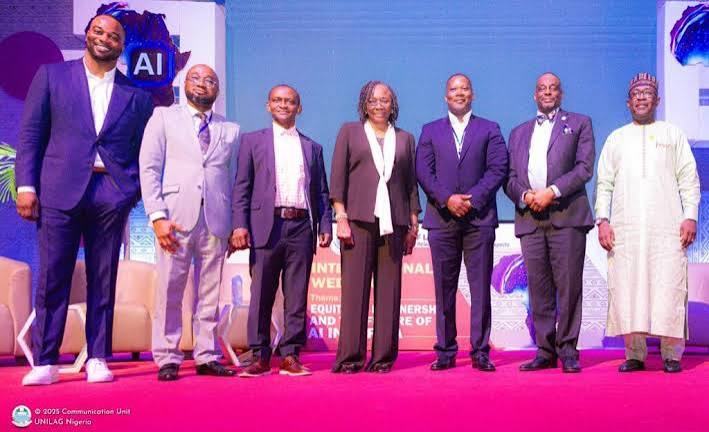
At UNILAG's International Week, leaders from the University of Ghana, UNILAG and UNDP argued that AI makes memorisation-based teaching obsolete and urged universities to reform curricula, assessment and incentives to reward critical thinking and innovation.
 Tech & Education
Otti’s Wife Supports 1,000 Abia Pupils With School Materials
The wife of the Abia State Governor, Mrs. Priscilla Otti, has distributed back-to-school materials to 1,000 indigent pupils from 50 public schools across the state's 17 local government areas, declaring that a child's background should never be a barrier to greatness. The intervention, organised by the Safe Tent Care Initiative in collaboration with the Abia State Universal Basic Education Board, is designed to support families struggling to provide essential educational materials for their chil
 Tech & Education
AI Era: Experts Warn Nigerian Graduates Face Skills Gap
Education experts have warned that Nigerian universities risk producing graduates who are ill-prepared for an AI-driven global job market unless curricula are urgently overhauled. At the StudyIn Global Study Conference 2026 in Lagos, stakeholders called for proactive curriculum reform, ethical AI adoption, and a shift from producing AI users to nurturing AI innovators who can solve real-world problems.
 Tech & Education
YABATECH, Threatremeter Launch Filmmaking Centre
Yaba College of Technology has signed a partnership with Threatremeter Nigeria Limited to establish a Centre for Filmmaking and Production, offering certified training in acting, directing and film production for students and the public.
Comments (0)
Leave a comment
All comments are moderated before publishing. Your email is never published.