
Adeleke University Commissions 200kWp Solar System to Ensure Reliable Power Supply
Adeleke University has inaugurated a 200-kilowatt peak solar power system to guarantee uninterrupted electricity supply and reduce dependence on the national grid and diesel generators.
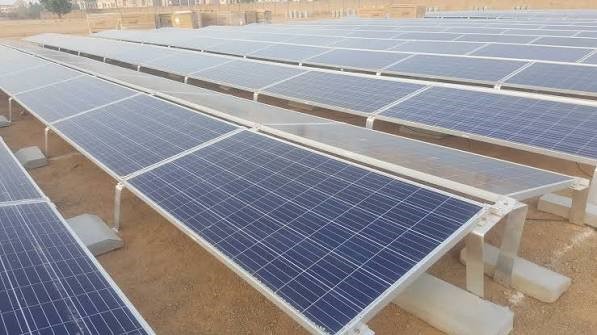
Adeleke University, Ede, has commissioned a 200-kilowatt peak (kWp) solar power system, marking a major step towards achieving energy independence and ensuring uninterrupted academic and administrative activities on campus. The project, which was officially inaugurated on Saturday, is expected to significantly reduce the institution’s dependence on the national grid and diesel generators, while also cutting operational costs and promoting environmental sustainability.
The solar installation, which includes a battery storage system, is designed to provide a stable and reliable power supply across key facilities such as lecture halls, laboratories, the university library, administrative blocks, and student hostels. University officials say the project aligns with the institution’s long-term vision of becoming a model green campus in Nigeria.
Speaking at the commissioning ceremony, the Vice Chancellor of Adeleke University, **Professor Solomon Adebola**, described the solar project as a strategic investment in the future of the institution. He noted that erratic power supply has remained one of the biggest challenges facing tertiary institutions in Nigeria, often disrupting lectures, research activities, and the general welfare of students and staff.
“Power supply has been a major constraint in the smooth running of academic programmes in many Nigerian universities. With this solar system, we are taking a decisive step to eliminate that challenge,” Professor Adebola said. “Our goal is to create an environment where learning and research can take place without the constant interruption of power outages. This project is also part of our broader commitment to sustainability and reducing our carbon footprint.”
The university’s management revealed that the solar installation is expected to generate substantial savings on diesel and electricity bills, which have continued to rise due to inflation and the removal of fuel subsidies. Officials estimate that the project will reduce the institution’s monthly energy expenditure by more than 60 per cent, freeing up resources that can be redirected towards academic development, staff welfare, and infrastructural upgrades.
The project was executed in partnership with a reputable renewable energy firm, which also provided technical training for selected university staff to ensure proper maintenance and long-term sustainability of the system. University sources say the solar panels were installed on designated rooftops and open spaces within the campus to maximise sunlight exposure.
Adeleke University’s move has been welcomed by education and environmental stakeholders, many of whom believe it could serve as a model for other tertiary institutions struggling with unreliable power supply. Several universities across the country have, in recent years, begun exploring renewable energy options, but few have achieved the scale of Adeleke University’s installation.
The Chairman of the university’s Governing Council, **Professor Adedotun Phillips**, noted that the solar project reflects the vision of the university’s founder, **Dr. Adedeji Adeleke**, who has consistently emphasised the importance of self-reliance and innovation in the running of the institution.
“From inception, this university was conceived as a centre of excellence that would not only produce quality graduates but also demonstrate leadership in innovation and sustainability,” Professor Phillips said. “This solar project is a practical demonstration of that vision.”
Beyond cost savings, the solar system is expected to deliver significant environmental benefits by reducing the university’s carbon emissions and dependence on fossil fuels. University officials say the project aligns with global efforts to combat climate change and promote clean energy adoption in educational institutions.
Students and staff have also expressed excitement about the development. Many noted that reliable electricity would improve the quality of academic work, enable longer study hours, and enhance the overall campus experience. Some departments, particularly those in the sciences and engineering, are expected to benefit immensely from the stable power supply for laboratory work and research activities.
The university has indicated that it plans to expand the solar installation in phases, with a long-term target of achieving near-total energy independence. Officials also hinted at the possibility of extending some of the benefits of the project to neighbouring communities as part of the institution’s corporate social responsibility efforts.
As Nigerian universities continue to grapple with infrastructural challenges, Adeleke University’s solar initiative stands out as a forward-thinking example of how institutions can leverage renewable energy to improve operational efficiency and create a more conducive learning environment.
Sponsored

Related stories
 Tech & Education
Bamidele Unveils N200m Renovated Science College
Senate Leader Opeyemi Bamidele has commissioned the renovated Government Science College, Iyin-Ekiti, personally funded at over N200 million, donating buses to the school and nearby FUTESI while promising a second phase of upgrades.
 Tech & Education
Abia Students Crowned Global Debate Champions
Students from public schools in Abia State, representing Nigeria, have emerged overall champions at the 2026 International Schools Debate Championship in Doha, Qatar, winning four major trophies and 12 laurels after defeating teams from Jordan, India, Qatar, the Philippines, Kenya and others. The historic victory has been hailed as proof that Governor Alex Otti's education reforms are producing world-class scholars.
 Tech & Education
WAEC Appoints Suleiman Kum as New Head of Nigeria National Office
The West African Examinations Council has appointed 56-year-old Suleiman Danlami Kum as the new Head of the Nigeria National Office, succeeding Dr Amos Josiah Dangut, who has assumed office as the council’s Registrar and Chief Executive Officer. A seasoned test developer, administrator and executive with 28 years of service, Kum is expected to drive technological innovation and examination security across Nigeria’s foremost examinations body.
 Tech & Education
Emmanuel College ’88 Set Renovates Classrooms, Pays Exam Fees
The Progressives of the Unique 1988 Set of Emmanuel College Owerri have unveiled a renovated five-classroom block and paid NECO and WAEC fees for financially disadvantaged students at their alma mater.
Comments (0)
Leave a comment
All comments are moderated before publishing. Your email is never published.