
ASUP Declares Indefinite Strike in South-West Polytechnics Over Unpaid Allowances
The Academic Staff Union of Polytechnics (ASUP), Zone C, has grounded academic activities in all state-owned polytechnics, colleges of technology, and monotechnics across Ogun, Oyo, Osun, and Ekiti states, declaring an indefinite strike over the non-implementation of the Consolidated Academic Tools Allowance (CATA) and Earned Academic Allowance (EAA). The strike, which began on Monday, November 16, 2026, follows the expiration of a 15-day ultimatum—and exposes a widening gulf between federal pol

Academic activities have ground to a halt across state-owned polytechnics, colleges of technology, and monotechnics in Ogun, Oyo, Osun, and Ekiti states after the Academic Staff Union of Polytechnics (ASUP), Zone C, declared an indefinite strike over the non-implementation of two key academic allowances.
The industrial action, which took effect on Monday, November 16, 2026, was announced by the union’s Zonal Executive Council at a press conference held at the ASUP Secretariat, The Polytechnic, Ibadan, Oyo State. The strike followed the expiration of a 15-day ultimatum issued to the four state governments on November 10, 2026, after repeated written appeals—first on August 10 and again as a reminder on September 21—failed to yield any response.
At the heart of the dispute is a fundamental question of equity. ASUP Zone C says the Federal Government concluded the renegotiation of its 2009/2010 agreement with the union in April 2026 under the Yayale Ahmed-led committee, producing the 2025/2026 FGN/ASUP Agreement, with implementation effective from January 1, 2026. That agreement provides for the Consolidated Academic Tools Allowance (CATA) and the Earned Academic Allowance (EAA) for academic staff on the Consolidated Polytechnics and Colleges of Education Academic Staff Salary Structure (CONPCASS).
The Federal Government has since commenced payment to lecturers in federal polytechnics. But ten months later, their counterparts in state-owned institutions across Ogun, Oyo, Osun, and Ekiti have received nothing—despite, the union insists, performing the same duties and enduring the same economic hardship.
“State governments should endeavour to treat our members in state-owned institutions appropriately, not as second-class citizens within the same national economy,” ASUP demanded in its statement. The union’s core demands are unambiguous: the immediate implementation of CATA and EAA for academic staff in state-owned polytechnics, colleges of technology, and monotechnics across the four states, and the payment of all accrued arrears from January 1, 2026, to date.
The strike is not a decision the union says it took lightly. ASUP’s 118th National Executive Council meeting, held in Abuja between October 23 and 24, 2026, resolved to issue the ultimatum only after the affected governments failed to respond to earlier correspondence. When the ultimatum expired without action, the Zonal Executive Council had no option but to direct all state chapters to proceed on indefinite strike.
There is one state that has broken ranks—in a positive sense. Ondo State has been singled out for commendation as the first and only state in the zone to implement the 2025/2026 agreement, with the governor also promising to clear outstanding arrears in two instalments scheduled for November 2026 and February 2027. Nationwide, seven states have complied: Ondo, Yobe, Kano, Bayelsa, Niger, Abia, and Taraba. The contrast with Ogun, Oyo, Osun, and Ekiti could hardly be starker.
For students in the affected states, the strike is a familiar and painful disruption. Polytechnics and colleges of technology are already grappling with a calendar still recovering from previous industrial actions and the lingering effects of the COVID-19 pandemic. An indefinite strike threatens to push graduation dates further back, strand final-year students awaiting clearance, and deepen the anxiety of families who have already paid tuition and accommodation fees for a session now frozen in place. The union has not announced a timeline for further negotiations, and the state governments have yet to issue a substantive response to the strike.
The broader stakes extend beyond the four states. The strike raises uncomfortable questions about the treatment of state-employed lecturers within Nigeria’s federal system. If the Federal Government can implement CATA and EAA for its polytechnic staff, why should state governments—some of which are not materially poorer—refuse to follow suit? ASUP’s answer is that ownership of an institution should not determine the entitlements of lecturers performing comparable duties within the same national education system.
For now, the polytechnics are shut. Classrooms are empty. And the four state governments have a choice: negotiate, pay, or watch an academic season slip away. The union has made its position clear. The question is whether anyone in Ogun, Oyo, Osun, and Ekiti is listening.
Sponsored

Related stories
 Tech & Education
Slum2School’s Solar-Powered River School Wins Global Environmental Award
A charity-run kindergarten and primary school in Epe, Lagos, has done what no Nigerian school has done before: Slum2School Green Academy has won the Environmental Action prize at the 2026 World’s Best School Prizes, beating finalists from across the globe. Built from bamboo, powered by the sun, and serving 250 children from river communities, the school is now headed to London to present its model to policymakers,proof that Nigerian education can lead the world, not just follow it.
 Tech & Education
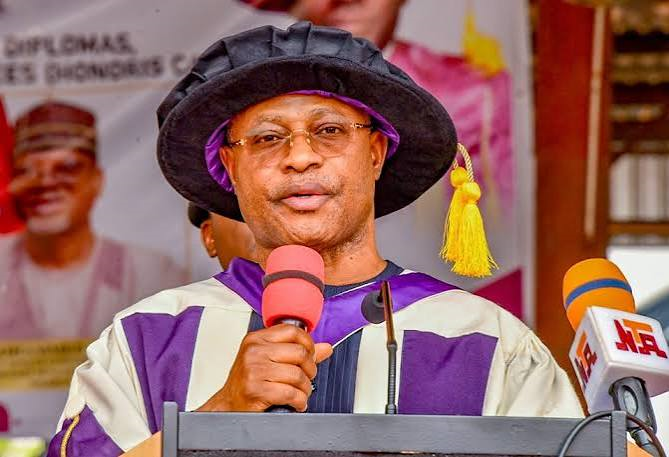
FUT Babura Appoints Agronomy Professor Hussaini as Vice-Chancellor
The Governing Council of the Federal University of Technology, Babura, has appointed Professor Muhammad Auwal Hussaini,a renowned agronomist and former Provost of Bilyaminu Usman College of Agriculture—as its new Vice-Chancellor, defeating six other professors in a fiercely contested selection. With a mandate to deliver science, technology, and practical skills education to a young university of 3,000 students, Hussaini’s tenure begins January 27, 2027. Pro-Chancellor Onimawo Ignatius Akhakhia i
 Tech & Education
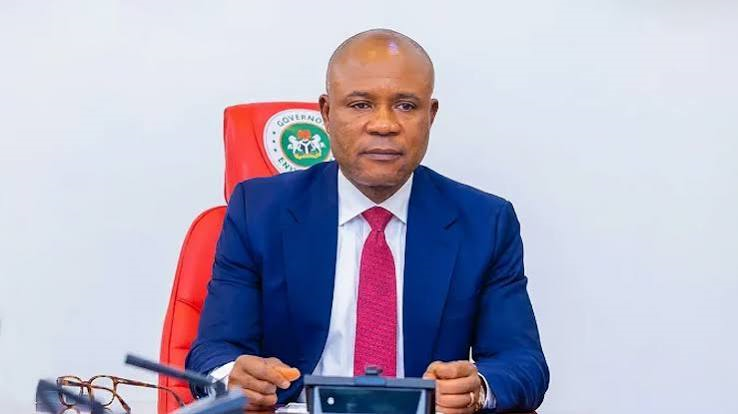
Mbah Proposes Renaming ESUT After Founder Jim Nwobodo
Governor Peter Mbah has set in motion the legal process to rename the Enugu State University of Science and Technology (ESUT) after its founder, Second Republic Governor Jim Nwobodo, as the institution marks 46 years since its establishment. The proposal, first pushed by the ESUT Alumni Association, requires approval from the Enugu State House of Assembly—but the announcement has already ignited a fierce debate about legacy, politics, and the price of honouring a founding father.
 Tech & Education
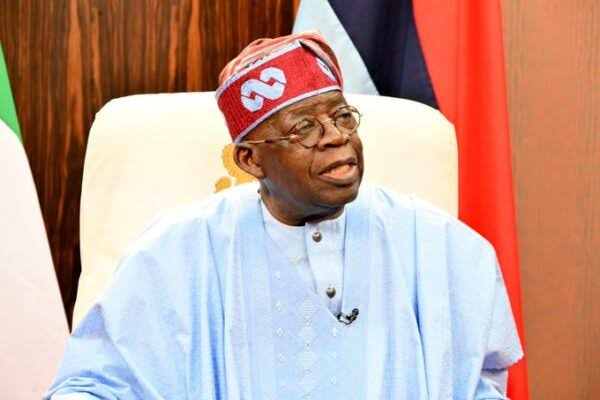
Tinubu Unveils Africa’s First University of Public Relations and Leadership
President Bola Ahmed Tinubu has unveiled Nigeria’s—and Africa’s—first dedicated University of Public Relations and Leadership, a pioneering institution designed to professionalise public relations practice, train a new generation of ethical leaders, and position Nigeria as a continental hub for strategic communication. The initiative, championed by the Nigerian Institute of Public Relations, marks a historic shift from vocational training to degree-granting academic excellence in a field that sh
Comments (0)
Leave a comment
All comments are moderated before publishing. Your email is never published.