
Tinubu Unveils Africa’s First University of Public Relations and Leadership
President Bola Ahmed Tinubu has unveiled Nigeria’s—and Africa’s—first dedicated University of Public Relations and Leadership, a pioneering institution designed to professionalise public relations practice, train a new generation of ethical leaders, and position Nigeria as a continental hub for strategic communication. The initiative, championed by the Nigerian Institute of Public Relations, marks a historic shift from vocational training to degree-granting academic excellence in a field that sh
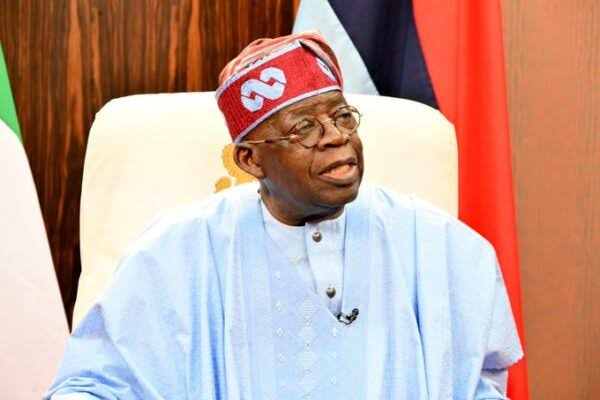
President Bola Ahmed Tinubu has unveiled the University of Public Relations and Leadership, a first-of-its-kind institution in Nigeria and across Africa, dedicated to the professionalisation of public relations practice and the cultivation of ethical, strategic leadership for the continent’s most consequential institutions.
The landmark unveiling, held in Abuja, represents the culmination of years of advocacy by the Nigerian Institute of Public Relations (NIPR) for the establishment of a specialised university that would elevate public relations from a vocation to a rigorous academic discipline. The institution is designed to offer degree programmes in public relations, strategic communication, crisis management, reputation management, political communication, and leadership studies,filling a gap that has long existed in Nigeria’s higher education landscape.
For Tinubu, the initiative aligns with a broader vision of repositioning Nigeria as a hub for professional excellence and soft power in Africa. In a world where perception is increasingly as consequential as policy, the ability to communicate effectively, manage reputations, and build trust has become a critical instrument of national development. The new university is intended to produce graduates who can operate at the highest levels of government, corporate Nigeria, international organisations, and the media, equipped with the theoretical grounding and practical skills that the modern communication landscape demands.
The NIPR has long argued that public relations in Nigeria has been practised without sufficient regulation, standardisation, or academic rigour—a gap that has allowed quacks to flourish and undermined public trust in the profession. The university is expected to address this by establishing a formal pipeline of professionally trained practitioners, with curricula benchmarked against global standards and delivered by faculty drawn from academia and industry. The institution is also expected to serve as a research hub, generating knowledge on communication, public opinion, crisis response, and leadership that can inform policy and practice across Africa.
The timing of the unveiling is significant. Nigeria’s public institutions and private sector continue to grapple with reputation challenges ,from crisis management failures to public distrust of government communication. The university offers a long-term response: a generation of professionals trained not merely to spin narratives but to build credibility through transparency, ethics, and strategic thinking. For a country seeking to attract foreign investment, project a positive image on the global stage, and strengthen democratic accountability, the capacity to communicate effectively and honestly is not a luxury,it is a strategic necessity.
The institution also signals a shift in how leadership is understood. Public relations and leadership are increasingly intertwined, as political, corporate, and civil society leaders are judged not only by the decisions they make but by how they explain them, defend them, and engage with the public. The university’s dual focus on public relations and leadership reflects a recognition that communication is not a technical function but a core leadership competency.
Stakeholders in the education and communication sectors have welcomed the initiative, though some have cautioned that the university must avoid the pitfalls that have undermined other specialised institutions—inadequate funding, weak regulatory oversight, and a gap between academic training and industry needs. The NIPR has indicated that the university will be governed by a board drawn from the profession, academia, and the private sector, with a mandate to maintain high standards and ensure that graduates are equipped for a rapidly evolving media environment.
For Nigeria, the University of Public Relations and Leadership is more than a new institution. It is a statement of intent: that the country intends to compete in the global marketplace of ideas, that it values the disciplines of persuasion and reputation, and that it is prepared to invest in the soft infrastructure of national influence. As Tinubu unveils this institution, the challenge will be to ensure that it lives up to its promise,producing not just graduates with degrees, but professionals with integrity, leaders with vision, and communicators capable of navigating the complexities of a rapidly changing world.
Sponsored

Related stories
 Tech & Education
JAMB Kills the Queue: Candidates Can Now Change Institutions and Courses From Their Bedrooms
The Joint Admissions and Matriculation Board (JAMB) has quietly dismantled one of the most frustrating rituals in Nigerian education: the physical pilgrimage to its offices to change institutions or courses. Under a new home-based service, candidates can now complete the entire process through the e-facility portal,using their registered email, a debit card, and a one-time password. It is a victory for convenience, a blow to middlemen, and a test of whether digital public services can actually w
 Tech & Education
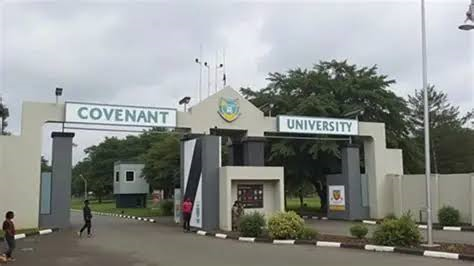
Covenant Leads African Universities as Nigeria Records 27 in Global Rankings
Covenant University has retained its crown as Africa’s top interdisciplinary science institution, placing joint 49th globally in the 2027 Times Higher Education rankings—the only African university in the world’s top 50 for a second consecutive year. Nigeria’s representation has soared to a record 27 universities, but behind the celebration lies a sobering warning: participation is rising faster than performance, with only two Nigerian institutions cracking the global top 300.
 Tech & Education
WAEC Opens 2027 WASSCE Registration, Introduces Hybrid Format
The West African Examinations Council has fired the starting gun on the 2027 WASSCE for school candidates, confirming a hybrid examination model that puts objective papers on-screen while essay and practical papers remain pen-and-paper. But as schools rush to upload CASS records and meet a January 2027 deadline, the suspended ₦50,000 registration fee hike looms over a process already clouded by cost, connectivity, and confusion.
 Tech & Education
FG Warns Nigerians Against Fake American University, Invalid Degrees
The Federal Ministry of Education has issued a national alert over an unapproved American university operating in Nigeria, warning that degrees obtained from the institution will not be recognised for employment, NYSC, or further studies. The warning comes amid a surge in fake foreign credentials and follows the ministry’s earlier crackdown on a dubious Republic of Benin PhD scheme—raising fresh questions about Nigeria’s ability to police a booming transnational education market.
Comments (0)
Leave a comment
All comments are moderated before publishing. Your email is never published.