
FG Warns Nigerians Against Fake American University, Invalid Degrees
The Federal Ministry of Education has issued a national alert over an unapproved American university operating in Nigeria, warning that degrees obtained from the institution will not be recognised for employment, NYSC, or further studies. The warning comes amid a surge in fake foreign credentials and follows the ministry’s earlier crackdown on a dubious Republic of Benin PhD scheme—raising fresh questions about Nigeria’s ability to police a booming transnational education market.

The Federal Ministry of Education has warned Nigerians against enrolling in an unapproved American university operating in the country, cautioning that qualifications obtained from the institution will not be recognised for employment, national service, or further academic pursuits.
The alert, issued by the ministry’s Director of Press and Public Relations, Folasade Boriowo, named the institution as “Washington University of Science and Technology (WUST), USA,” which it said has been operating in Nigeria without the requisite approval or accreditation from Nigerian authorities. The ministry said it had received credible reports of the institution marketing academic programmes to Nigerian students, and warned that any certificates issued would be treated as invalid.
“The Federal Ministry of Education wishes to inform the general public that Washington University of Science and Technology (WUST), USA, is not accredited to operate in Nigeria,” the statement read. “The ministry has not granted any approval for the institution to offer academic programmes or award degrees in Nigeria”. It urged Nigerians to verify the accreditation status of any foreign institution before enrolling, and to report suspicious operations to the ministry and relevant security agencies.
The warning is not an isolated intervention. In September 2026, the ministry issued a similar alert over a purported PhD programme offered in collaboration with the Universite Internationale de Management et de Technologie du Benin, which it said was being promoted to Nigerian students without approval. The ministry’s repeated warnings suggest a deepening concern about the proliferation of unaccredited foreign institutions targeting Nigerian students—often through aggressive online marketing, affiliated study centres, and promises of fast-track degrees.
The stakes for students are severe. Degrees from unapproved institutions are routinely rejected by employers, professional bodies, and foreign universities. Graduates are typically ineligible for the National Youth Service Corps, barred from public-sector employment, and unable to pursue postgraduate studies at recognised institutions. The financial cost can run into millions of naira, with many students taking loans or depleting family savings to fund qualifications that ultimately prove worthless.
The problem is compounded by the difficulty of verification. Foreign institutions operate across jurisdictions, and Nigerian regulators have limited capacity to monitor entities that may be registered abroad but function locally through agents, satellite campuses, or online platforms. The ministry’s warnings are a first line of defence, but they rely on public vigilance and media coverage to reach prospective students before they enrol.
The timing is significant. Nigeria’s appetite for foreign qualifications remains strong, driven by a competitive labour market, the perceived prestige of international degrees, and the desire for migration pathways. That demand has created fertile ground for unaccredited institutions and credential mills, which exploit the gap between aspiration and regulation. The ministry’s alert is an attempt to close that gap, but it also highlights the limits of a system that reacts to abuse rather than preventing it.
Stakeholders have called for more robust enforcement. The ministry has urged students to verify the accreditation status of any institution through its official channels and to seek independent confirmation from relevant embassies, accreditation bodies, and professional councils. It has also encouraged the public to report suspicious institutions and their promoters to the ministry and security agencies, suggesting a desire to move beyond warnings to active enforcement.
For Nigerian students and their families, the lesson is unambiguous: a foreign-sounding name and a slick website are not evidence of legitimacy. Accreditation is not a formality—it is the difference between a qualification that opens doors and one that closes them. The Federal Ministry of Education’s warning is a timely reminder that the burden of due diligence falls, in the first instance, on the student.
The broader challenge, however, is systemic. As long as demand for foreign degrees outstrips the supply of credible, affordable alternatives, unaccredited institutions will continue to find willing customers. The ministry’s alerts are necessary, but they are not sufficient. Until Nigeria strengthens its regulatory capacity, improves access to quality domestic education, and holds promoters of fraudulent institutions accountable, the warning will remain a recurring feature of the academic landscape—issued after the damage has already been done.
For now, the message is clear: Nigerians should verify before they enrol, and treat any institution operating without approval with the suspicion it deserves.
Sponsored

Related stories
 Tech & Education
WAEC Opens 2027 WASSCE Registration, Introduces Hybrid Format
The West African Examinations Council has fired the starting gun on the 2027 WASSCE for school candidates, confirming a hybrid examination model that puts objective papers on-screen while essay and practical papers remain pen-and-paper. But as schools rush to upload CASS records and meet a January 2027 deadline, the suspended ₦50,000 registration fee hike looms over a process already clouded by cost, connectivity, and confusion.
 Tech & Education
TRCN’s 2027 Ultimatum: Every Nigerian Teacher Must Be Licensed or Leave the Classroom
The Teachers Registration Council of Nigeria has drawn a hard line: by December 2027, no teacher—public or private, junior or senior—will be allowed near a classroom without professional certification and a practising licence. With over two million teachers on its platform but compliance still low, the council is deploying QR-coded certificates, WAEC/NECO data-sharing, and a 75 per cent certification threshold for schools seeking to register candidates for national exams. The message is unmistak
 Tech & Education
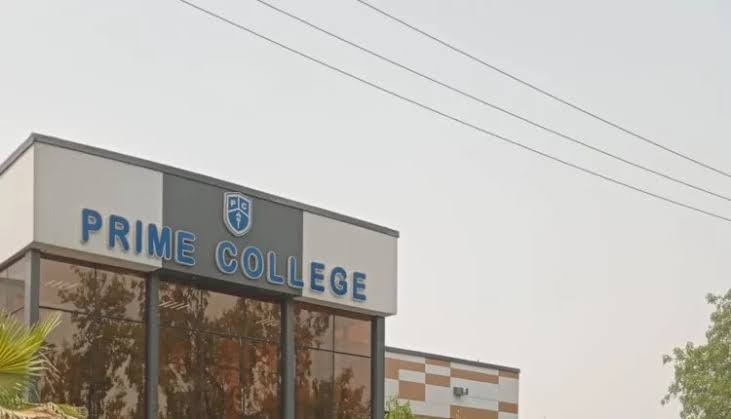
Kano Shuts Down Prime College Over Expired Licence, Threatens Permanent Closure
The Kano State Private and Voluntary Institutions Board has ordered the immediate two-week closure of Prime College, Nassarawa GRA, for operating without a valid Certificate of Operations. Executive Secretary Baba Abubakar-Umar says the school ignored repeated revalidation directives and now faces permanent shutdown if it fails to comply—a warning that no private institution in Kano is above the law.
 Tech & Education
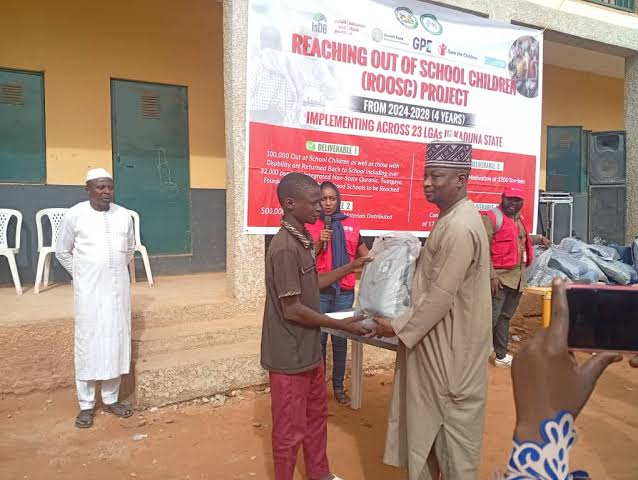
Oando Foundation, Kaduna Distribute 5,000 Learning Kits to Tackle Out-of-School Crisis
Kaduna State and Oando Foundation have launched a targeted distribution of back-to-school kits to 5,000 learners under the Reaching Out-of-School Children project—a four-year, $62.8 million intervention that has already mainstreamed over 40,000 children and trained more than 3,000 teachers. But with millions still locked out of classrooms, the question is whether this is a template for scaling or a drop in a very deep ocean.
Comments (0)
Leave a comment
All comments are moderated before publishing. Your email is never published.