
Kano Shuts Down Prime College Over Expired Licence, Threatens Permanent Closure
The Kano State Private and Voluntary Institutions Board has ordered the immediate two-week closure of Prime College, Nassarawa GRA, for operating without a valid Certificate of Operations. Executive Secretary Baba Abubakar-Umar says the school ignored repeated revalidation directives and now faces permanent shutdown if it fails to comply—a warning that no private institution in Kano is above the law.
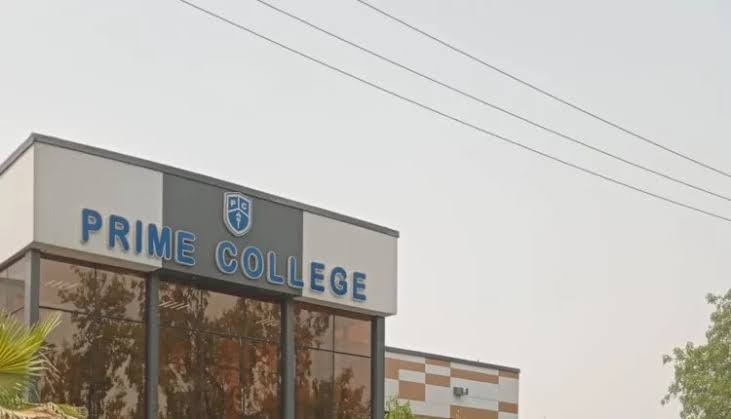
The Kano State Private and Voluntary Institutions Board (KSPVIB) has shut down Prime College, Kano, for two weeks with immediate effect, escalating a regulatory crackdown on private schools operating without valid certification and putting the institution’s long-term future on the line.
The enforcement closure, which took effect on Wednesday, November 18, 2026, targets Prime College’s campus at Alu Avenue, Nassarawa GRA. The board said the school had repeatedly failed to revalidate and recertify its Certificate of Operations despite being given ample time and official communication to do so.
Executive Secretary of the board, Malam Baba Abubakar-Umar, announced the decision in Kano, framing it as a last-resort regulatory measure rather than an act of hostility. He said the school was currently operating without a valid certificate, a direct violation of the state’s private education law, and that the two-week window is a final opportunity for management to regularise its status.
“Private schools in Kano must obtain valid certificates,” Abubakar-Umar said. “No institution is above regulatory compliance or the rule of law”. He cited Section 16(2) of the Kano State Private and Voluntary Institutions Board Law No. 2 of 2026, as amended, as the legal basis for the enforcement action.
The board’s warning was pointed: failure to comply within the two-week period could result in the permanent closure of Prime College. Abubakar-Umar stressed that the action was not intended for victimisation or personal vendetta, but to uphold standards, protect learners, and enforce the law uniformly across the state.
Prime College is not the first institution to face the board’s enforcement machinery. In October 2026, the KSPVIB temporarily shut nine private schools—including Zayyad Academy, Success International Schools, Sunshine International School, Perfect Schools, and Al-Fa’iq International College—for failing to meet registration renewal and recertification requirements. Those closures followed the expiration of previous certificates on July 31, 2026, and were tied to the new academic session’s licensing cycle. The board has consistently maintained that revalidation is not optional and that schools operating on expired licences pose risks to learners and the integrity of the education system.
The timing of the Prime College closure is significant. It comes as Kano’s private education sector faces heightened scrutiny over standards, fee compliance, and regulatory adherence. The board has previously warned proprietors against arbitrary fee increases and unregistered operations, signalling a broader push to bring the state’s sprawling private school market under tighter control.
For parents and students at Prime College, the immediate consequence is disruption. A two-week closure mid-term raises questions about academic continuity, examination schedules, and the school’s ability to retain staff and students if the standoff drags on. The board’s message, however, is that regulatory compliance cannot be sacrificed for institutional convenience.
Abubakar-Umar urged proprietors across Kano to cooperate fully with the board and fulfil their statutory obligations, warning that no private school would be exempted from the law. The board reaffirmed its commitment to protecting learners, promoting quality education, and ensuring that all institutions operate within the established regulatory framework.
The closure of Prime College is a test case for how far the KSPVIB is willing to go—and how quickly private schools will fall in line. If the institution uses the two weeks to recertify, the shutdown will be remembered as a firm but corrective nudge. If it does not, Kano may soon have its first permanent closure under the 2026 law—a precedent that would reverberate across the state’s private education landscape.
Sponsored

Related stories
 Tech & Education
WAEC Opens 2027 WASSCE Registration, Introduces Hybrid Format
The West African Examinations Council has fired the starting gun on the 2027 WASSCE for school candidates, confirming a hybrid examination model that puts objective papers on-screen while essay and practical papers remain pen-and-paper. But as schools rush to upload CASS records and meet a January 2027 deadline, the suspended ₦50,000 registration fee hike looms over a process already clouded by cost, connectivity, and confusion.
 Tech & Education
FG Warns Nigerians Against Fake American University, Invalid Degrees
The Federal Ministry of Education has issued a national alert over an unapproved American university operating in Nigeria, warning that degrees obtained from the institution will not be recognised for employment, NYSC, or further studies. The warning comes amid a surge in fake foreign credentials and follows the ministry’s earlier crackdown on a dubious Republic of Benin PhD scheme—raising fresh questions about Nigeria’s ability to police a booming transnational education market.
 Tech & Education
TRCN’s 2027 Ultimatum: Every Nigerian Teacher Must Be Licensed or Leave the Classroom
The Teachers Registration Council of Nigeria has drawn a hard line: by December 2027, no teacher—public or private, junior or senior—will be allowed near a classroom without professional certification and a practising licence. With over two million teachers on its platform but compliance still low, the council is deploying QR-coded certificates, WAEC/NECO data-sharing, and a 75 per cent certification threshold for schools seeking to register candidates for national exams. The message is unmistak
 Tech & Education
Oando Foundation, Kaduna Distribute 5,000 Learning Kits to Tackle Out-of-School Crisis
Kaduna State and Oando Foundation have launched a targeted distribution of back-to-school kits to 5,000 learners under the Reaching Out-of-School Children project—a four-year, $62.8 million intervention that has already mainstreamed over 40,000 children and trained more than 3,000 teachers. But with millions still locked out of classrooms, the question is whether this is a template for scaling or a drop in a very deep ocean.
Comments (0)
Leave a comment
All comments are moderated before publishing. Your email is never published.