
TRCN’s 2027 Ultimatum: Every Nigerian Teacher Must Be Licensed or Leave the Classroom
The Teachers Registration Council of Nigeria has drawn a hard line: by December 2027, no teacher—public or private, junior or senior—will be allowed near a classroom without professional certification and a practising licence. With over two million teachers on its platform but compliance still low, the council is deploying QR-coded certificates, WAEC/NECO data-sharing, and a 75 per cent certification threshold for schools seeking to register candidates for national exams. The message is unmistak
Teachers Registration Council of Nigeria (TRCN) has issued a national ultimatum with seismic implications for the country’s education workforce: by December 2027, every practising teacher in Nigeria must obtain professional certification and a valid practising licence, or be barred from the classroom.
Registrar and Chief Executive of TRCN, Dr Ronke Soyombo, announced the deadline during an interaction with journalists in Abuja, warning that teaching without the requisite credentials would no longer be tolerated. The policy applies universally—public and private schools, junior and senior cadres, and even the highest echelons of public office. To underscore the point, Soyombo revealed that the Deputy Governor of Adamawa State, Prof. Kaletapwa Farauta, recently sat for the council’s Professional Qualifying Examination (PQE), a first for a sitting deputy governor. “That is to tell you that everybody who owns schools or is making efforts in education is coming to sit for the exam,” Soyombo said.
The architecture of the new regime is two-tiered. Professional certification is obtained once in a teacher’s lifetime. Practising licences, however, must be renewed every three years, and renewal is contingent on evidence of participation in Mandatory Continuous Professional Development (MCPD) programmes. “Every teacher must be certified, every teacher must be licensed before they can actually teach in our schools,” Soyombo declared. Graduates of education programmes are now required to sit for the TRCN qualifying examination before completing their training, while serving teachers must also undergo the examination to secure professional recognition.
The compliance gap is staggering. More than two million teachers are registered on the council’s online platform, yet many have not completed certification and licensing. To bridge the divide, TRCN has introduced an accelerated professionalisation pathway for teachers without education degrees, allowing them to acquire the necessary qualifications. Participation in the qualifying examination has surged—from roughly 13,000 candidates when Soyombo assumed office in May 2025 to approximately 26,000 by November of the same year—driven by the introduction of online registration and an upgraded examination platform capable of handling 5,000 candidates simultaneously, up from just 120.
Enforcement is being tightened on multiple fronts. TRCN is proposing that schools seeking to register candidates for National Examinations Council (NECO) examinations demonstrate that at least 75 per cent of their teachers are professionally certified. The council has interfaced its website with those of the West African Examinations Council (WAEC) and NECO to facilitate credential verification, and has introduced QR codes on certificates to combat forgery.
The integrity challenges are real and sobering. During a recent PQE in Taraba State, an invigilator uncovered more than 47 suspected impersonators. In Nasarawa State, 250 fake certificates were discovered during a teacher recruitment exercise, and a suspect is in custody over alleged certificate forgery. TRCN has responded with photographs, surveillance cameras, and improved identity-verification technology to protect the examination process.
For Nigeria’s education system, the 2027 deadline represents both an opportunity and a reckoning. A fully certified, licensed teaching workforce would raise professional standards, improve learning outcomes, and restore public confidence in a sector long plagued by unqualified personnel. But the scale of the task is immense, and the council’s ability to enforce compliance across millions of teachers—many in remote rural schools beyond the reach of regulatory oversight—remains uncertain.
What is clear is that TRCN is no longer asking. It is demanding. By the end of 2027, the council expects every teacher in Nigeria to be fully certified and licensed. Those who are not will have no place in the classroom.
Sponsored

Related stories
 Tech & Education
WAEC Opens 2027 WASSCE Registration, Introduces Hybrid Format
The West African Examinations Council has fired the starting gun on the 2027 WASSCE for school candidates, confirming a hybrid examination model that puts objective papers on-screen while essay and practical papers remain pen-and-paper. But as schools rush to upload CASS records and meet a January 2027 deadline, the suspended ₦50,000 registration fee hike looms over a process already clouded by cost, connectivity, and confusion.
 Tech & Education
FG Warns Nigerians Against Fake American University, Invalid Degrees
The Federal Ministry of Education has issued a national alert over an unapproved American university operating in Nigeria, warning that degrees obtained from the institution will not be recognised for employment, NYSC, or further studies. The warning comes amid a surge in fake foreign credentials and follows the ministry’s earlier crackdown on a dubious Republic of Benin PhD scheme—raising fresh questions about Nigeria’s ability to police a booming transnational education market.
 Tech & Education
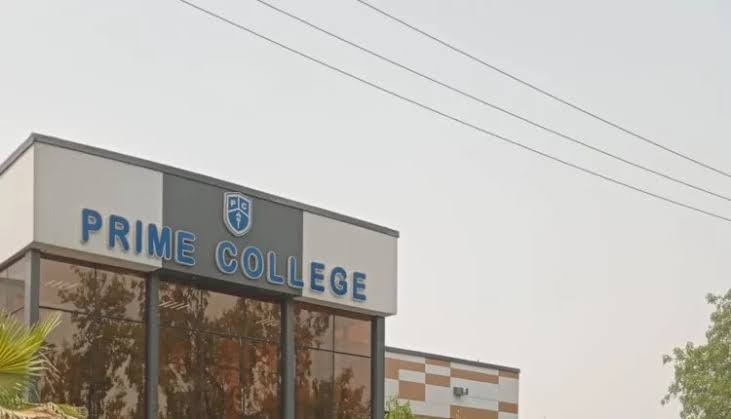
Kano Shuts Down Prime College Over Expired Licence, Threatens Permanent Closure
The Kano State Private and Voluntary Institutions Board has ordered the immediate two-week closure of Prime College, Nassarawa GRA, for operating without a valid Certificate of Operations. Executive Secretary Baba Abubakar-Umar says the school ignored repeated revalidation directives and now faces permanent shutdown if it fails to comply—a warning that no private institution in Kano is above the law.
 Tech & Education
Oando Foundation, Kaduna Distribute 5,000 Learning Kits to Tackle Out-of-School Crisis
Kaduna State and Oando Foundation have launched a targeted distribution of back-to-school kits to 5,000 learners under the Reaching Out-of-School Children project—a four-year, $62.8 million intervention that has already mainstreamed over 40,000 children and trained more than 3,000 teachers. But with millions still locked out of classrooms, the question is whether this is a template for scaling or a drop in a very deep ocean.
Comments (0)
Leave a comment
All comments are moderated before publishing. Your email is never published.