
Oando Foundation, Kaduna Distribute 5,000 Learning Kits to Tackle Out-of-School Crisis
Kaduna State and Oando Foundation have launched a targeted distribution of back-to-school kits to 5,000 learners under the Reaching Out-of-School Children project—a four-year, $62.8 million intervention that has already mainstreamed over 40,000 children and trained more than 3,000 teachers. But with millions still locked out of classrooms, the question is whether this is a template for scaling or a drop in a very deep ocean.
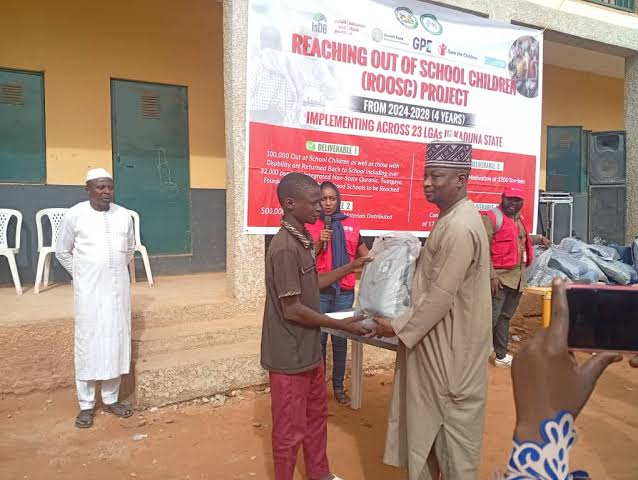
Kaduna State Government and Oando Foundation on Tuesday distributed back-to-school kits to 5,000 learners under the Reaching Out-of-School Children (ROOSC) project, in a pointed intervention aimed at pulling vulnerable children back into classrooms and keeping them there.
The symbolic launch, held at Hayin Banki in Kaduna North Local Government Area, saw school bags, exercise books, rulers, pens, and erasers handed to program beneficiaries—materials that, for many families, represent the thin line between a child returning to school and dropping out for good. The distribution targets 12 schools across six local governments, deliberately focusing on hard-to-reach and hinterland communities where out-of-school children are most concentrated.
The event drew a cross-section of state and development partners, underscoring the collaborative architecture behind the ROOSC project. Hon. Mahmud Lawal Ismaila, Chairman of the Kaduna State House of Assembly’s House Committee on Education, described the out-of-school crisis as more than an educational failure—it is a social and developmental emergency that no single actor can resolve. He commended Oando Foundation for buying into the state’s vision and urged other partners to deepen their engagement.
Commissioner for Education Prof. Abubakar Sani Sambo framed the intervention as a product of alignment. After conducting its own assessment, he said, Oando Foundation found that Governor Uba Sani’s educational priorities mirrored its own theory of change, leading to the donation of more than 5,000 units of learning materials. Sambo noted that many children leave school not because of a lack of ambition, but because their parents cannot afford basic items like school bags—or because parental interest in education has lapsed. The kits, he argued, address both the material and motivational barriers that keep children out of classrooms.
Tonia Uduimoh, Head of Oando Foundation, said the partnership was not a spontaneous gesture but the result of a deliberate appraisal. She encountered the ROOSC project coordinator at a Federal Ministry of Education event in Jos, reviewed the program’s theory of change and its partners—including Save the Children and UNICEF—and concluded that the Foundation had to be part of the initiative. “Education is a right for every child,” she said, stressing that ROOSC offers an end-to-end mechanism that ensures children remain in school after being mobilized, rather than simply receiving kits and being left to fend for themselves.
The scale of the challenge is immense. Project Coordinator Ezra Angai revealed that ROOSC has already mainstreamed over 40,000 learners and distributed 50,000 learning materials, while more than 3,000 teachers have received professional development training. The four-year project is backed by a coalition of heavyweights—the Islamic Development Bank, Kuwait Fund for Arab Economic Development, the Global Partnership for Education, Education Above All, Save the Children International, and UNICEF—with funding of $62.8 million.
Alhaji Mubarak Mohammed, Executive Chairman of the Kaduna State Universal Basic Education Board, described the event as the symbolic launch of a distribution made possible by ROOSC and funded by Oando Foundation, signalling that the kits are part of a structured, data-driven rollout rather than a one-off philanthropic gesture.
For Kaduna, the political stakes are high. Governor Uba Sani has staked his administration’s reputation on expanding access to education, and the ROOSC partnership gives him a tangible delivery vehicle. For Oando Foundation, the intervention reinforces its growing footprint in northern Nigeria’s education landscape. For the 5,000 children receiving kits, the immediate benefit is practical: a bag to carry books, materials to write with, and a signal that their education matters.
But the deeper question remains unanswered. Kaduna, like much of northern Nigeria, continues to grapple with an out-of-school crisis of staggering proportions. Distributing 5,000 kits to targeted communities is a surgical intervention, not a systemic cure. The real test will be whether the ROOSC model—data-driven mapping, end-to-end support, teacher training, and multi-partner funding—can be replicated at a scale that matches the magnitude of the problem. If it can, Hayin Banki may be remembered as the day a template was born. If it cannot, the kits will remain what they are for now: a lifeline for a fortunate few, in a state where millions still wait.
Sponsored

Related stories
 Tech & Education
WAEC Opens 2027 WASSCE Registration, Introduces Hybrid Format
The West African Examinations Council has fired the starting gun on the 2027 WASSCE for school candidates, confirming a hybrid examination model that puts objective papers on-screen while essay and practical papers remain pen-and-paper. But as schools rush to upload CASS records and meet a January 2027 deadline, the suspended ₦50,000 registration fee hike looms over a process already clouded by cost, connectivity, and confusion.
 Tech & Education
FG Warns Nigerians Against Fake American University, Invalid Degrees
The Federal Ministry of Education has issued a national alert over an unapproved American university operating in Nigeria, warning that degrees obtained from the institution will not be recognised for employment, NYSC, or further studies. The warning comes amid a surge in fake foreign credentials and follows the ministry’s earlier crackdown on a dubious Republic of Benin PhD scheme—raising fresh questions about Nigeria’s ability to police a booming transnational education market.
 Tech & Education
TRCN’s 2027 Ultimatum: Every Nigerian Teacher Must Be Licensed or Leave the Classroom
The Teachers Registration Council of Nigeria has drawn a hard line: by December 2027, no teacher—public or private, junior or senior—will be allowed near a classroom without professional certification and a practising licence. With over two million teachers on its platform but compliance still low, the council is deploying QR-coded certificates, WAEC/NECO data-sharing, and a 75 per cent certification threshold for schools seeking to register candidates for national exams. The message is unmistak
 Tech & Education
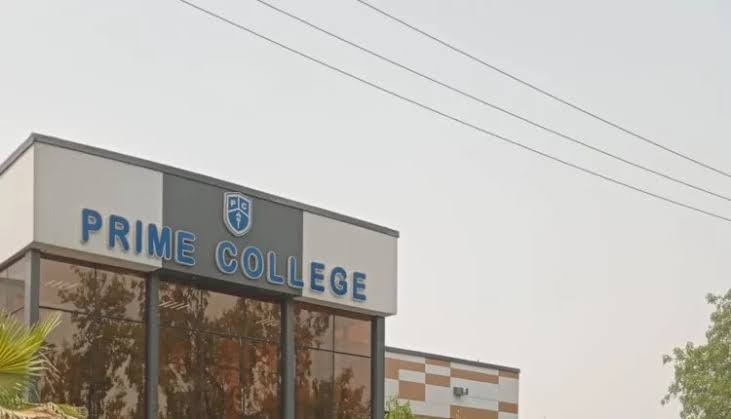
Kano Shuts Down Prime College Over Expired Licence, Threatens Permanent Closure
The Kano State Private and Voluntary Institutions Board has ordered the immediate two-week closure of Prime College, Nassarawa GRA, for operating without a valid Certificate of Operations. Executive Secretary Baba Abubakar-Umar says the school ignored repeated revalidation directives and now faces permanent shutdown if it fails to comply—a warning that no private institution in Kano is above the law.
Comments (0)
Leave a comment
All comments are moderated before publishing. Your email is never published.