
WAEC Result Crisis Worsens as Official Alleges Irregularities, Glitches
The crisis over WAEC’s 2026 school-candidate results has deepened after a senior WAEC official, Olanrewaju Fadehan, alleged glitches and irregularities in the computer-based examination, claiming affected candidates were disadvantaged in Mathematics, English and Igbo.
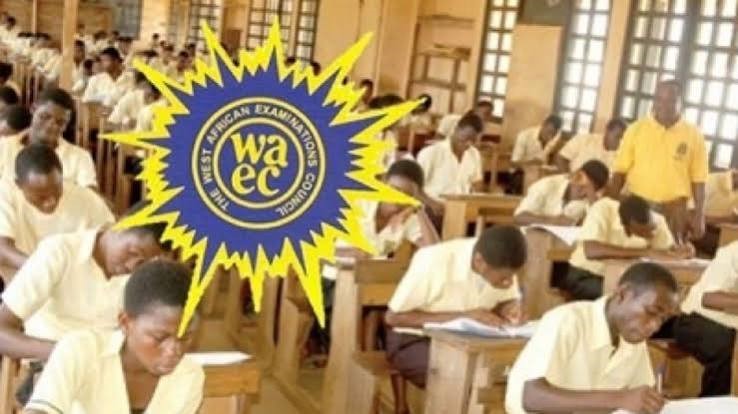
The crisis surrounding the West African Examinations Council (WAEC) 2026 results for school candidates has deepened following allegations of glitches and irregularities made by an official of the examination body.
The Head of Examinations at the WAEC office covering Anambra, Olanrewaju Fadehan, made the allegations in a now-viral video, claiming that candidates who sat the computer-based version of the examination were particularly affected.
Fadehan alleged that problems became noticeable around the release of the results, which he said was initially expected to be announced between August 3 and 5, 2026, adding that WAEC had traditionally released results on Mondays.
“Obviously, there was a problem because the press was eagerly waiting on Monday, the scheduled date. There was a need to quickly do some last-minute adjustments. Something was wrong,” he said.
According to him, the alleged last-minute adjustments affected candidates who sat the computer-based examination, particularly in subjects including Mathematics, English and Igbo.
He also expressed concern over reports that some candidates from the South-East performed poorly in Igbo, despite the subject being widely spoken in the region.
Fadehan said schools that invested heavily in computer-based examination facilities were also affected, alleging that some spent over N60 million establishing the facilities in anticipation of the transition to CBT.
“The call for a review this year is particularly disturbing, as it is alarming. Schools that subscribed to the CBT innovation of WAEC were badly hit. Some of them spent upwards of N60m and above to set up their CBT facilities,” he alleged.
He further alleged that some candidates were not provided with appropriate calculators during the examination, claiming that the development contributed to poor performance in Mathematics and other calculation-based subjects.
Fadehan said he had raised concerns about the alleged irregularities during the examination and subsequently petitioned relevant authorities, including the WAEC Board, the House of Representatives Committee on Basic Education and Examining Bodies, and the Minister of Education.
He alleged that rather than addressing his complaints, he was subjected to disciplinary proceedings and subsequently placed on interdiction.
“I call on the President of the Federal Republic of Nigeria, President Bola Ahmed Tinubu, to investigate the cause of failure of candidates, particularly those who chose the computer-based WAEC,” he said.
He also made allegations of financial impropriety against the management of the examination body, including claims concerning the supply of calculators, students’ identification cards and charges imposed on candidates and other service seekers.
He urged the federal government and other stakeholders to investigate the allegations, stressing that the integrity of the examination system was important to the future of Nigerian students.
When contacted for a reaction to the allegations on Thursday, the WAEC Head of Public Affairs, Moyosola Adesina, declined to comment on the matter.
“No comment for now,” she said.
The PUNCH reported on August 18 that the examination body is facing growing scrutiny over the integrity of its released WASSCE results for school candidates, as school administrators and education advocates allege grading anomalies and technical glitches linked to the expanded Computer-Based Testing rollout.
The concerns followed complaints from school administrators and education advocates who claim that some high-performing students received lower grades than expected, based on their academic records and performance in other standardised assessments.
An education advocacy group, the Initiative for School Excellence and Education Foundation, had earlier given WAEC 14 days to address concerns over the credibility of the 2026 results or face legal action, calling for an independent verification exercise.
The deepening crisis raises questions about the transparency of the computer-based examination process, the adequacy of WAEC’s response to complaints and the measures needed to protect the integrity of the examination system and the future of affected candidates.
Sponsored

Related stories
 Tech & Education
Bamidele Unveils N200m Renovated Science College
Senate Leader Opeyemi Bamidele has commissioned the renovated Government Science College, Iyin-Ekiti, personally funded at over N200 million, donating buses to the school and nearby FUTESI while promising a second phase of upgrades.
 Tech & Education
Abia Students Crowned Global Debate Champions
Students from public schools in Abia State, representing Nigeria, have emerged overall champions at the 2026 International Schools Debate Championship in Doha, Qatar, winning four major trophies and 12 laurels after defeating teams from Jordan, India, Qatar, the Philippines, Kenya and others. The historic victory has been hailed as proof that Governor Alex Otti's education reforms are producing world-class scholars.
 Tech & Education
WAEC Appoints Suleiman Kum as New Head of Nigeria National Office
The West African Examinations Council has appointed 56-year-old Suleiman Danlami Kum as the new Head of the Nigeria National Office, succeeding Dr Amos Josiah Dangut, who has assumed office as the council’s Registrar and Chief Executive Officer. A seasoned test developer, administrator and executive with 28 years of service, Kum is expected to drive technological innovation and examination security across Nigeria’s foremost examinations body.
 Tech & Education
Emmanuel College ’88 Set Renovates Classrooms, Pays Exam Fees
The Progressives of the Unique 1988 Set of Emmanuel College Owerri have unveiled a renovated five-classroom block and paid NECO and WAEC fees for financially disadvantaged students at their alma mater.
Comments (0)
Leave a comment
All comments are moderated before publishing. Your email is never published.