
Senate Passes Bill to Boost Funding Access for Small Businesses
The Senate has passed the Factoring, Assignments and Receivables Financing Bill, 2026, aimed at improving access to finance, boosting liquidity, supporting small businesses and enhancing trade across Nigeria.

The Senate on Tuesday passed the Factoring, Assignments and Receivables Financing Bill, 2026, a legislation aimed at improving access to finance for businesses, increasing liquidity and supporting domestic and international trade.
The bill, which scaled third reading during plenary, seeks to establish a legal framework for receivables financing, a system that allows businesses to convert unpaid invoices into immediate cash by selling them to financiers at a discount.
Lawmakers considered and adopted the bill in the Committee of the Whole before its final passage.
Leading debate on the legislation, Senate Leader Opeyemi Bamidele moved the motion for the bill’s third reading and urged lawmakers to support its passage. The motion was seconded by Minority Leader Abba Moro, who highlighted the expected benefits of the measure for businesses and the economy.
Following a voice vote, Senate President Godswill Akpabio announced the passage of the bill.
Before the final approval, the Clerk of the Senate read the bill’s long title, which seeks to provide legal certainty, transparency and modern legal backing for receivables financing transactions.
The proposed law is titled: “A Bill for an Act to provide for the assignment of receivables, establish legal certainty, promote transparency, modernise assignment laws, facilitate access to credit, enhance domestic and international trade and for related matters.”
Speaking after its passage, Akpabio commended both chambers of the National Assembly for advancing the legislation, expressing confidence that it would stimulate trade and support economic growth.
He said the law would strengthen both domestic and international commerce while helping Nigeria improve its trade balance with other countries.
Factoring is regarded globally as an alternative financing mechanism that enables businesses, especially Micro, Small and Medium Enterprises, to unlock working capital tied up in unpaid invoices rather than relying solely on traditional bank loans.
Industry stakeholders have repeatedly argued that the absence of a clear legal framework has limited the growth of receivables financing in Nigeria despite its potential to improve cash flow, strengthen operations and expand access to credit.
Lawmakers believe the new framework will increase confidence among financiers, investors and businesses involved in receivables financing while aligning Nigeria’s commercial laws with international best practices.
Supporters of the bill also say easier access to working capital will help businesses expand operations, create jobs, fulfil contracts more efficiently and compete more effectively in local and global markets.
The bill will now be transmitted to President Bola Tinubu for assent.
Sponsored

Related stories
 News
News
IMF Says Nigerians Still Face High Living Costs Despite Economic Growth
The International Monetary Fund has urged the Federal Government to introduce targeted cash transfers and temporary income support for vulnerable households as food and energy costs continue to strain Nigerians despite improved economic growth.
 News
News
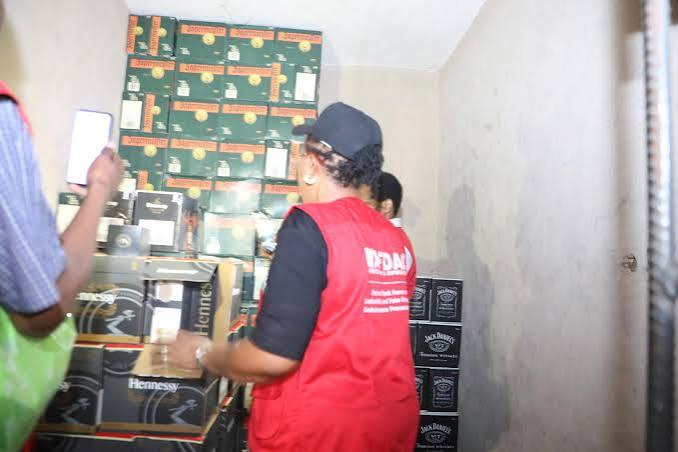
NAFDAC Arrests Two over Suspected Fake Drinks Operation in Lagos
NAFDAC has arrested two suspects at a facility in Lagos’ Trade Fair Complex over the alleged revalidation and repackaging of expired energy drinks, wines and whisky, warning of the health risks posed by counterfeit beverages.
 News
News
LCCI Proposes 20% Petrol Price Cut Within Six Months
The Lagos Chamber of Commerce and Industry has urged the Federal Government to introduce a six-month programme targeting a 15 to 20 per cent reduction in petrol pump prices to ease rising energy, transport and operating costs.
 News
News
Nigeria’s Private Capital Inflows Rise to $6bn as Reforms Gather Pace
World Bank Group President Ajay Banga says Nigeria’s private capital inflows have risen from about $300 million in 2023 to nearly $6 billion in 2026, while the Federal Government reports an increase in the tax-to-GDP ratio to 12.5 per cent.
Comments (0)
Leave a comment
All comments are moderated before publishing. Your email is never published.