
Experts Unveil AI Strategies to Accelerate Growth of SMEs and Startups at GNA Summit
AI is now core business infrastructure, not just an optional tool for startups and SMEs, experts say at the GNA Summit 2026.

From left: Dr. Kayode Elusoji, AI Research Engineer and Executive Director of the Great Nigerian Assembly, Dr. Yakubu Kayode Saheed, Regional Director for Africa and the Middle East at i3Cert Inc., GN. Olalekan Martins, CEO of Living Gold Consulting, and Arch. Simbo Akinola Odusola, Business Consultant and member of the GNA Pacesetter Award Committee, experts who shared practical insights on artificial intelligence, cybersecurity, business growth and digital transformation at the GNA AI Business Summit 2026 for SMEs and Startups.
__________________________________________________
Artificial intelligence is no longer a futuristic concept or an experimental technology reserved for global corporations. It is rapidly becoming a core layer of how modern businesses operate, compete and scale, experts said at the Great Nigerian Assembly, GNA, AI Business Summit 2026.
The summit, held virtually on May 30, brought together business leaders, technology professionals, entrepreneurs and startup founders to examine how small and medium sized enterprises, SMEs, can harness artificial intelligence to drive growth, improve efficiency, strengthen cybersecurity and remain competitive in an increasingly digital economy.
Held under the theme, "Empowering Businesses. Transforming Futures," the event focused on one central message, that artificial intelligence is no longer optional infrastructure for businesses but an operational reality that must be strategically integrated into everyday processes.
Throughout the summit, speakers emphasised that the conversation around AI has moved beyond awareness and experimentation to practical implementation, urging SMEs and startups to begin deploying AI solutions capable of delivering measurable outcomes across marketing, operations, security and growth strategy.
Opening the summit, Business Consultant and member of the GNA Pacesetter Award Committee, Arch. Simbo Akinola Odusola, laid the strategic foundation for the discussions, warning businesses against adopting artificial intelligence technologies without first developing a clear operational blueprint.

According to her, many organisations are falling into what she described as "technology FOMO", the tendency to acquire multiple AI tools simply because of their growing popularity rather than because they are aligned with business objectives.
She noted that the rush to embrace technology often results in fragmented systems that fail to deliver meaningful value.
"Many businesses are adopting AI tools without first defining what problem they are trying to solve. Technology should not drive strategy. Strategy should drive technology. Artificial intelligence becomes valuable only when it is connected to clearly defined business objectives," she said.
Akinola Odusola stressed that successful AI adoption begins with understanding how value is created within an organisation before identifying where artificial intelligence can improve, enhance or automate those processes.
"Businesses must first define how value is created in their organisations and then determine where AI can strengthen that value chain. When that happens, artificial intelligence becomes a growth multiplier rather than an additional cost burden," she said.
She explained that organisations that focus on structure before software are more likely to achieve sustainable outcomes from AI investments than those pursuing technology for its own sake.
The first technical session of the summit examined how African businesses can position themselves within the rapidly evolving global AI economy.
Speaking on the topic, AI Research Engineer and Executive Director of GNA, Dr. Kayode Elusoji, challenged SMEs to move beyond being passive consumers of artificial intelligence technologies and begin building solutions designed around local realities.
He argued that many businesses across Africa continue to rely heavily on generic platforms despite possessing unique insights into their own markets and customers.
According to him, the future belongs to organisations that combine local knowledge with intelligent systems capable of addressing specific challenges.
"We must move from being passive users of artificial intelligence to becoming active builders within the ecosystem. The next generation of successful African businesses will not simply consume AI products. They will develop solutions that understand their own markets and customers," he said.
Elusoji encouraged entrepreneurs to leverage application programming interfaces, APIs, open source models and locally relevant datasets to build intelligent systems tailored to their operating environments.
Rather than relying exclusively on off the shelf solutions, he said businesses should explore opportunities to customise technologies to meet local needs.
"The competitive advantage in the AI era does not necessarily lie in scale. It lies in specificity. Businesses that understand the unique characteristics of their markets can create solutions that are far more relevant and effective than generic alternatives," he said.
He further noted that artificial intelligence is helping to democratise innovation by enabling smaller organisations to compete more effectively with larger enterprises.
The second deep dive session focused on AI driven Cybersecurity and digital risk management formed the focus of the summit's third technical session.marketing and customer acquisition.

Delivering the presentation, Regional Director for Africa and the Middle East at i3Cert Inc., Dr. Yakubu Kayode Saheed, explained how artificial intelligence is transforming one of the most resource intensive functions within modern businesses.
He observed that marketing often consumes a disproportionate share of startup resources, making efficiency critical to growth and sustainability.
According to him, AI technologies are now helping businesses dramatically reduce those costs through automation and predictive systems.
"Artificial intelligence allows small teams to perform tasks that previously required large marketing departments. Through automation, businesses can improve efficiency, reduce costs and significantly expand their reach," he said.
Saheed highlighted behavioural scoring as one of the most powerful applications of AI in customer acquisition, explaining that intelligent systems can analyse customer behaviour patterns and identify prospects with the highest likelihood of conversion.
He also pointed to programmatic content generation as a tool that enables businesses to create and distribute relevant content at scale while maintaining consistency and reducing production costs.
In addition, he explained how predictive marketing systems can help organisations anticipate customer needs, personalise engagement and improve decision making.
"The shift taking place in marketing is from manual campaign execution to intelligent systems that continuously learn, optimise and adjust in real time. Businesses that embrace these technologies will be able to compete at a level previously unavailable to small organisations," he said.
Saheed maintained that AI has created opportunities for startups and SMEs to operate with the efficiency and sophistication traditionally associated with larger enterprises.
Cybersecurity and digital risk management formed the focus of the summit's third technical session.

Speaking on the subject, Chief Executive Officer of Living Gold Consulting, GN. Olalekan Martins, warned that while artificial intelligence offers enormous benefits, it also introduces new vulnerabilities that businesses must address proactively.
He noted that every API connection, automation workflow and cloud integration increases an organisation's exposure to cyber threats.
"As businesses integrate more AI tools and third party systems into their operations, their attack surfaces expand significantly. Every API connection, automation workflow and cloud integration introduces potential vulnerabilities that must be managed carefully," he said.
Martins stressed that cybersecurity should not be viewed as a separate function from innovation but as an essential component of digital transformation.
According to him, businesses that fail to prioritise security risk undermining the benefits generated by technological advancement.
"The objective is not necessarily to build expensive infrastructure. What businesses need are intelligent defensive systems capable of identifying threats before they cause damage. Security must evolve at the same speed as innovation," he said.
He recommended the adoption of lightweight monitoring tools, anomaly detection systems and proactive risk auditing frameworks capable of identifying unusual activities and emerging threats in real time.
Martins argued that startups and SMEs can significantly improve their cybersecurity posture through smart investments in preventive systems rather than waiting to respond after breaches occur.
Beyond the individual presentations, the summit identified five critical pillars that experts described as essential for successful AI transformation among SMEs and startups.
The first pillar, Strategic Awareness, emphasises understanding how artificial intelligence is reshaping industries and using that knowledge to anticipate market shifts, emerging opportunities and changing customer expectations.
The second pillar, Operational Automation, focuses on deploying AI agents and intelligent systems to manage repetitive administrative, analytical and customer facing functions, enabling organisations to improve productivity while reducing operational inefficiencies.
The third pillar, Growth Acceleration, encourages businesses to redesign their sales and marketing processes through data driven targeting, automated lead scoring, predictive marketing systems and intelligent customer engagement strategies.
The fourth pillar, Digital Protection, highlights the need for proactive cybersecurity systems capable of detecting anomalies, identifying vulnerabilities and responding to threats before they disrupt business operations.
The fifth pillar, Workforce Evolution, stresses the importance of equipping employees with the skills required to work alongside artificial intelligence systems, manage automated processes and maximise the benefits of emerging technologies.
Speakers described the five pillars as a practical roadmap for organisations seeking to remain competitive in what is increasingly becoming an AI first economy.
As the summit drew to a close, participants were reminded that access to technology alone would not determine future success.
The experts agreed that most of the tools, frameworks and platforms needed to transform modern enterprises already exist and are becoming increasingly accessible to businesses of all sizes.
What now matters most, they said, is the ability of organisations to move from insight to implementation.
"Awareness without implementation has no business value. The organisations that will lead the next decade are those that can translate knowledge into operational systems and measurable outcomes," participants were told.
Speakers further argued that the most important differentiator in the years ahead will be execution speed, specifically how quickly businesses can transform ideas into scalable processes that deliver tangible results.
The summit concluded with a strong consensus that artificial intelligence is no longer a future trend waiting to arrive but a present reality already embedded in business operations around the world.
For SMEs and startups, the experts said, the opportunity is no longer about early adoption but intelligent integration.
Those that successfully build structure around artificial intelligence today, they added, will be the organisations that define the competitive landscape of the next decade.
Sponsored

Related stories
 News
News
El-Rufai Returns to Court as Corruption Trial Resumes, Bail Appeal Fails
Fails Excerpt: Former Kaduna governor faces renewed trial proceedings after the Court of Appeal upheld his detention, with multiple financial allegations still before the courts.
 News
News
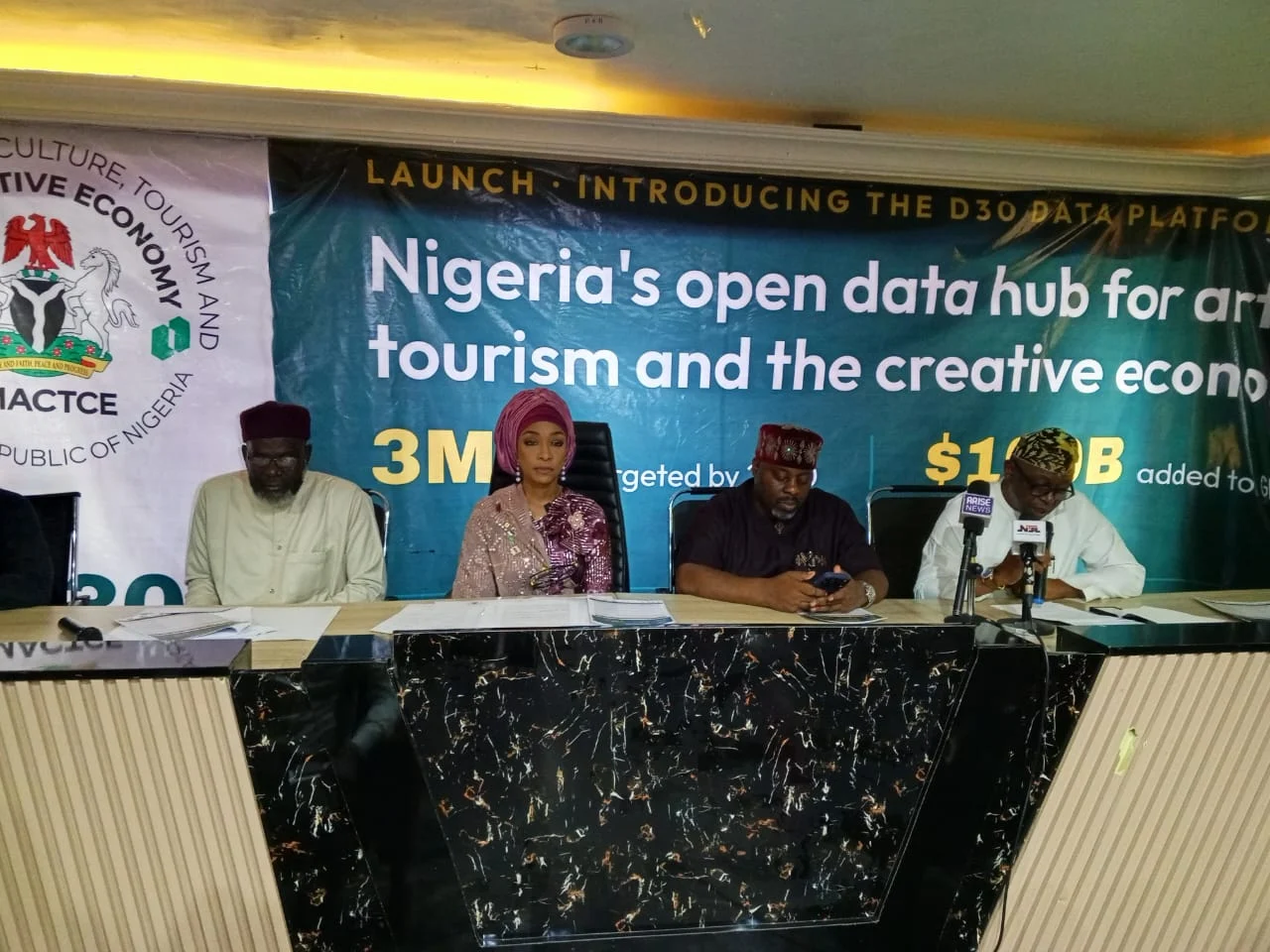
FG Unveils Digital Platform, Targets $100bn from Tourism, Creative Economy
Government launches D30 to connect investors with tourism and creative opportunities, targeting three million jobs by 2030.
 News
News
FG Urges Varsities to Adopt AI, Strengthen Regulatory Compliance
Education Minister Suwaiba Ahmad urges universities to embrace AI responsibly while improving governance, accountability and compliance with standards.
 News
News
Tinubu Seeks Reps’ Approval to Pay Yobe N100.5bn for Airport
President seeks legislative approval for a N100.5bn promissory note to reimburse Yobe State for its airport construction.
Comments (0)
Leave a comment
All comments are moderated before publishing. Your email is never published.