
Badenoch Backs FIFA Probe, Says Argentina Politicised Football Over Falklands Banner
Kemi Badenoch backed FIFA’s investigation into Argentina’s Falklands banner, insisting the islands are British and accusing the team of politicising football after beating England.

Conservative Party leader Kemi Badenoch has declared that the Falkland Islands are “British” and backed a FIFA investigation into Argentina’s players after they displayed a political banner following their World Cup semi-final victory over England.
Badenoch accused Argentina of using football as a platform to advance its territorial claim over the disputed islands after players unfurled a banner reading “Las Malvinas son Argentinas” (The Falklands are Argentine) following their dramatic 2-1 win in Atlanta.
Her comments came as FIFA confirmed that its independent disciplinary committee was reviewing match officials’ reports and other evidence to determine whether Argentina breached tournament regulations prohibiting political messages on the field of play.
The United Kingdom government also supported calls for an investigation. Prime Minister Keir Starmer’s administration insisted that the sovereignty of the Falkland Islands was not open to debate.
A Downing Street spokesperson said, “The World Cup might not be ours, but the Falkland Islands definitely are,” while Business Minister Peter Kyle described the banner as “an egregious violation” of FIFA’s rules, adding that politics should remain separate from football.
Reacting to the incident, Badenoch said the Conservatives would continue defending British sovereignty over the islands.
“The Falkland Islands are British. The Conservatives will always defend them. We know that political messaging and slogans are banned by FIFA, so they absolutely should investigate. It was a very silly banner,” she said.
“The fact is the Falkland Islands are British and the Conservatives will never stop defending them. We did it before and we would do it again.”
The banner reignited the decades-long dispute between Britain and Argentina over the South Atlantic territory, known as the Falkland Islands in Britain and Las Malvinas in Argentina.
The sovereignty dispute led to the 1982 Falklands War, a 74-day conflict that claimed the lives of 649 Argentine personnel, 255 British servicemen and three island residents before Britain retained control of the islands.
FIFA has previously sanctioned Argentina over a similar incident. In 2014, the Argentine Football Association was fined after the national team displayed the same banner before an international friendly against Slovenia. FIFA ruled that the act violated its regulations governing political messages and team conduct.
Badenoch also used the controversy to criticise the Labour government’s agreement over the Chagos Islands, arguing that a Conservative administration would never adopt a similar position on the Falklands, which she described as an integral part of British territory.
Sponsored
Related stories
 Sports
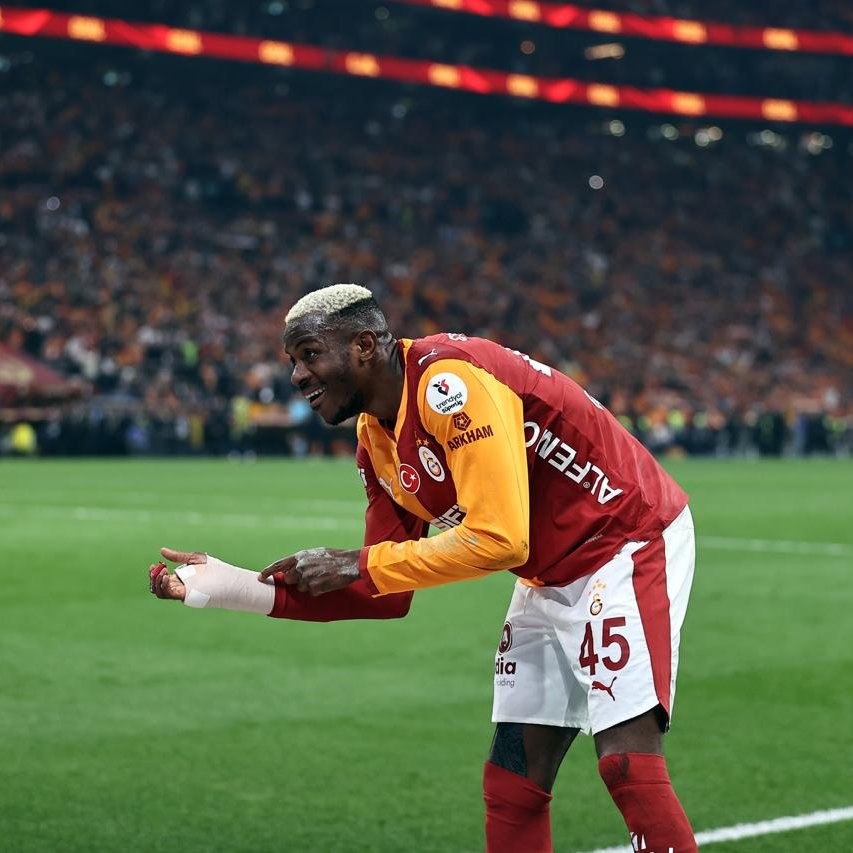
UCL: Osimhen Battle-Ready for Barcelona — Galatasaray Coach
Galatasaray assistant coach confirms Osimhen is fit for Barcelona after his groin injury comeback this weekend.
 Sports
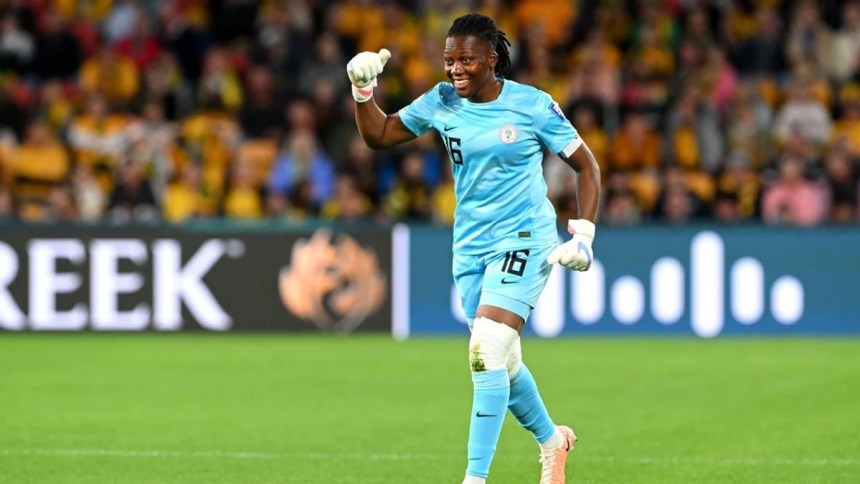
Olympics Qualifier: Nnadozie Warns Falcons Ahead of Comoros Rematch
Chiamaka Nnadozie urges the Super Falcons to avoid complacency as they seek to complete their Olympic qualifying campaign against Comoros.
 Sports
Ronaldo Nets 981st Career Goal in Al-Nassr Win
Cristiano Ronaldo scored his 981st career goal as Al-Nassr defeated Uzbekistan’s Neftchi Fergana 3-1 in Riyadh.
 Sports
EPL: Crystal Palace Come Back to Beat Forest; Hull Draw with Everton
Palace beat Forest after trailing, while Hull and Everton shared four goals in a draw.
Comments (0)
Leave a comment
All comments are moderated before publishing. Your email is never published.