
FG Targets Cashew Value Addition as 85% of Output Leaves Nigeria Unprocessed
The Federal Government is stepping up efforts to add value to Nigeria’s booming cashew production, as around 80–85 percent of output still leaves the country in raw form. Officials say the goal is to expand local processing, create jobs and capture billions of naira now lost to foreign processors
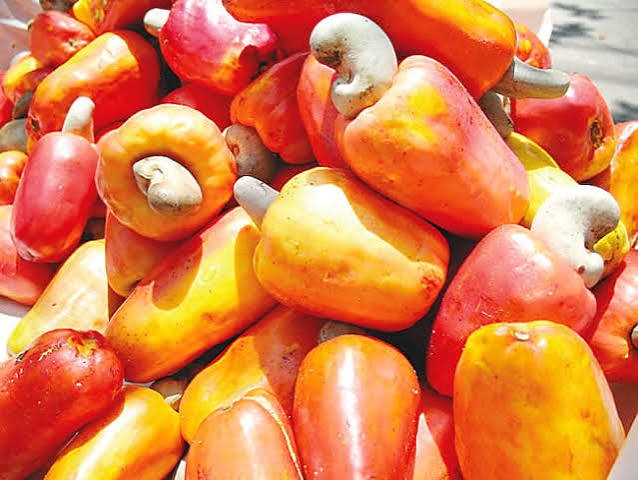
Nigeria is one of Africa’s leading cashew producers, yet most of its cashew still leaves the country as raw nuts, with foreign processors taking the bulk of the profit. Recent industry figures suggest that only about 15–20 percent of Nigeria’s roughly 400,000 tonnes of annual production is processed locally, while the remaining 80–85 percent is exported unprocessed to countries like Vietnam and India. The Federal Government now wants to change that picture by pushing cashew value addition as a key plank of its economic‑diversification agenda.
Officials and sector advocates argue that exporting raw cashew is effectively exporting jobs and revenue. When nuts are shipped without being turned into kernels, snacks, cashew butter or industrial products derived from shells, most of the value is captured abroad. One recent analysis estimated that Nigeria lost roughly N3.18N3.18N3.18 trillion in 2023 alone in missed value addition, even as export volumes and earnings from raw nuts continued to rise. That gap has helped convince policymakers that value addition is no longer a niche priority but a strategic necessity.
In response, the government has begun calling for minimum processing before export. Earlier this year, federal authorities urged stakeholders to ensure at least 30 percent value addition on cashew products before they leave Nigeria, framing the push as part of a broader effort to diversify away from crude oil and deepen agro‑industrial development. The message is that raw‑nut exports can no longer be the default model; processors and investors are being encouraged to build local capacity for roasting, shelling, packaging and more advanced uses of cashew by‑products.
Research from different parts of the country shows that this focus on value addition is commercially sensible, not just policy rhetoric. Studies of cashew processors in southeastern Nigeria, for example, have found that turning nuts into kernels and other value‑added products delivers positive net income and attractive rates of return. One analysis reported benefit‑cost ratios around 1:1.3–1:1.4 and rates of return of roughly 34–38 percent per kilogram of processed products, with cashew kernels yielding the highest margins. Those findings reinforce the view that, with the right equipment and market access, processing can be a strong business for small and medium‑scale investors.
The government’s earlier Agricultural Promotion Policy already identified cashew as one of the export crops where value chains could be deepened to create jobs and wealth. More recent work examining factors that influence value addition has highlighted issues such as income levels, access to markets, processing experience, equipment costs and the quality of government policy and market facilities. Together, these studies suggest that policy support needs to go beyond slogans and include affordable technology, better market links and targeted credit for processors.
Cashew’s appeal lies partly in how widely the crop is grown. As a tree that thrives with relatively low maintenance, cashew is cultivated in many states, providing a foundation on which processing clusters and rural enterprises can be built. Where apples are currently wasted on plantations due to poor storage and lack of processing, simple value‑addition steps—such as producing juice and packaged snacks—can turn what is now loss into revenue. That kind of transformation is precisely what the Federal Government wants to see on a larger scale.
To get there, sector observers say Nigeria will need a mix of incentives and discipline. On the incentive side, processors may require tax breaks, concessional loans and support for modern equipment to make local transformation competitive with established hubs in Asia. On the discipline side, enforcing minimum value‑addition thresholds before export could gradually shift behaviour, especially if exporters see advantages in branding Nigerian‑processed products rather than raw commodities.
Ultimately, the government’s cashew value‑addition push is about more than one crop. It is a test case for whether Nigeria can move from being primarily a raw‑material supplier to a country that processes and brands its own agricultural products. If the cashew sector can successfully raise local processing from around 15–20 percent to much higher levels, it would mean more factories, more jobs and more money staying in the country—while still keeping Nigeria competitive in global markets.
Related stories
 Agriculture
CARE NGO Showcases Gains of Climate‑Smart Agriculture Project in Kaduna
CARE NGO says its climate‑smart agriculture project in Kaduna has trained hundreds of farmers in resilient production techniques, boosting yields, cutting losses and strengthening food security. A recent knowledge‑sharing workshop highlighted how climate‑aware practices are helping communities adapt to shifting rainfall and rising temperatures.
 Agriculture
Shettima Launches Niger Delta Agric Investment Fund to Boost Food Security, Economic Diversification
Vice President Kash the region’s oil‑dependent economy. The fund will back projects across key value chains, from aquaculture and palm oil to cassava, rice and cocoaim Shettima has launched a $500 million Niger Delta Agricultural Development and Investment Fund to raise food production, attract private capital and help diversify.
 Agriculture
NDDC Launches $500m Investment Fund to Drive Niger Delta Agricultural Transformation
The Federal Government and the NDDC have unveiled a $500 million Niger Delta Agricultural Investment Fund to boost food production, attract private capital and create jobs across the region. The initiative is designed as a commercial, returns-driven vehicle spanning key agricultural value chains
 Agriculture
Post-Harvest Losses Cost Nigeria N3.5 Trillion Yearly, Bank of Agriculture Says
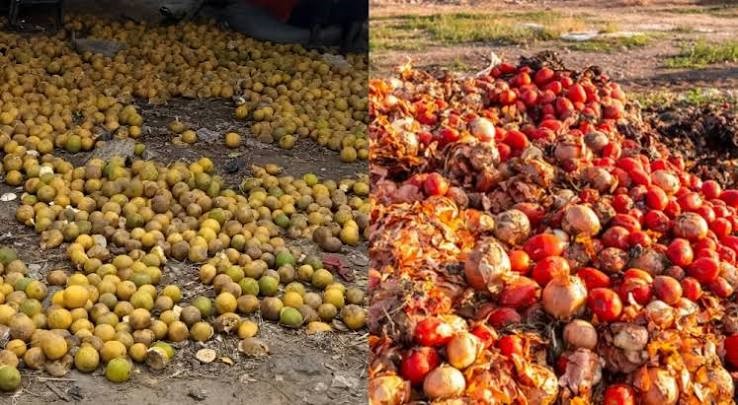
Nigeria is losing about N3.5 trillion every year to post-harvest losses, according to agricultural stakeholders, underscoring how badly poor storage and weak cold-chain systems are hurting food security. The warning adds urgency to calls for better infrastructure across the farm-to-market chain
Comments (0)
Leave a comment
All comments are moderated before publishing. Your email is never published.