
Shettima Launches Niger Delta Agric Investment Fund to Boost Food Security, Economic Diversification
Vice President Kash the region’s oil‑dependent economy. The fund will back projects across key value chains, from aquaculture and palm oil to cassava, rice and cocoaim Shettima has launched a $500 million Niger Delta Agricultural Development and Investment Fund to raise food production, attract private capital and help diversify.
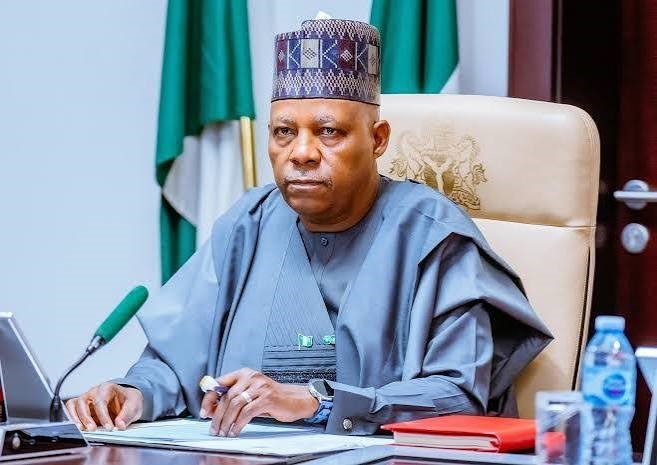
Vice President Kashim Shettima has formally launched the Niger Delta Agricultural Development and Investment Fund, a $500 million vehicle designed to transform agriculture and drive economic diversification across Nigeria’s oil‑producing region. The initiative was unveiled at the Niger Delta Agricultural Development and Investment Summit held at the Banquet Hall of the Presidential Villa, Abuja, bringing together government, investors and development partners under the theme “Unlocking Investment for Sustainable Agricultural Transformation in the Niger Delta.
Shettima described the fund as a commercial, returns‑driven instrument that will invest along the entire agricultural value chain rather than operate as a grant scheme. According to him, the vehicle will support aquaculture, palm oil, cassava, cocoa, rice, horticulture, marine resources and livestock, targeting projects that can raise productivity, create jobs and generate sustainable income for communities.
The Vice President linked the initiative directly to President Bola Ahmed Tinubu’s agrarian programme under the Renewed Hope Agenda, noting that Nigeria’s economy was originally built on agriculture long before crude oil became dominant. In his view, reviving agriculture in the Niger Delta is essential not just for food security but for re‑balancing a region that has long relied on petroleum revenues while under‑utilising its fertile land and water resources.
The summit and fund launch were jointly organised by the Office of the Vice President and the Niger Delta Development Commission, with the backing of governors from the nine Niger Delta mandate states. Shettima said the gathering was meant to mobilise collective commitment from government, investors, financial institutions and agribusiness leaders toward converting the region’s vast agricultural potential into measurable economic progress.
Under the design presented at the summit, the $500 million fund is expected to draw in capital from multilateral lenders, development partners and private investors, creating a blended‑finance structure able to de‑risk projects and crowd in additional money. Officials highlighted planned engagement with institutions such as the World Bank, African Development Bank and other global financiers to ensure the vehicle has enough scale to back large, long‑term investments.
NDDC Managing Director Samuel Ogbuku said the initiative is not just about growing more food but about building an agricultural economy that can reward investment and support industrial growth. He argued that by financing storage, processing and logistics alongside primary production, the fund can help position the Niger Delta as one of Nigeria’s leading agribusiness destinations, rather than simply a source of raw commodities.
The fund will sit alongside a newly inaugurated Coordinating Council for agricultural development and investment in the region, which is meant to align state‑level programmes with national policy and private‑sector plans. That council is expected to help identify bankable projects, streamline approvals and ensure that investments are tied to real opportunities on the ground, from commercial farms to agro‑industrial parks.
For local farmers and agribusinesses, the promise is access to larger pools of finance and structured support that can help them expand beyond subsistence or small‑scale operations. If the fund works as intended, it could help upgrade inputs, mechanisation, irrigation and processing capacity, while also improving market access and export prospects for Niger Delta produce.
Shettima’s message at the launch was that the Niger Delta’s future cannot rest solely on oil. By backing agriculture through a serious, investment‑grade vehicle, the government hopes to create new value chains, new jobs and a more resilient regional economy. The real test will be implementation: whether the $500 million fund can move from policy announcement to visible projects that change how agriculture is practised—and how livelihoods are sustained,across the Niger Delta.
Related stories
 Agriculture
CARE NGO Showcases Gains of Climate‑Smart Agriculture Project in Kaduna
CARE NGO says its climate‑smart agriculture project in Kaduna has trained hundreds of farmers in resilient production techniques, boosting yields, cutting losses and strengthening food security. A recent knowledge‑sharing workshop highlighted how climate‑aware practices are helping communities adapt to shifting rainfall and rising temperatures.
 Agriculture
FG Targets Cashew Value Addition as 85% of Output Leaves Nigeria Unprocessed
The Federal Government is stepping up efforts to add value to Nigeria’s booming cashew production, as around 80–85 percent of output still leaves the country in raw form. Officials say the goal is to expand local processing, create jobs and capture billions of naira now lost to foreign processors
 Agriculture
NDDC Launches $500m Investment Fund to Drive Niger Delta Agricultural Transformation
The Federal Government and the NDDC have unveiled a $500 million Niger Delta Agricultural Investment Fund to boost food production, attract private capital and create jobs across the region. The initiative is designed as a commercial, returns-driven vehicle spanning key agricultural value chains
 Agriculture
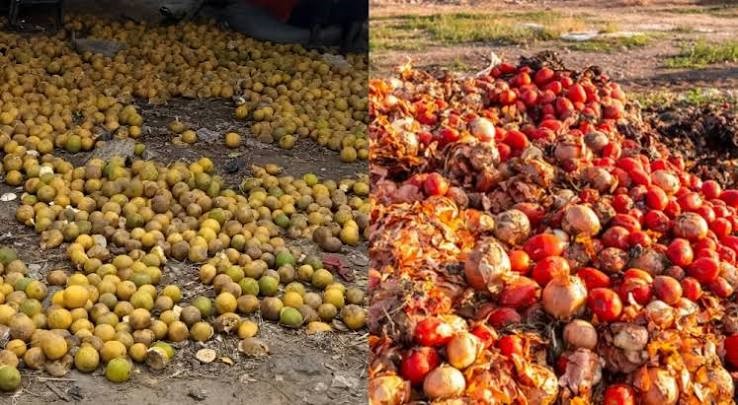
Post-Harvest Losses Cost Nigeria N3.5 Trillion Yearly, Bank of Agriculture Says
Nigeria is losing about N3.5 trillion every year to post-harvest losses, according to agricultural stakeholders, underscoring how badly poor storage and weak cold-chain systems are hurting food security. The warning adds urgency to calls for better infrastructure across the farm-to-market chain
Comments (0)
Leave a comment
All comments are moderated before publishing. Your email is never published.