
Post-Harvest Losses Cost Nigeria N3.5 Trillion Yearly, Bank of Agriculture Says
Nigeria is losing about N3.5 trillion every year to post-harvest losses, according to agricultural stakeholders, underscoring how badly poor storage and weak cold-chain systems are hurting food security. The warning adds urgency to calls for better infrastructure across the farm-to-market chain
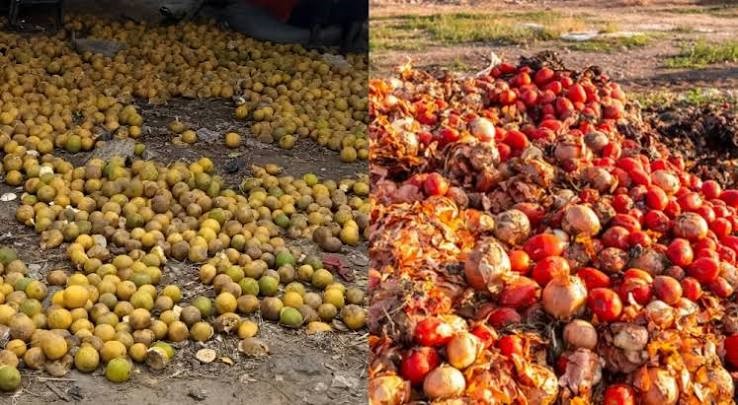
Nigeria loses about N3.5 trillion annually to post-harvest losses, a figure that highlights the scale of waste in the country’s food system. Recent reporting says the losses affect major value chains including tomatoes, vegetables, fruits, dairy, meat, fish and root crops, with millions of metric tonnes wasted each year.
The problem is not just about food spoiling after harvest. It also reflects gaps in storage, transportation, processing and refrigeration, which together make it difficult for farmers to preserve produce long enough to reach markets in good condition.[thecable]
One report says Nigeria loses as much as 30 to 40 million metric tonnes of food annually to these inefficiencies, a waste that translates into huge financial losses and worsens hunger. That level of loss is especially troubling in a country where food prices remain high and many households are already struggling.
Experts say the solution lies in better infrastructure, especially cold-chain systems, warehousing and processing facilities. They also argue for stronger investment in logistics and preservation technology so that farmers can keep more of what they produce and earn more from their labor.
The economic impact is severe because the losses are large enough to swallow a major share of agricultural investment. One analysis noted that annual post-harvest losses exceed the federal agriculture budget over several years combined, showing how much value is being lost before food even reaches consumers.
For farmers, the consequences include lower income, reduced bargaining power and more uncertainty after harvest. For consumers, the result is less food supply and higher prices, since scarcity grows when a significant share of produce never makes it to market.
The warning from agriculture stakeholders is straightforward: Nigeria cannot achieve food security while so much of its produce is being wasted. Reducing post-harvest losses could be one of the fastest ways to improve food availability without necessarily increasing farmland.
In practical terms, this means the country needs more than production support alone. It must also build the systems that protect food after harvest, or else the gains from farming will continue to evaporate before they can benefit households or the wider economy.
Related stories
 Agriculture
NDDC Launches $500m Investment Fund to Drive Niger Delta Agricultural Transformation
The Federal Government and the NDDC have unveiled a $500 million Niger Delta Agricultural Investment Fund to boost food production, attract private capital and create jobs across the region. The initiative is designed as a commercial, returns-driven vehicle spanning key agricultural value chains
 Agriculture
Food Security: Abia Shifts Focus to Commercial Agriculture, Empowers 18,000 Farmers
Abia State is pushing harder into commercial agriculture as part of its food security drive, with more than 18,000 farmers receiving support under a new state-backed programme. Officials say the plan is designed to increase food production, raise farmers’ incomes and attract investment into the agricultural value chain.
.jpeg) Agriculture
Agriculture
Farmers at the Table: Nigeria’s AGROW Policy Push to Boost Food Security and Rural Incomes
Nigeria’s government is moving to include farmers directly in policy through the AGROW initiative, aiming to boost productivity, food security and market‑oriented agriculture. GNA explains the strategy and its implications.
.jpeg) Agriculture
Agriculture
Food Security on a Knife‑Edge: Nigeria’s Farm Reforms, Fertiliser Costs and Fragile Recovery
Nigeria’s agriculture is showing early recovery, but experts warn fragile gains could collapse without sustained reforms, affordable fertiliser and better spending.
Comments (0)
Leave a comment
All comments are moderated before publishing. Your email is never published.