
Auditor-General Raises Alarm Over Weak Financial Controls in Government Agencies
Auditor-General Shaakaa Chira has raised concerns over weak internal controls, accountability gaps and poor compliance in government agencies, warning that the challenges continue to hinder effective financial oversight and transparency.
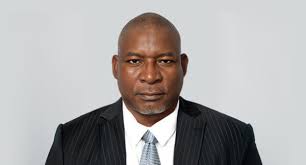
The Auditor-General for the Federation, Dr. Shaakaa Chira, has expressed concern over persistent weaknesses in accountability and financial management across government institutions, warning that weak internal controls, capacity gaps and poor compliance with regulations continue to undermine transparency in the public sector.
Speaking in an interview on Wednesday, Chira identified weak accountability structures as one of the major obstacles to effective financial oversight in Ministries, Departments and Agencies (MDAs).
According to him, several government institutions still struggle with inadequate internal control systems, delayed responses to audit observations and insufficient appreciation of the importance of compliance with financial regulations.
“One of the major challenges is the persistence of weak internal control systems in some public institutions. In certain cases, there are also capacity gaps, delays in responding to audit observations and inadequate appreciation of the importance of compliance with established regulations,” he said.
The Auditor-General noted that the sheer scale of government operations compared to available oversight resources has further complicated efforts to ensure accountability and prudent management of public funds.
Despite these challenges, he said the Office of the Auditor-General for the Federation (OAuGF) continues to engage MDAs, provide professional guidance and advocate stronger accountability measures to improve compliance and safeguard public resources.
Chira disclosed that since assuming office, the OAuGF has intensified efforts to strengthen its institutional capacity through auditor training, improved forensic audit capabilities and compliance with international auditing standards.
He added that the office is implementing its Strategic Plan 2024–2028, aimed at enhancing audit quality, institutional effectiveness and accountability in public resource management.
The Auditor-General also highlighted the growing role of technology in public sector auditing, noting that the office has adopted digital audit tools, data analytics and modern auditing techniques to improve efficiency and detect financial irregularities more effectively.
According to him, technology enables auditors to analyse large volumes of data, identify unusual patterns and uncover potential risks faster than traditional methods.
Chira further stressed that transparency remains critical to rebuilding public confidence in government financial management. He said the office remains committed to publishing audit reports and making findings accessible to citizens through appropriate channels.
He added that efforts are ongoing to improve stakeholder engagement and public communication so that audit findings can be better understood by ordinary Nigerians.
Sponsored

Related stories
 News
News
IMF Says Nigerians Still Face High Living Costs Despite Economic Growth
The International Monetary Fund has urged the Federal Government to introduce targeted cash transfers and temporary income support for vulnerable households as food and energy costs continue to strain Nigerians despite improved economic growth.
 News
News
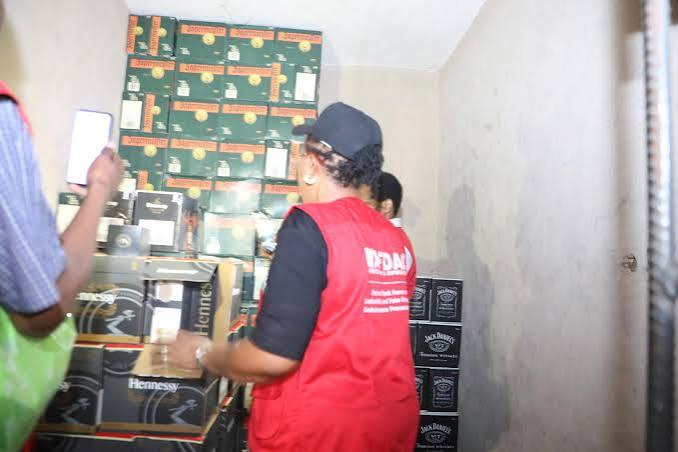
NAFDAC Arrests Two over Suspected Fake Drinks Operation in Lagos
NAFDAC has arrested two suspects at a facility in Lagos’ Trade Fair Complex over the alleged revalidation and repackaging of expired energy drinks, wines and whisky, warning of the health risks posed by counterfeit beverages.
 News
News
LCCI Proposes 20% Petrol Price Cut Within Six Months
The Lagos Chamber of Commerce and Industry has urged the Federal Government to introduce a six-month programme targeting a 15 to 20 per cent reduction in petrol pump prices to ease rising energy, transport and operating costs.
 News
News
Nigeria’s Private Capital Inflows Rise to $6bn as Reforms Gather Pace
World Bank Group President Ajay Banga says Nigeria’s private capital inflows have risen from about $300 million in 2023 to nearly $6 billion in 2026, while the Federal Government reports an increase in the tax-to-GDP ratio to 12.5 per cent.
Comments (0)
Leave a comment
All comments are moderated before publishing. Your email is never published.