
2027: North Divided Over Obi’s One-Term Promise
2027: North Divided Over Obi’s One-Term Promise
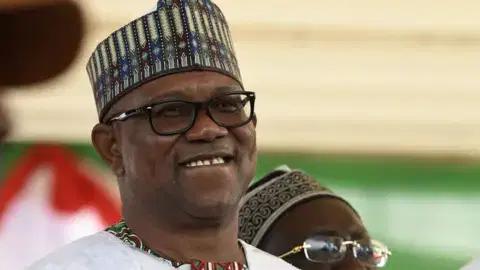
Political opinion across Northern Nigeria appears sharply divided over the renewed pledge by the presidential hopeful of the National Democratic Congress (NDC), Mr Peter Obi, to serve only one term if elected president in 2027.
Obi recently reiterated that he would serve only a single four-year term “even at gunpoint,” describing the proposal as a stabilising arrangement meant to reassure northern political interests and preserve the country’s rotational balance.
He made the promise after the NDC reportedly zoned the presidency to the South and the vice presidency to the North following his defection from the African Democratic Congress (ADC). The arrangement is also seen as politically favourable to Senator Rabiu Musa Kwankwaso, who is expected by some analysts to feature as a potential running mate.
However, reactions across northern political circles remain mixed, with many stakeholders describing the pledge as strategic but lacking enforceable guarantees.
Several politicians and analysts argue that the promise is primarily an electoral strategy aimed at increasing Obi’s acceptability in the region as opposition alliances continue to shift ahead of 2027.
A major concern repeatedly raised is the issue of trust in informal political agreements, with some stakeholders referencing the political developments following the death of former President Umaru Musa Yar’Adua and the 2011 election of Goodluck Jonathan.
For many northern political actors, that episode remains a reference point shaping scepticism toward zoning understandings and verbal commitments.
Some members of the ruling All Progressives Congress (APC) insist that no political promise can override constitutional provisions, noting that the Constitution allows a president to seek re-election after a first term.
Political analyst Murtala Abubakar described the pledge as “a political gimmick designed to secure electoral sympathy,” arguing that there is no legal mechanism to enforce such a commitment.
Similarly, the Northern Youth Council of Nigeria said the region now approaches such promises with a “once bitten, twice shy” mentality, stressing that constitutional realities often outweigh political assurances.
Within Kwankwasiyya-aligned groups, opinions are also divided, with some viewing the arrangement as a possible pathway to power realignment in 2031, while others warn of risks tied to incumbency advantage.
However, Obi supporters maintain confidence in his credibility, insisting he has a record of keeping political promises and would honour his commitment if elected.
Analysts conclude that the success of the proposal will depend less on the promise itself and more on whether key northern political stakeholders eventually endorse and legitimise any pre-election agreement.
Sponsored
Related stories
 News
News
FG Seeks World Bank Guarantees for Infrastructure Financing
Nigeria’s Oyedele and Cardoso seek World Bank guarantees to attract private capital for infrastructure projects.
 News
News
Power: FG to Clear GenCos’ Legacy Debts in 2027 — Tegbe
Power Minister Joseph Tegbe says the Federal Government aims to settle outstanding legacy debts owed to electricity generation companies by 2027.
 News
News
IPO: Dangote Petroleum Refinery Extends Offer Period by Two Weeks
Dangote Refinery extends its share offer to October 27, giving investors more time to participate in the landmark IPO.
 News
News
Houthi Official Warns of ‘Swift, Painful Response’ if US Enters Yemen War
Houthi official Mohammed Al Bukhaiti threatens US interests if Washington joins Saudi Arabia’s military campaign against the group.
Comments (0)
Leave a comment
All comments are moderated before publishing. Your email is never published.