
Nigeria, China Enter 'Season of Unprecedented Opportunity' as 55-Year Ties Push New Agriculture, Science Deals
Officials say Nigeria-China relations are entering a new phase focused on agricultural technology, science and trade, with China's zero-tariff policy and advanced farming innovations offering fresh opportunities for Nigerian exporters and researchers.
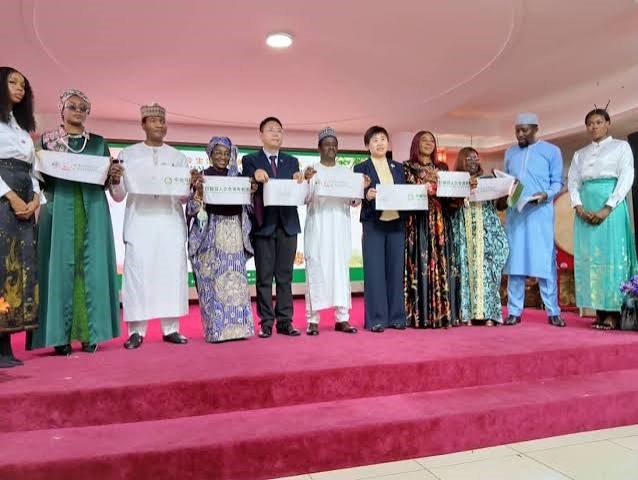
Nigeria and China are seeking to open a new chapter in their 55-year diplomatic relationship, with both countries placing growing emphasis on cultural understanding, agricultural transformation, science, technology, and trade as engines of a broader strategic partnership.
The emerging direction of the relationship was highlighted at the weekend in Abuja during the "Seasonal Life & Harmonious China" Cultural Exhibition, held at the China Cultural Center, where Chinese and Nigerian officials used the celebration of traditional Chinese culture to underscore growing opportunities for cooperation between the two nations. The event, organised as part of the China-Africa Year of People-to-People Exchanges, also served as a platform to mark the 55th anniversary of China-Nigeria diplomatic relations and reflect on the expanding scope of bilateral cooperation.
Speaking at the occasion, the Permanent Secretary of the Federal Ministry of Innovation, Science and Technology, Dr Mukhtar Yawale Muhammad, described the moment as the beginning of what he called a "season of unprecedented opportunity" for Nigeria-China relations, noting that the partnership was moving beyond conventional trade toward agricultural, scientific, and technological transformation.
Drawing a parallel between the exhibition's central theme of harmony with nature and the broader bilateral relationship, Muhammad argued that just as farmers work in sync with the seasons to produce a successful harvest, Nigeria and China must deliberately cultivate their partnership to generate tangible benefits for both peoples. He stressed that the relationship was already evolving beyond its traditional areas of engagement into agriculture, technology, and science.
His remarks came as Chinese officials reaffirmed the importance of cultural diplomacy in strengthening the foundation of the relationship, describing the 55th anniversary as an opportunity to deepen mutual understanding between two ancient civilisations that, despite their geographical distance, share values of openness and community. The "Seasonal Life & Harmonious China" exhibition brought this philosophy to life through displays on the Twenty-Four Solar Terms, a UNESCO-recognised element of intangible cultural heritage, alongside traditional Chinese delicacies, craft demonstrations, and interactive cultural activities.
Beneath the cultural celebration, however, was a much broader message about the future trajectory of Nigeria-China relations. Muhammad, while congratulating the Communist Party of China on its 105th anniversary, said China's transformation in socio-economic development, poverty reduction, scientific innovation, and infrastructure had demonstrated the impact of long-term strategic planning, offering lessons for developing countries such as Nigeria on using science and technology to overcome structural development challenges.
The Permanent Secretary disclosed that a recent technical visit to China had strengthened his conviction that deeper cooperation could produce practical solutions to Nigeria's agricultural and environmental challenges. He specifically cited a visit to the Yangling High-tech Agricultural Demonstration Zone in Shaanxi Province, often referred to as China's "Agricultural Silicon Valley," describing the experience as an eye-opener. At Yangling, the Nigerian delegation observed advanced irrigation and soil-monitoring technologies designed to boost agricultural production while significantly reducing water consumption.
Muhammad added that China's experience combating land degradation and improving agricultural productivity in its Loess Plateau region offered important lessons for Northern Nigeria and the Lake Chad Basin, areas where desertification, water scarcity, and declining agricultural productivity continue to threaten rural livelihoods. For Nigeria, he suggested, the takeaway was clear: scientific research must be translated into practical technologies capable of solving the everyday problems faced by ordinary farmers.
That imperative, he said, has become even more pressing given China's recently introduced zero-tariff policy covering products from 53 African countries, a development Muhammad identified as potentially significant for Nigerian agriculture. He explained that the policy could grant Nigerian commodities such as sesame, ginger, cashew nuts, and cocoa improved access to the vast Chinese market, potentially boosting export earnings, expanding opportunities for farmers, and stimulating rural economic activity nationwide.
He cautioned, however, that tariff-free access would only translate into real benefit if Nigeria could meet the quality, packaging, processing, and supply-chain standards demanded by Chinese buyers. "The policy does not just facilitate exports; it forces us to level up," Muhammad said, explaining that this is precisely where science, technology, and innovation become critical to Nigeria's competitiveness.
According to Muhammad, the Federal Ministry of Innovation, Science and Technology is now pursuing deeper collaboration with Chinese research institutions, universities, and industries to develop technologies capable of strengthening Nigeria's agricultural value chains and reducing the country's dependence on exporting raw, unprocessed commodities. Among the areas under consideration is the development of affordable solar-powered cold-storage facilities aimed at reducing post-harvest losses, a persistent challenge that continues to erode farmer incomes and weaken Nigeria's food supply chain. Nigeria is also exploring Chinese technology and expertise for processing cassava, shea butter, and cashew nuts into value-added products for both the Chinese and broader global markets.
The overarching objective, Muhammad explained, is to ensure Nigeria moves beyond simply exporting raw agricultural commodities toward developing local processing capacity, capable of creating jobs, increasing export revenues, and retaining a larger share of the value generated from the country's natural and agricultural resources.
The proposed partnership also extends into human capital development, with the ministry planning to deepen scientific exchanges and expand training opportunities for Nigerian scientists at Chinese universities, particularly in fields such as sustainable agriculture, water management, soil conservation, and other STEM disciplines. Muhammad stressed that stronger institutional links between ministries, universities, research bodies, and industries in both countries would be essential to translating scientific knowledge into commercially viable solutions on the ground.
Over the past five and a half decades, Nigeria-China relations have expanded well beyond diplomatic engagement into infrastructure, trade, investment, education, telecommunications, agriculture, manufacturing, tourism, and cultural exchange. The renewed emphasis on science, technology, and agricultural innovation signals an attempt to deepen that relationship further, addressing some of Nigeria's most pressing development challenges while opening new avenues for Chinese investment, technology transfer, and market access.
For Nigeria, officials acknowledged that the opportunity presented is substantial, though it will require sustained domestic reforms and investment in production capacity, quality assurance, infrastructure, research and development, and private-sector competitiveness to be fully realised. For China, deeper engagement with Nigeria offers an opportunity to consolidate people-to-people relations while strengthening cooperation with one of Africa's most important political, economic, and demographic powers.
Speaking at the same event, the Cultural Counsellor of the Chinese Embassy in Nigeria, Yang Jianxing, said the Embassy and the China Cultural Center would continue serving as bridges between the two peoples, with plans already underway for more cultural exhibitions, artistic performances, language programmes, youth exchanges, and tourism activities under the ongoing China-Africa Year of People-to-People Exchanges.
Sponsored

Related stories
 Agriculture
Babalola’s Farmer Support Hits N98m
Legal icon Aare Afe Babalola has disbursed N11.2 million to 81 outstanding farmers across Ekiti State's 16 local government areas, bringing total awards under his annual agricultural scheme since 2015 to N98 million.
 Agriculture
FG Launches African Swine Fever Control Campaign in Southwest
The Federal Government has launched a major African Swine Fever control and biosecurity campaign at the Oke-Aro Pig Farm Estate, distributing protective kits to farmers and pledging comprehensive training to prevent future outbreaks. The intervention by the Livestock Productivity and Resilience Support Project (L-PRES) targets one of Nigeria's largest pig production clusters, which has suffered devastating losses from the highly contagious disease in the past.
 Agriculture
Kyari: More Farmland Won’t Feed 400 Million Nigerians
Agriculture Minister Abubakar Kyari says Nigeria must treat agricultural extension as critical infrastructure, disclosing that over 100,000 farmers already receive weekly digital advisories as the country's population heads toward 400 million by 2050.
 Agriculture
Farmland Expansion Alone Won’t Feed Nigeria
Agriculture Minister Abubakar Kyari says Nigeria must shift to demand-driven, AI-enabled agricultural extension services to boost farm yields, warning that expanding farmland alone can no longer feed the country's growing population.
Comments (0)
Leave a comment
All comments are moderated before publishing. Your email is never published.