
When Your Boss's Voice Can't be Trusted: The Invisible AI Fraud Threat Facing Nigerian SMEs
Cybersecurity experts are warning Nigerian small businesses to implement strict call-back rules as fraudsters increasingly use AI voice cloning to mimic company directors and steal funds via WhatsApp.

A wave of sophisticated cybercrime is sweeping across Nigeria, with cybersecurity specialists warning that small and medium-sized enterprises (SMEs) are facing an unprecedented threat from artificial intelligence-driven scams. These new tactics leverage voice cloning, advanced impersonation, and deepfakes to manipulate human relationships rather than break through technical firewalls.
The underlying danger of generative AI lies in its ability to exploit trust. Historically, the business community has relied on familiarity as its primary line of defence. Finance departments execute orders because they recognise a manager's voice, whilst vendors ship goods based on long-standing relationships.
However, AI technology can now capture short audio clips—plucked from webinars, YouTube videos, radio interviews, or casual WhatsApp voice notes—and create flawless vocal replicas. This transformation means that in the modern digital landscape, hearing a familiar voice over the telephone is no longer a reliable proof of identity.
The danger is amplified in Nigeria due to the rapid, informal nature of domestic business operations. Thousands of SMEs rely heavily on mobile messaging platforms to keep pace with a fast-moving economy. Common daily practices include:
- Exchanging and approving invoices via text message
- Coordinating logistics and suppliers through voice calls
- Authorising major corporate transactions using WhatsApp voice notes
Whilst these methods provide exceptional agility, they also create gaping security vulnerabilities. Unlike major corporations equipped with multi-layered approval procedures and dedicated IT security teams, small businesses frequently depend on informal networks built purely on personal rapport.
When employees are accustomed to taking swift action based on verbal commands from their directors, that speed becomes a weakness. A highly convincing, AI-generated voice clone demanding an immediate emergency transfer to a supplier can catch a busy accounts manager off-guard, forcing them to act on instinct rather than verify the request.
Cybersecurity analysts emphasize that as technologies advance, business owners must re-evaluate their informal verification models. Relying blindly on digital communication channels without secondary authentication protocols leaves companies dangerously exposed.
To safeguard operations, experts advise that SMEs must establish rigid, non-negotiable operational rules. These include implementing mandatory call-back procedures on alternative phone lines, introducing pre-agreed verbal passwords for high-value transactions, and cultivating a workplace culture where staff are actively encouraged to question and double-check unexpected financial directives—even if they sound exactly like the boss.
Sponsored

Related stories
 Tech & Education
African Universities Urged to Rethink Teaching in AI Era
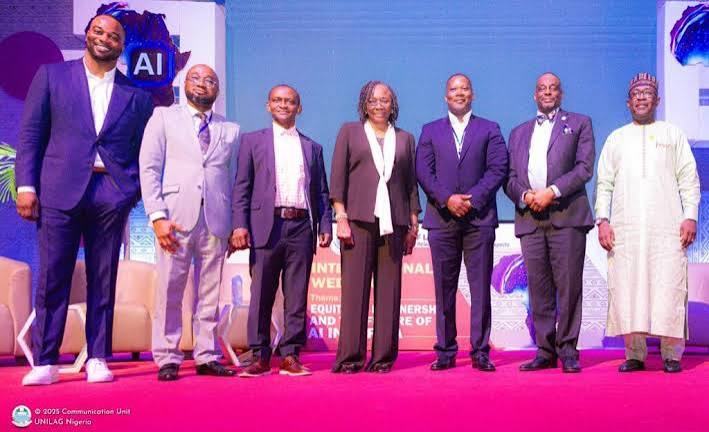
At UNILAG's International Week, leaders from the University of Ghana, UNILAG and UNDP argued that AI makes memorisation-based teaching obsolete and urged universities to reform curricula, assessment and incentives to reward critical thinking and innovation.
 Tech & Education
Otti’s Wife Supports 1,000 Abia Pupils With School Materials
The wife of the Abia State Governor, Mrs. Priscilla Otti, has distributed back-to-school materials to 1,000 indigent pupils from 50 public schools across the state's 17 local government areas, declaring that a child's background should never be a barrier to greatness. The intervention, organised by the Safe Tent Care Initiative in collaboration with the Abia State Universal Basic Education Board, is designed to support families struggling to provide essential educational materials for their chil
 Tech & Education
AI Era: Experts Warn Nigerian Graduates Face Skills Gap
Education experts have warned that Nigerian universities risk producing graduates who are ill-prepared for an AI-driven global job market unless curricula are urgently overhauled. At the StudyIn Global Study Conference 2026 in Lagos, stakeholders called for proactive curriculum reform, ethical AI adoption, and a shift from producing AI users to nurturing AI innovators who can solve real-world problems.
 Tech & Education
YABATECH, Threatremeter Launch Filmmaking Centre
Yaba College of Technology has signed a partnership with Threatremeter Nigeria Limited to establish a Centre for Filmmaking and Production, offering certified training in acting, directing and film production for students and the public.
Comments (0)
Leave a comment
All comments are moderated before publishing. Your email is never published.