
UNICEF Launches Nigeria Learning Passport in Oyo, Targets 2.4m Learners Nationwide
UNICEF has launched the Nigeria Learning Passport in Oyo State, making it the 26th state to adopt the digital learning platform, which is already being used by about 2.4 million children and teachers nationwide.
The United Nations Children’s Fund has launched the Nigeria Learning Passport in Oyo State as part of efforts to expand access to quality education through digital technology.
The launch, held on Wednesday at the Local Government Hall, Secretariat, Ibadan, makes Oyo the 26th state to adopt the digital learning platform. UNICEF said about 2.4 million children and teachers were already using the platform nationwide.
UNICEF Lagos Chief of Field Office, Celine Lafoucriere, said the platform was designed to provide learning opportunities for children who face barriers to conventional education.
She said the initiative was being implemented in partnership with the Oyo State Ministry of Education, adding that the state’s recent recruitment of 5,000 teachers provided an opportunity to strengthen classroom learning through digital tools.
The Nigeria Learning Passport offers thousands of curriculum-aligned lessons in subjects including mathematics, English and science. The lessons can be accessed through mobile phones and tablets, both online and offline.
Lafoucriere said Airtel covers the cost of data usage for the platform, enabling users to access the learning materials without paying for data.
She explained that the platform was initially developed in response to the disruption caused by the COVID-19 pandemic, when school closures affected more than 1.6 billion children worldwide.
The platform subsequently evolved into a broader education tool aimed at strengthening learning systems and improving resilience.
UNICEF’s partners on the initiative include the Federal Government, Microsoft, the Global Partnership for Education, IHS Towers, TECNO and Airtel.
Lafoucriere urged the Oyo State Government to ensure that rural and underserved communities, particularly girls, were not excluded because of limited electricity or network coverage.
She also called for sustained teacher training and effective monitoring to determine whether children were actively using the platform and whether it was improving learning outcomes.
She said the ultimate measure of success would be the platform’s impact on children across Oyo State, including those in communities such as Saki and Iseyin.
Sponsored

Related stories
 News
News
NPHCDA Completes Renovation of 3,526 Primary Healthcare Centres
The National Primary Health Care Development Agency says it has renovated and handed over 3,526 healthcare centres nationwide, with work continuing at 908 others to improve access to essential medical services.
 News
News
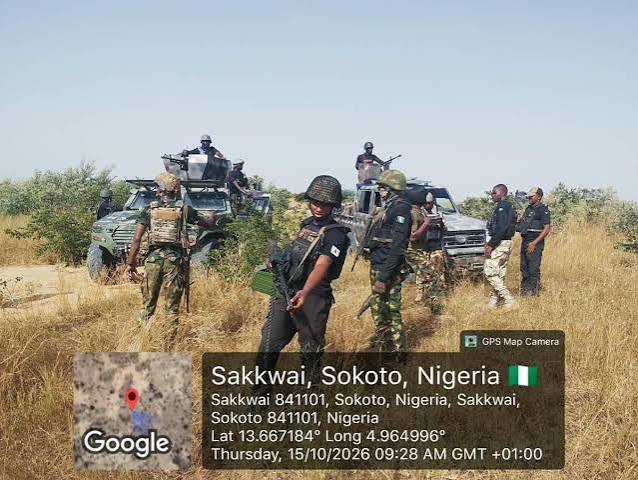
Army Destroys Lakurawa Camps in Sokoto, Kills Terrorists
Nigerian Army troops have destroyed Lakurawa terrorist camps in Waria Forest, Sokoto State, killing several fighters and recovering weapons and five motorcycles during a military operation.
 News
News
NHIA Raises Fee-for-Service Payments to Hospitals by 373 Per Cent
The National Health Insurance Authority has increased reimbursements to healthcare providers by 373 per cent and doubled capitation payments, as part of efforts to improve care quality, expand insurance coverage and restore public confidence.
 News
News
Nigeria’s Inflation Rate Drops to 14.63 Per Cent in September
Nigeria’s headline inflation rate fell to 14.63 per cent in September 2026 from 15.39 per cent in August, according to the National Bureau of Statistics, although food inflation remained elevated.
Comments (0)
Leave a comment
All comments are moderated before publishing. Your email is never published.