
Tinubu Unveils ₦450bn Agricultural Plan Targeting 500,000 Farmers
President Bola Tinubu has committed ₦450 billion to agriculture in a sweeping intervention targeting 500,000 farmers across Nigeria—part of a broader ₦4.7 trillion food security package aimed at tackling hunger, stabilising prices, and weaning the country off food imports. But with food inflation still biting and implementation gaps plaguing past programmes, the question is whether this is the turning point Nigerian farmers have waited for—or another well-funded announcement destined for the she
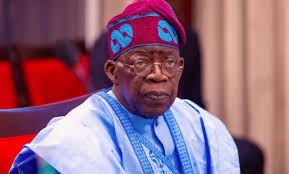
President Bola Tinubu has committed ₦450 billion to agricultural intervention programmes targeting 500,000 farmers nationwide, in what officials are describing as the most ambitious single-year investment in Nigeria’s food security architecture in over a decade.
The commitment, announced at a high-level agricultural stakeholders’ forum in Abuja on Sunday, November 23, 2026, forms part of a broader ₦4.7 trillion package that the Federal Government has earmarked for agriculture and food security under its ongoing economic reform agenda. The intervention is designed to boost food production, stabilise prices, reduce dependence on imports, and create jobs across the agricultural value chain—from smallholder farmers in rural communities to agro-processors and logistics operators in urban centres.
The President, who was represented at the forum by the Minister of Agriculture and Food Security, Senator Abubakar Kyari, described agriculture as the backbone of Nigeria’s economy and the most reliable pathway to mass employment. “No nation can achieve lasting prosperity without feeding itself,” Tinubu said. “This administration is committed to ensuring that Nigeria does not just grow enough food for its people, but becomes a net exporter of agricultural products within this decade”. He said the ₦450 billion would be deployed through targeted credit facilities, input subsidies, mechanisation support, and extension services, with priority given to smallholder farmers who constitute the majority of Nigeria’s agricultural workforce.
The 500,000 farmers targeted under the programme will receive a package that includes improved seedlings, fertilisers, pesticides, and access to affordable financing, alongside training in modern farming techniques and post-harvest handling. The programme will be implemented through a partnership between the Federal Ministry of Agriculture and Food Security, state governments, development finance institutions, and private-sector agro-processors. Beneficiaries will be selected through a digitised registration system designed to eliminate ghost farmers and ensure that support reaches those who actually till the soil.
The stakes could hardly be higher. Nigeria’s food inflation has remained stubbornly high, hovering around 30 per cent in recent months, driven by insecurity in farming belts, poor infrastructure, currency depreciation, and the removal of fuel subsidies. Millions of households are grappling with rising food prices, and the government has faced mounting criticism over its inability to translate macroeconomic reforms into tangible relief at the dinner table. The ₦450 billion intervention is an attempt to address that gap—to move from policy announcements to production outcomes that Nigerians can see, taste, and afford.
The programme also aligns with the government’s broader goal of reducing food imports. Nigeria spends billions of dollars annually on imported food items—rice, wheat, fish, poultry, and edible oils among them—despite possessing vast arable land and favourable climatic conditions. Officials argue that with the right support, Nigerian farmers can produce enough to feed the nation and generate surplus for export. The 500,000 farmers targeted in this first phase are expected to serve as demonstration hubs, with successful beneficiaries becoming trainers and mentors for others in their communities.
But the announcement has drawn scepticism from stakeholders who have seen similar initiatives falter in the past. Nigeria has a long history of well-funded agricultural programmes that collapsed under the weight of corruption, political interference, poor coordination, and weak monitoring. The Anchor Borrowers’ Programme, launched in 2015, distributed billions of naira in loans and inputs but was later criticised for poor repayment rates, diversion of funds, and limited impact on food production. The Presidential Fertilizer Initiative and various state-level agricultural schemes have faced comparable challenges.
Agricultural economists have welcomed the scale of the investment but warned that success will depend on implementation. “The money is not the problem,” said Dr. Olusegun Adebayo, an agricultural policy analyst at the University of Ibadan. “The problem is coordination. If the Federal Government, state governments, and private-sector partners do not work from the same blueprint, and if there is no transparent monitoring of beneficiaries, this will become another expensive photo opportunity”. He called for independent verification of farmer registrations, timely disbursement of inputs, and a clear accountability framework to prevent the programme from becoming a conduit for political patronage.
Farmers’ associations have expressed cautious optimism. The All Farmers Association of Nigeria has called for transparency in beneficiary selection and urged the government to prioritise farmers in conflict-affected regions—the North-East, North-West, and parts of the Middle Belt—where insecurity has displaced communities and disrupted farming cycles. “The farmers who need this intervention most are the ones who have been forced off their land,” an AFAN official said. “If the programme does not reach them, it will have failed before it begins”.
For Tinubu, the ₦450 billion commitment is a political bet. Agriculture is one of the few sectors where his administration can point to tangible progress, and food security is a visible, measurable indicator of government performance. The 500,000 farmers targeted by the programme will be watching closely. So will the millions of Nigerians who spend a growing share of their income on food. The money has been committed. The farmers have been counted. What remains is the hardest part: delivery.
Sponsored

Related stories
 Agriculture
Abiodun Deploys 39 Tractors to Boost Mechanised Farming in Ogun
Farmers across Ogun State’s settlements have praised Governor Dapo Abiodun after the government distributed 39 tractors and a suite of modern implements,ploughs, harrows, trailers, grain planters, boom sprayers, cassava planters, and harvesters,at the Cultural Centre, Kuto, Abeokuta. The intervention, part of the World Bank-backed OGSTEP and SAPZ programmes, is designed to end the tyranny of manual labour, accelerate planting after rainfall, and crash food prices. But farmers are already asking
 Agriculture
China’s Smart Farming Revolution Offers Lessons for Nigeria
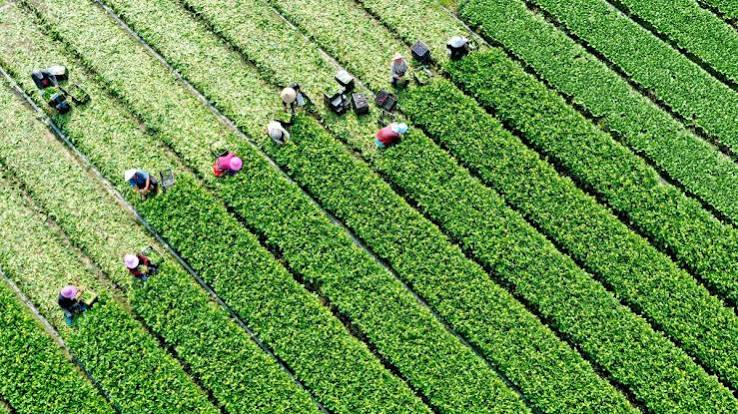
While China’s high-speed trains and skyscrapers dominate headlines, a quieter revolution is unfolding in its fields—one that Nigeria cannot afford to ignore. A visit to Yangling, Shaanxi Province, reveals a farming future built on data-driven greenhouses, spraying drones, and seed research, offering a stark contrast to Nigeria’s vast but underperforming agricultural sector. The lessons are practical, urgent, and within reach—if only the political will exists to act on them.
 Agriculture
FG Launches Jigawa Fertiliser Support to Boost Farming, Curb Food Inflation
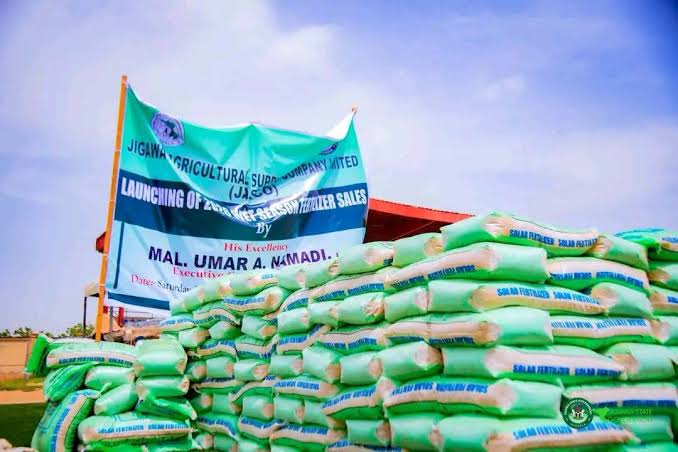
The Federal Government has moved to boost farming activities in Jigawa State by making cheap, subsidised fertiliser available to smallholder farmers,a targeted intervention aimed at raising yields, cushioning the impact of food inflation, and pulling rural households back from the brink of hunger. Officials say the programme is part of a broader national push to make Nigeria self-sufficient in food production, but farmers warn that without sustained supply, timely delivery, and credit support, t
 Agriculture
Poor Harvest May Worsen Nigeria's Food Crisis, AFAN Warns
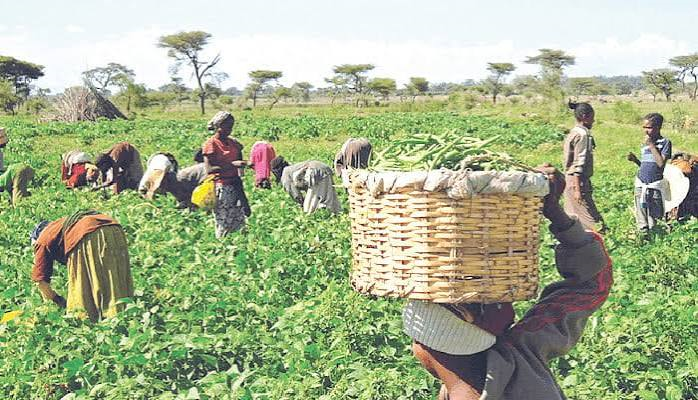
The All Farmers Association of Nigeria has warned that poor harvests caused by devastating floods, insecurity and farmer displacement could plunge the country into a severe food crisis, with millions facing famine-like conditions in early 2027. AFAN President Kabir Ibrahim says the situation could mirror the 2024 hardship protests unless urgent interventions are made to support farmers and stabilise food production.
Comments (0)
Leave a comment
All comments are moderated before publishing. Your email is never published.