
Taraba Launches Mass Artificial Insemination Programme to Boost Cattle Production
The Taraba State Government and L-PRES have launched a statewide artificial insemination programme to improve cattle genetics, increase milk and meat production, and raise the income of livestock farmers.
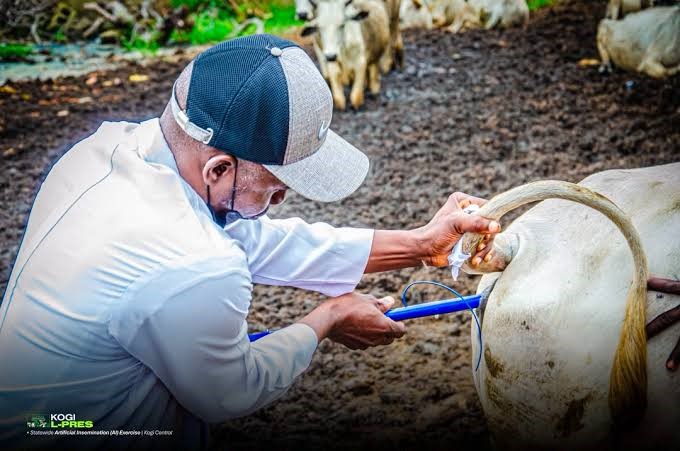
The Taraba State Government, in partnership with the Livestock Productivity and Resilience Support Project (L-PRES), has launched a statewide mass artificial insemination programme to improve cattle genetics and increase milk and meat production.
The programme was flagged off on Saturday in Jalingo and is expected to improve herd productivity, modernise livestock breeding and increase the economic value of cattle farming across the state
The initiative is being implemented by Livestock Genetics Africa Limited, which has deployed technical personnel to support the exercise across Taraba.
Speaking at the flag-off ceremony, the company’s Managing Director, Emmanuel Nnoku, said the programme would help transform livestock production through the adoption of modern breeding technology.
He said the intervention was designed to improve the genetic quality of cattle, with emphasis on higher milk production, faster growth, improved meat yields, better fertility and increased returns for livestock farmers.
Nnoku urged farmers and other stakeholders to cooperate with the technical teams deployed to various locations, saying their participation would be important to the success of the programme.
He added that similar interventions were already being implemented in other states, noting that artificial insemination could help livestock owners improve their herds without relying solely on traditional breeding methods.
The Taraba State Project Coordinator of L-PRES, Hananiah Albert, said artificial insemination would give farmers access to superior bull genetics without the financial burden and management challenges associated with keeping breeding bulls.
He explained that the programme would be implemented across livestock clusters and other strategic locations in the state, with support from animal health and husbandry personnel.
Albert urged livestock owners to make their cattle available for the exercise and follow the technical advice provided by specialists.
He said the use of quality semen would gradually improve important livestock traits, including milk yield, growth rate, fertility, disease tolerance, adaptability and overall cattle productivity.
Artificial insemination enables farmers to introduce desirable genetic characteristics into their herds without maintaining a breeding bull on every farm. It can also help improve the quality and consistency of cattle over successive generations when properly managed.
However, the success of the programme will depend on timely identification of animals, access to trained technicians, proper handling of semen, good animal nutrition and adequate veterinary support.
The Chairman of the Taraba State Livestock Development Commission (TALDEC), Dr Dauda Abubakar, described the initiative as an important step towards modernising livestock production in the state.
Abubakar commended the L-PRES Project Implementation Unit and its technical partners for introducing the programme, urging livestock keepers to participate and take advantage of the opportunity to improve the productivity of their herds.
He reaffirmed TALDEC’s commitment to supporting initiatives aimed at improving animal productivity and strengthening the livelihoods of livestock-keeping communities across Taraba.
A livestock farmer and former Deputy Governor of Taraba State, Alhaji Arma Yau, also commended the state government and L-PRES for introducing the cross-breeding initiative.
Yau said the programme would contribute significantly to improving cattle breeds and boosting productivity among livestock farmers in the state.
The intervention is part of broader efforts to strengthen Nigeria’s livestock sector through improved genetics, better animal health services, modern husbandry practices and increased access to technical support.
If effectively implemented, the programme could help Taraba farmers produce cattle with stronger growth performance, higher milk yields and better adaptation to local conditions, while improving food supply and household incomes.
Sponsored

Related stories
 Agriculture
Babalola’s Farmer Support Hits N98m
Legal icon Aare Afe Babalola has disbursed N11.2 million to 81 outstanding farmers across Ekiti State's 16 local government areas, bringing total awards under his annual agricultural scheme since 2015 to N98 million.
 Agriculture
FG Launches African Swine Fever Control Campaign in Southwest
The Federal Government has launched a major African Swine Fever control and biosecurity campaign at the Oke-Aro Pig Farm Estate, distributing protective kits to farmers and pledging comprehensive training to prevent future outbreaks. The intervention by the Livestock Productivity and Resilience Support Project (L-PRES) targets one of Nigeria's largest pig production clusters, which has suffered devastating losses from the highly contagious disease in the past.
 Agriculture
Kyari: More Farmland Won’t Feed 400 Million Nigerians
Agriculture Minister Abubakar Kyari says Nigeria must treat agricultural extension as critical infrastructure, disclosing that over 100,000 farmers already receive weekly digital advisories as the country's population heads toward 400 million by 2050.
 Agriculture
Farmland Expansion Alone Won’t Feed Nigeria
Agriculture Minister Abubakar Kyari says Nigeria must shift to demand-driven, AI-enabled agricultural extension services to boost farm yields, warning that expanding farmland alone can no longer feed the country's growing population.
Comments (0)
Leave a comment
All comments are moderated before publishing. Your email is never published.