
State Police Will Deepen Ethnic Divisions, Encourage Political Persecution, Jurisdictional Conflicts — Ayagi
Human rights activist A.A. Haruna Ayagi has warned that state police could worsen ethnic tensions, enable political intimidation, create jurisdictional disputes, and undermine community security efforts across Nigeria.

The Chairman of the Coalition of International Human Rights Organisations in Kano State, Comrade A.A. Haruna Ayagi, has expressed strong reservations over the proposed establishment of state police in Nigeria, warning that the initiative could worsen ethnic divisions, encourage political persecution, and create operational conflicts among security agencies.
Ayagi made the remarks on Wednesday while reacting to the Senate’s passage of the State Police Bill, a development that has reignited national discussions on decentralising policing powers to state governments.
According to him, Nigeria is still struggling with deep-rooted ethnic and security challenges, making the timing of the proposed reform unsuitable.
He argued that allowing individual states to control their own police forces could result in law enforcement being influenced by local customs, traditions, and ethnic considerations rather than national standards of justice and fairness.
“There is a likelihood of heightened ethnic sentiments because the country is still grappling with issues of ethnic divisions. If every state controls its own police, officers may administer justice based on local customs, traditions and prevailing social attitudes in their respective states,” he said.
Ayagi also expressed concern that state police could be exploited by politicians to intimidate opponents and suppress dissent, particularly during election periods.
According to him, governors and other political office holders may use state-controlled security structures to strengthen their grip on power and weaken opposition voices.
“Politicians may use state police as a tool to intimidate and silence their political opponents, especially during elections, in order to consolidate their hold on power,” he stated.
The human rights advocate further warned that the creation of state police could generate frequent jurisdictional disputes between federal and state security agencies.
He explained that disagreements over arrests, investigations, and operational authority could undermine effective law enforcement and create confusion within the security system.
Ayagi also noted that the proposal may negatively affect existing community-based security outfits such as vigilante groups and the Civilian Joint Task Force, whose members have contributed significantly to local security efforts.
He urged lawmakers and stakeholders to carefully consider the potential consequences before implementing the policy, stressing the need for broader consultation and stronger safeguards to prevent abuse.
Related stories
 News
News
FG to Scrap JSS-SSS Separation Policy After 20 Million Pupils Drop Out
The Federal Government plans to abolish the separation of junior and senior secondary schools after revealing that over 20 million pupils dropped out before reaching senior secondary education.
 News
News
Sanwo-Olu Approves Dredging of 28 Drainage Channels to Tackle Lagos Flooding
Governor Babajide Sanwo-Olu has approved the dredging of 28 additional drainage channels following widespread flooding, as Lagos intensifies efforts to improve stormwater management and strengthen flood resilience.
 News
News
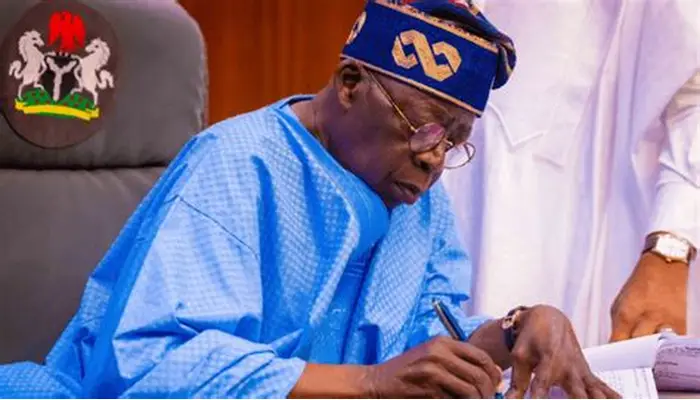
Tinubu Approves 27 Road Projects Worth N3.9tn Across 15 States
President Bola Tinubu has approved 27 federal road projects valued at over N3.9 trillion across 15 states to boost infrastructure, improve connectivity and enhance economic development nationwide.
 News
News
World Bank Rewards Nigerian States with $27m for Education, Healthcare Reforms
The World Bank will disburse $27 million to Nigerian states that excelled in education and healthcare governance reforms under the HOPE Programme, with Bayelsa, Borno, Kano, Kebbi and Yobe leading.
Comments (0)
Leave a comment
All comments are moderated before publishing. Your email is never published.