
BREAKING: Reps Pass State Police Bill
The House of Representatives passed the State Police Bill, paving the way for state-controlled police formations and a decentralised security framework designed to improve policing and tackle insecurity nationwide.
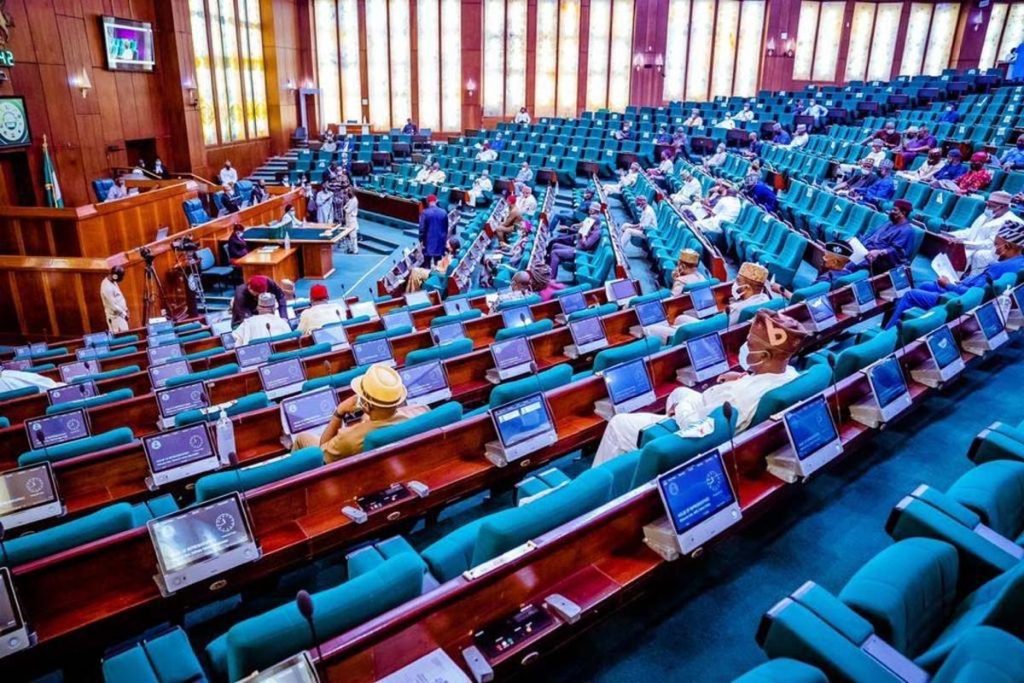
The House of Representatives on Thursday passed the State Police Bill, marking a major milestone in Nigeria’s constitutional amendment process aimed at decentralising policing and strengthening internal security across the country.
The bill, formally titled “A Bill for an Act to Alter the Constitution of the Federal Republic of Nigeria, 1999 to Provide for the Establishment of State Police and for Related Matters (Sixth Alteration) Bill, 2026,” was approved during proceedings of the Committee of the Whole presided over by Speaker Tajudeen Abbas.
The proposal was presented by Deputy Speaker Benjamin Kalu, who chairs the House Committee on Constitution Review. Kalu urged lawmakers to support the measure, arguing that a decentralised policing structure is necessary to tackle Nigeria’s evolving security challenges more effectively.
Voting was conducted manually, with lawmakers indicating their positions by raising their hands. The bill received overwhelming support, with 289 members voting in favour, one abstaining and none opposing the proposal.
The constitutional amendment seeks to create a dual policing structure consisting of Federal Police and State Police formations. One of its major provisions amends Section 214 of the 1999 Constitution to formally recognise both institutions within Nigeria’s security framework.
Under the bill, the National Assembly will retain responsibility for prescribing the structure, organisation, administration and powers of the Federal Police while also establishing the legal framework and minimum operational standards required for state police services.
The legislation provides that no state police formation can begin operations unless the relevant State House of Assembly passes a law establishing it and the force is certified as meeting national standards set by the National Assembly.
It further states that the Federal Police will continue to exercise full policing responsibilities in any state where a state police force has not yet been established.
To protect the independence of state police formations, the bill limits federal intervention in state security matters. Federal authorities may only step in during a complete breakdown of law and order, upon a governor’s request, or when a state police force becomes unable to function because of financial, administrative or operational challenges.
Supporters say the reform will enhance local intelligence gathering, improve community policing and provide more effective responses to insecurity nationwide.
Sponsored

Related stories
 News
News
IMF Says Nigerians Still Face High Living Costs Despite Economic Growth
The International Monetary Fund has urged the Federal Government to introduce targeted cash transfers and temporary income support for vulnerable households as food and energy costs continue to strain Nigerians despite improved economic growth.
 News
News
NAFDAC Arrests Two over Suspected Fake Drinks Operation in Lagos
NAFDAC has arrested two suspects at a facility in Lagos’ Trade Fair Complex over the alleged revalidation and repackaging of expired energy drinks, wines and whisky, warning of the health risks posed by counterfeit beverages.
 News
News
LCCI Proposes 20% Petrol Price Cut Within Six Months
The Lagos Chamber of Commerce and Industry has urged the Federal Government to introduce a six-month programme targeting a 15 to 20 per cent reduction in petrol pump prices to ease rising energy, transport and operating costs.
 News
News
Nigeria’s Private Capital Inflows Rise to $6bn as Reforms Gather Pace
World Bank Group President Ajay Banga says Nigeria’s private capital inflows have risen from about $300 million in 2023 to nearly $6 billion in 2026, while the Federal Government reports an increase in the tax-to-GDP ratio to 12.5 per cent.
Comments (0)
Leave a comment
All comments are moderated before publishing. Your email is never published.