
Sokoto Reaffirms Plan for Family Health Department to Boost Maternal, Child Care
Sokoto State has restated its commitment to create a dedicated Family Health Department under its Ministry of Health, aiming to strengthen maternal, child and reproductive health services. Officials say technical work is advanced and budget provisions are being lined up to give the new unit a clear mandate and funding from launch.
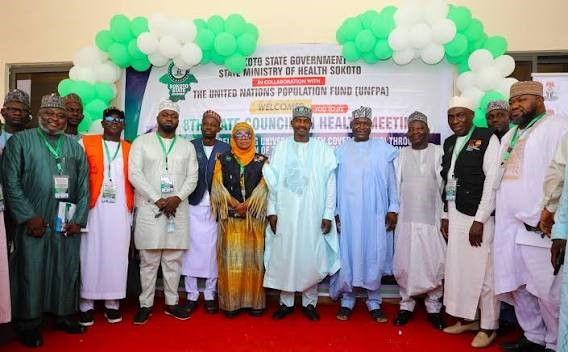
Sokoto State government has reaffirmed its resolve to establish a dedicated Department of Family Health within the Ministry of Health, in a move designed to give maternal, child and family health services a stronger institutional home. The announcement came during an advocacy visit by Presidential Adviser on Health, Dr Salma Anas, who has been pushing states to formalise family‑health structures in line with federal priorities.
During the engagement, Dr Anas appealed to Sokoto to complete the process of setting up the department, noting that states such as Lagos and Ondo have already created similar units with dedicated budget lines. She argued that having a clearly defined Family Health Department helps states coordinate programmes more effectively, avoid fragmentation and attract support from partners focused on maternal and child health.
Senior Sokoto officials said the plan is no longer at the conceptual stage. According to the state’s health leadership, the technical groundwork required to establish the department has largely been done, and discussions are ongoing to ensure that budgetary allocations are built into upcoming fiscal cycles. The Ministry of Health’s management has also signalled readiness to provide staff, office space and administrative backing once formal approval is completed.
The proposed department is expected to focus on maternal health, child health, reproductive health and nutrition, while also dealing with broader family‑oriented services that cut across these areas. Federal experts say such a unit can serve as a hub for interventions like antenatal care, safe delivery, immunisation, family planning and growth monitoring, especially in states where indicators for mothers and children remain a concern.
Dr Anas pointed out that recent reviews of Nigeria’s health architecture revealed gaps in how maternal and child health programmes are organised at state level, with responsibilities often split among different units without a single coordinating entity. In her view, creating Family Health Departments is a practical way to correct that problem, make lines of responsibility clearer and ensure that priority programmes have a home with defined leadership and reporting channels.
For Sokoto, the move aligns with its broader health strategies and longstanding efforts to reduce preventable deaths among women and children. The state’s Ministry of Health already oversees public health, service delivery and disease control, but officials believe a dedicated Family Health Department will sharpen focus on vulnerable groups and improve how resources are targeted. They also see it as a platform for closer collaboration with federal agencies and development partners.
Governor Ahmad Aliyu’s administration has been described as firmly supportive of the initiative. State representatives told the visiting delegation that the government considers the department an instrument for better‑coordinated services rather than an extra bureaucratic burden. With that political backing, advocates say Sokoto is well‑placed to become one of the northern states leading on formal family‑health structures.
Health stakeholders hope Sokoto’s example will encourage more states to adopt similar arrangements. With Lagos and Ondo already running Family Health Departments, federal advisers are working toward a nationwide picture in which maternal and child health is anchored institutionally rather than treated as a series of temporary projects. They argue that clearer departments, backed by budgets and accountability, are essential if Nigeria is to make sustained progress on reducing maternal and under‑five mortality.
If Sokoto successfully completes the process, the new Family Health Department could quickly become a focal point for scaling key services in both urban and rural communities—from antenatal and delivery care to immunisation outreach and family‑planning counselling. The next test will be implementation: turning renewed commitment into functional offices, active programmes and visible improvements in clinics and communities across the state.
Related stories
 Health
Katsina Health Insurance Enrolment Hits 583,460 Beneficiaries
Katsina State’s health insurance enrolment has risen from 355,000 beneficiaries in 2023 to 583,460 in 2026, while Governor Dikko Radda has made coverage compulsory for participants in government employment programmes.
 Health
Nigerian Army CMD: Medical Corps Is Army's 'Eye' on Health, Cleanliness in Barracks
Brig-Gen. Godwin Ogoh, CMD of 44 Nigerian Army Reference Hospital Kaduna, says the Medical Corps serves as the Army's watchdog on hygiene and preventive healthcare, as the hospital hosts a Barracks Health Committee sensitisation programme.
 Health
Japanese Doctors Shield Patient with Their Bodies as 7.1 Magnitude Earthquake Hits Mid-Surgery
Newly released hospital security footage shows medical staff at Kumamoto General Hospital in Japan shielding a patient with their bodies as a powerful earthquake shook the operating theatre, with all four ongoing surgeries successfully completed.
 Health
Sick Health Centres Keep Rural Dwellers in Agony as Nigeria’s PHCs Struggle
Nigeria’s primary healthcare centres are facing poor infrastructure, staff shortages, inadequate equipment and hidden charges, leaving rural residents to travel long distances or depend on unqualified providers for basic medical care
Comments (0)
Leave a comment
All comments are moderated before publishing. Your email is never published.