
SEDC and the Rebirth of Okpara’s Agro‑Revolution
The South East Development Commission is reviving the agro‑industrial vision of the late Dr Michael Okpara, pushing a new regional agriculture revolution built on commercial farming, agro‑processing and integrated rural development. With fresh investment plans and university partnerships, SEDC aims to turn Eastern Nigeria’s farmlands into engines of jobs and export growth
The South East Development Commission is positioning itself as the institutional backbone of a new agro‑revolution in Eastern Nigeria, drawing explicit inspiration from the transformative legacy of former Eastern Region Premier, Dr Michael Okpara. In a recent commentary, SEDC’s efforts were framed as a “rebirth” of Okpara’s model, which turned the old Eastern Region into one of the world’s fastest‑growing economies in the 1960s through aggressive investment in agriculture, rural infrastructure and agro‑industry.
Okpara’s philosophy,often called “Okparanomics”,treated agriculture not as subsistence but as a modern commercial enterprise tied to industrial growth, food sufficiency and integrated rural development. He used the Eastern Nigeria Development Corporation to finance plantations, support farmers, build access roads and link primary production to processing estates, creating a system in which cocoa, palm produce, rubber and other crops powered both household incomes and regional budgets.
Today, SEDC leaders say their mandate is to update that blueprint for a 21st‑century economy. Managing Director Mark Okoye has set an ambitious target: growing the South East’s economy from about 40 billion dollars to 200 billion dollars by 2035, with agriculture and agro‑processing as central pillars. The commission’s stated priorities include security and investment, infrastructure, agriculture, industrialisation, technology, innovation and human‑capital development, all framed as part of a long‑term reconstruction of the region more than five decades after the civil war.
One dimension of this new agro‑revolution is building large‑scale, commercially viable farm estates and processing zones across the region. Abia State Governor Alex Otti has already linked his agricultural agenda to Okpara’s legacy, saying his administration is revitalising moribund plantations and developing new mechanised farm estates across local government areas and value chains. The goal is to reclaim “wasting farmlands” that have become hideouts for criminality and turn them back into productive hubs for crops and livestock.
SEDC is backing this push with a ₦500 billion regional infrastructure pipeline, anchored on strategic investments in industry, agriculture, housing and power. The plan is to connect industrial estates, agro‑processing clusters, transport networks and electricity infrastructure into a single production ecosystem, reducing logistics bottlenecks and making it easier for farmers and agribusinesses to operate at scale. Private capital, diaspora funds and development finance are expected to drive much of this investment, through vehicles such as the South East Investment Company.
Universities are being drawn into the project as knowledge and innovation hubs. The Michael Okpara University of Agriculture, Umudike has declared its readiness to partner with SEDC to support a comprehensive agricultural revolution in the region. Its vice‑chancellor says the institution is “willing, available and enthusiastic” to collaborate on research, training and extension services that can help farmers adopt better technologies, raise productivity and access markets in ways that follow Okpara’s original vision while meeting today’s challenges.
Beyond physical infrastructure, SEDC is also investing in people. The commission has floated concepts such as the Michael Okpara Fellowship and regional venture‑capital programmes to groom a new generation of public‑sector leaders, agripreneurs and innovators rooted in the Okpara development philosophy. The idea is that leadership and entrepreneurship must evolve alongside farm output and factory capacity if the region is to truly become, in the words of some advocates, “the Japan of Africa.”
This modernised Okpara model also embraces digital tools and artificial intelligence. Former labour minister Emeka Wogu has described SEDC as a “reincarnation” of Okpara’s development approach, but updated with technology, data and modern finance. That means using satellite data for land‑use planning, digital platforms for farmer registration and market access, and AI‑driven analytics to guide where investments in irrigation, storage or processing will have the greatest impact.
For ordinary farmers and rural communities, the promise of this reborn agro‑revolution is tangible: more roads, better access to inputs, stronger links to processors, and a clearer path from smallholder status to commercially viable enterprise. For the wider South East, it offers a chance to rebuild regional economic confidence on something more stable than the uncertain ebb and flow of federal allocations.
Whether SEDC can fully deliver on Okpara‑scale transformation remains to be seen. But by rooting its plans in a proven regional development tradition and coupling that with new tools, private capital and institutional backing, the commission is trying to turn nostalgia into a working blueprint—one that could once again make agriculture the engine of Eastern Nigeria’s prosperity.
Sponsored

Related stories
 Agriculture
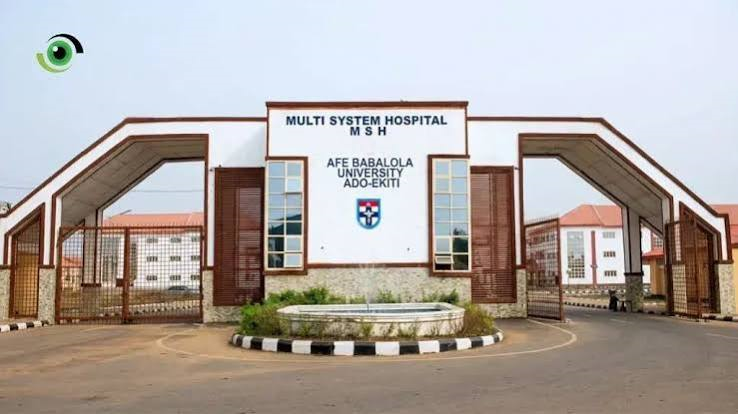
Babalola’s Farmer Support Hits N98m
Legal icon Aare Afe Babalola has disbursed N11.2 million to 81 outstanding farmers across Ekiti State's 16 local government areas, bringing total awards under his annual agricultural scheme since 2015 to N98 million.
 Agriculture
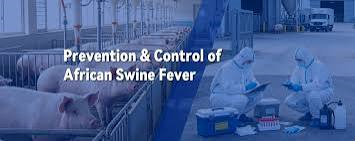
FG Launches African Swine Fever Control Campaign in Southwest
The Federal Government has launched a major African Swine Fever control and biosecurity campaign at the Oke-Aro Pig Farm Estate, distributing protective kits to farmers and pledging comprehensive training to prevent future outbreaks. The intervention by the Livestock Productivity and Resilience Support Project (L-PRES) targets one of Nigeria's largest pig production clusters, which has suffered devastating losses from the highly contagious disease in the past.
 Agriculture
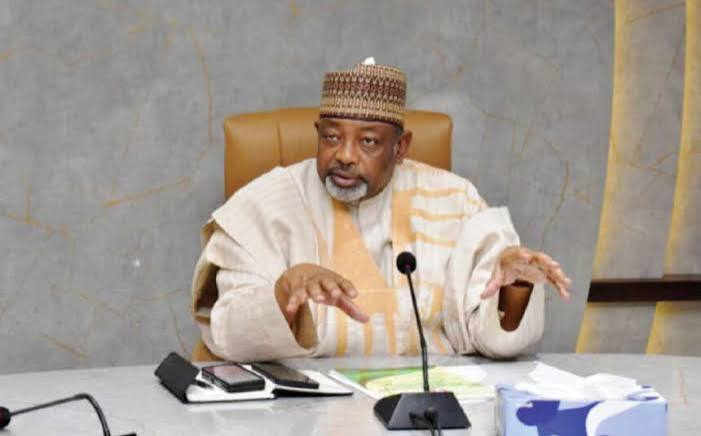
Kyari: More Farmland Won’t Feed 400 Million Nigerians
Agriculture Minister Abubakar Kyari says Nigeria must treat agricultural extension as critical infrastructure, disclosing that over 100,000 farmers already receive weekly digital advisories as the country's population heads toward 400 million by 2050.
 Agriculture
Farmland Expansion Alone Won’t Feed Nigeria
Agriculture Minister Abubakar Kyari says Nigeria must shift to demand-driven, AI-enabled agricultural extension services to boost farm yields, warning that expanding farmland alone can no longer feed the country's growing population.
Comments (0)
Leave a comment
All comments are moderated before publishing. Your email is never published.