
Farmland Expansion Alone Won’t Feed Nigeria
Agriculture Minister Abubakar Kyari says Nigeria must shift to demand-driven, AI-enabled agricultural extension services to boost farm yields, warning that expanding farmland alone can no longer feed the country's growing population.
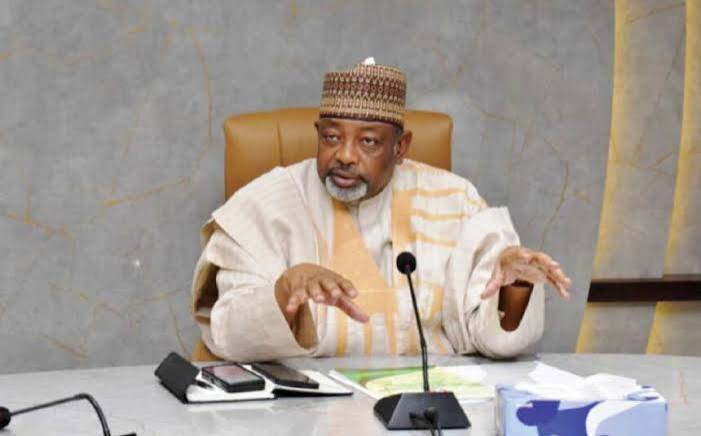
The Federal Government has called for a comprehensive overhaul of Nigeria's agricultural extension system, with the Minister of Agriculture and Food Security, Senator Abubakar Kyari, warning that simply expanding physical farmland can no longer keep pace with the country's rapidly growing population.
Kyari made the call on Wednesday at the Africa Agribusiness Extension Summit 2026, held in Abuja, where he urged a shift from Nigeria's traditional, supply-driven extension model toward a demand-driven system built around farmers' actual needs, market opportunities, and locally verified information.
Tracing the history of agricultural extension services in Nigeria back to the early 1900s, Kyari recalled that extension officers were once deeply trusted figures within farming communities, serving as a direct link between research institutions and smallholder farmers.
He argued that this trusted relationship has eroded over time, even as the demands placed on Nigeria's agricultural sector have grown substantially. "Nigeria's experience reflects a wider African challenge," he said, framing the country's extension gap as part of a broader continental pattern rather than an isolated domestic failure. He stressed that the relevant question facing policymakers is not whether Africa still needs agricultural extension services, but how those services should be redesigned to function effectively under today's conditions.
According to Kyari, Nigeria has already begun deploying digital tools aimed at bridging the widening gap between the limited number of extension agents available and the far larger population of farmers who need their support. He explained that technology-enabled extension delivery represents one of the more practical pathways available for scaling advisory services without a proportional increase in the number of human extension officers, a resource constraint that has historically limited the reach of Nigeria's extension system.
Separately, Minister of State for Agriculture and Food Security, Senator Aliyu Sabi Abdullahi, reinforced the call for demand-driven extension services, urging stakeholders to provide farmers with verified, market-oriented information tailored specifically to their needs and local agroecological conditions. Abdullahi stressed that agricultural extension services should be driven by farmers' specific requirements rather than the conventional model of simply supplying standardised information regardless of local context. He further highlighted the importance of tailoring agricultural advisory services to Nigeria's diverse agroecological zones, noting that different farming environments require distinct production techniques and correspondingly different extension guidance.
Speaking at the summit, the Chief Executive Officer and Co-founder of Extension Africa, Tajudeen Yahaya, said the event was designed to shift discussions around agricultural extension away from simple service delivery and toward building genuinely sustainable extension infrastructure. He identified four pillars he described as essential to strengthening agricultural extension systems: people, technology, data, and partnerships, arguing that progress on any single pillar alone would be insufficient without complementary advances across the other three.
The summit's Chief Operating Officer and Co-Founder, Isa Abdulsamad, added that greater adoption of artificial intelligence and digital extension advisory tools has become necessary, not only to better serve farmers directly, but also to ensure the long-term sustainability of agricultural programmes and solutions more broadly. He noted that farmers could escalate more complex issues to human extension agents through existing farmer helplines and decentralised agricultural development structures, positioning digital tools as a complement to, rather than a replacement for, human extension expertise.
Also speaking at the event, the Director of the Federal Department of Agricultural Extension Services, Samaila Tehinshe, represented by Deputy Director Christiana Malgwi, said strengthening extension delivery remains central to achieving food security, higher agricultural productivity, employment creation, and more resilient food systems across Nigeria.
The push for a demand-driven extension model builds on earlier Federal Government efforts in this area, including the development of Nigeria's first-ever Harmonised Extension Manual and a National Agricultural Extension Policy, both aimed at providing a more pragmatic, market-oriented framework for disseminating agricultural innovations and technologies to farmers nationwide. That earlier groundwork, unveiled as part of broader reforms under President Bola Tinubu's Renewed Hope Agenda, had similarly emphasised moving away from theoretical, top-down extension frameworks toward approaches more directly responsive to farmers' practical needs.
With the agriculture sector having recently recorded its strongest quarterly growth rate since 2021, officials appear to be positioning extension system reform as a complementary pillar to other recent interventions, including farmland expansion, mechanisation support, and the newly inaugurated farmers' coalition, in the broader effort to sustain and build on that growth momentum. Whether the shift toward AI-enabled, demand-driven extension services translates into measurably improved farm yields will likely depend on how effectively the four pillars identified at the summit, people, technology, data, and partnerships, are developed and coordinated in the months ahead.
Sponsored

Related stories
 Agriculture
Abakaliki Rice Mill: Ebonyi’s N171bn Neglected Goldmine
Nigeria's largest rice mill, operating since 1967, processes 132,000 tonnes of rice annually—worth over N171 billion—yet operates without power, safe working conditions, or good roads. As the state's entire IGR sits at just N17.18 billion, analysts ask how a facility generating ten times that amount has been allowed to decay into a "prostrate goldmine."
 Agriculture
Seaweed Could Transform Nigeria’s Agricultural Energy Sector
SMEFUNDS CEO Dr. Femi Oye advocates for seaweed as a renewable energy source to power Nigeria’s food production, offering a circular solution for farmers and small businesses.
 Agriculture
Babalola’s Farmer Support Hits N98m
Legal icon Aare Afe Babalola has disbursed N11.2 million to 81 outstanding farmers across Ekiti State's 16 local government areas, bringing total awards under his annual agricultural scheme since 2015 to N98 million.
 Agriculture
FG Launches African Swine Fever Control Campaign in Southwest
The Federal Government has launched a major African Swine Fever control and biosecurity campaign at the Oke-Aro Pig Farm Estate, distributing protective kits to farmers and pledging comprehensive training to prevent future outbreaks. The intervention by the Livestock Productivity and Resilience Support Project (L-PRES) targets one of Nigeria's largest pig production clusters, which has suffered devastating losses from the highly contagious disease in the past.
Comments (0)
Leave a comment
All comments are moderated before publishing. Your email is never published.