
Kyari: More Farmland Won’t Feed 400 Million Nigerians
Agriculture Minister Abubakar Kyari says Nigeria must treat agricultural extension as critical infrastructure, disclosing that over 100,000 farmers already receive weekly digital advisories as the country's population heads toward 400 million by 2050.
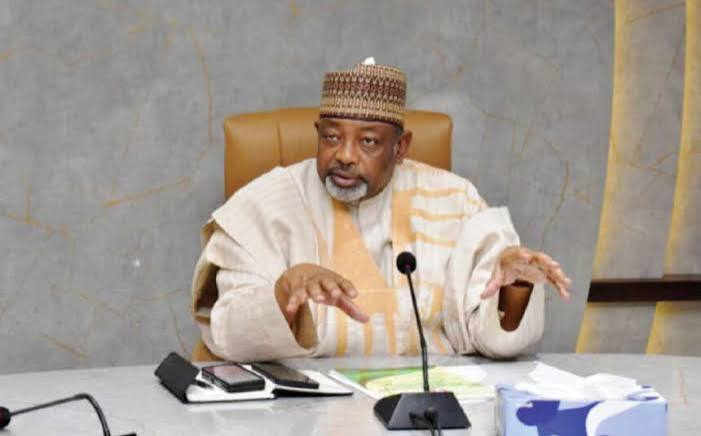
Minister of Agriculture and Food Security, Senator Abubakar Kyari, has warned that Nigeria cannot meet the food needs of its rapidly growing population by simply expanding the amount of land under cultivation, stressing instead that productivity gains must increasingly come from knowledge, technology, and stronger agricultural extension systems.
Kyari made the remarks at the opening of the Africa Agribusiness Extension Summit (AAES) 2026 in Abuja, where he argued that agricultural extension should be treated as critical infrastructure capable of delivering productivity improvements across millions of farms, rather than as a fragmented, project-based intervention.
"Nigeria reflects that reality. We are home to more than 240 million people, with our population projected to approach 400 million by 2050. Most of the food required by Africans still must be produced from the farms that are already here with us now. We cannot feed that future on more land alone," Kyari said.
With agriculture accounting for about 34 per cent of total employment in Nigeria, the minister said the effectiveness of extension services carries implications not only for food production, but also for household incomes, resilience, and livelihoods. He cited evidence showing that access to extension services is associated with lower food insecurity and significantly higher household assets, while mobile agricultural advisory services have been found to improve yields and increase farmers' adoption of recommended inputs. According to him, the implication is that relatively small improvements in farm-level knowledge can translate into significant productivity gains when deployed across millions of farmers.
Drawing a comparison with conventional infrastructure, Kyari argued that extension systems must be built to last. "A project can deliver advice for three seasons. Infrastructure must deliver for 30 years. For Africa, that distinction matters," he said, framing extension as something that must be maintained and funded with the same long-term seriousness as roads or power infrastructure.
The minister disclosed that the Federal Government is already shifting extension delivery from conventional face-to-face services toward digital platforms capable of reaching farmers more quickly and in forms they can readily use. He said more than 100,000 farmers across six states currently receive weekly text messages on rainfall expectations and crop protection, while a broader digital agricultural extension platform is being rolled out to provide advisory services through text and voice in Hausa, Igbo, Yoruba, and Pidgin. He added that the government has deployed more than 1,000 digital extension agents equipped with tablets through the National Agricultural Development Fund, while 774 agricultural desk officers are being positioned across local government areas nationwide.
Kyari also disclosed that he had approved a steering committee to harmonise the ministry's various digital extension initiatives across its departments and agencies, a move intended to prevent competing information systems from emerging as more agricultural services move online. "The farmer should hear one trusted message, not many competing ones," he said, adding that government would also work with the Nigerian Meteorological Agency (NiMet) to integrate climate information directly into advisory services. He cautioned that digitalisation, if poorly coordinated, could otherwise reproduce the same fragmentation that weakened conventional extension systems in the past. "As African countries digitise agriculture, we must avoid replacing institutional fragmentation with digital fragmentation," he said.
The summit also highlighted the gender dimension of agricultural extension. Kyari said women, who play major roles in planting, harvesting, processing, and marketing, should be deliberately targeted by advisory systems, advocating direct outreach to women farmers, including through female extension agents who understand local cultural contexts.
Speaking at the same event, Chief Executive and Co-founder of Extension Africa, Tajudeen Yahaya, said Nigeria's extension system remains severely constrained by inadequate personnel, weak data systems, and poor coordination among stakeholders. He disclosed that one extension agent currently serves about 10,000 farm families, making it difficult to provide farmers with timely technical advice. Yahaya called for sustained investment in extension personnel, farmer data, technology, and partnerships, stressing that no single intervention could fix the system on its own. "What is missing is just that collaboration… that partnership amongst stakeholders. That intentionality around building that infrastructure," he said.
Yahaya further argued that the real economic test of agricultural technology should be whether it lowers farmers' production costs or improves their access to premium markets. "For farmers, it's about cost reduction and profit maximisation," he said. He also called for agricultural extension to become a viable career path for young Nigerians, noting that attracting a new generation of professionals into the field would require sustainable remuneration and clearer economic opportunities within the sector.
Sponsored

Related stories
 Agriculture
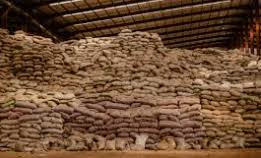
Abakaliki Rice Mill: Ebonyi’s N171bn Neglected Goldmine
Nigeria's largest rice mill, operating since 1967, processes 132,000 tonnes of rice annually—worth over N171 billion—yet operates without power, safe working conditions, or good roads. As the state's entire IGR sits at just N17.18 billion, analysts ask how a facility generating ten times that amount has been allowed to decay into a "prostrate goldmine."
 Agriculture
Seaweed Could Transform Nigeria’s Agricultural Energy Sector
SMEFUNDS CEO Dr. Femi Oye advocates for seaweed as a renewable energy source to power Nigeria’s food production, offering a circular solution for farmers and small businesses.
 Agriculture
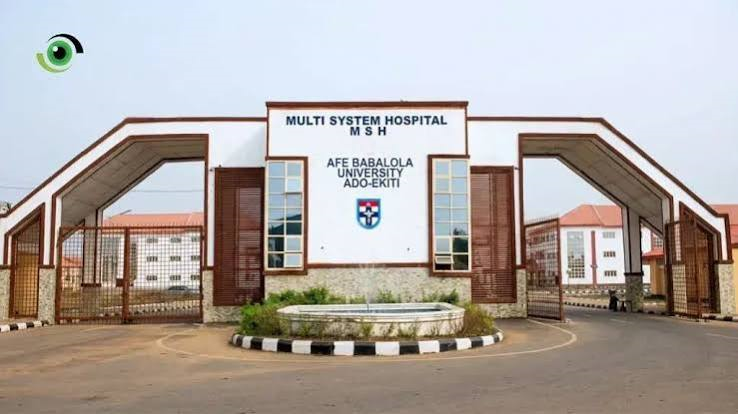
Babalola’s Farmer Support Hits N98m
Legal icon Aare Afe Babalola has disbursed N11.2 million to 81 outstanding farmers across Ekiti State's 16 local government areas, bringing total awards under his annual agricultural scheme since 2015 to N98 million.
 Agriculture
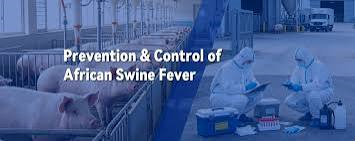
FG Launches African Swine Fever Control Campaign in Southwest
The Federal Government has launched a major African Swine Fever control and biosecurity campaign at the Oke-Aro Pig Farm Estate, distributing protective kits to farmers and pledging comprehensive training to prevent future outbreaks. The intervention by the Livestock Productivity and Resilience Support Project (L-PRES) targets one of Nigeria's largest pig production clusters, which has suffered devastating losses from the highly contagious disease in the past.
Comments (0)
Leave a comment
All comments are moderated before publishing. Your email is never published.