
Nigeria's Data Regulator Warns AI Disinformation Poses Threat to 2027 Polls
The Nigeria Data Protection Commission has partnered with INEC to protect the country's 94 million voters from data exploitation and AI-generated deepfakes ahead of the 2027 elections.

The Nigeria Data Protection Commission (NDPC) has sounded the alarm over the upcoming 2027 general elections, warning that the exploitation of personal information, targeted voter profiling, and artificial intelligence-driven fake news could compromise the country's democratic foundations.
The data protection watchdog delivered the warning during the 2026 Press Week in Abuja, hosted by the Federal Capital Territory (FCT) Council of the Nigeria Union of Journalists (NUJ).
Speaking on behalf of Dr Vincent Olatunji, the National Commissioner and Chief Executive Officer of the NDPC, the Head of the Commission’s Media Unit, Itunu Dosekun, emphasised that rapid advancements in digital technology are presenting unprecedented challenges to electoral transparency and institutional trust.
"The exploitation of personal data for political profiling, hyper-targeted propaganda, fabricated reports, and AI-generated disinformation poses severe hazards to democratic continuity and public confidence," Olatunji cautioned.
The NDPC's intervention arrives as political maneuvering begins to pick up pace ahead of the next electoral cycle. The commission noted with concern the growing reliance on data analytics, digital networks, and artificial intelligence mechanisms for political marketing and voter outreach.
Addressing the assembly on the theme "2027 Election: Defending Democracy in the Era of Disinformation," Olatunji observed that modern technology heavily influences voting outcomes. Consequently, protecting the private data of citizens has shifted from being a mere compliance issue to an essential pillar of democratic governance.
He remarked that political campaigning has moved far beyond physical polling stations and traditional arenas, with social media apps, instant messaging networks, and online channels transforming into highly influential spaces for political mobilisation and the shaping of public sentiment.
To combat these digital threats, the NDPC boss highlighted that the Nigeria Data Protection Act (NDP Act) of 2023 offers robust legal protection against illicit data harvesting and online exploitation, ensuring that the public maintains authority over how their personal details are archived and utilised.
Olatunji made a direct appeal to political candidates, media outlets, technology firms, civil society coalitions, and individual voters to champion ethical digital conduct in the build-up to 2027.
The NDPC's stance reflects an escalating global anxiety regarding the role of automated algorithms, micro-targeting, and sophisticated AI applications in altering democratic processes. Regulatory bodies worldwide are increasingly troubled by the potential of synthetic media, deepfakes, and automated bot networks to skew public discourse and falsify political narratives.
In response to these domestic realities, the NDPC has actively integrated data privacy with democratic security. In April 2026, the regulator established a collaborative task force alongside the Independent National Electoral Commission (INEC). This partnership is specifically designed to fortify privacy mechanisms within Nigeria's electoral framework, which currently manages the sensitive personal information of roughly 94 million registered voters.
The commission concluded by reiterating that fostering responsible tech governance, implementing transparency measures, and enforcing strict data compliance will be vital to securing voter trust and upholding the overall credibility of the 2027 ballot.
Sponsored

Related stories
 Tech & Education
African Universities Urged to Rethink Teaching in AI Era
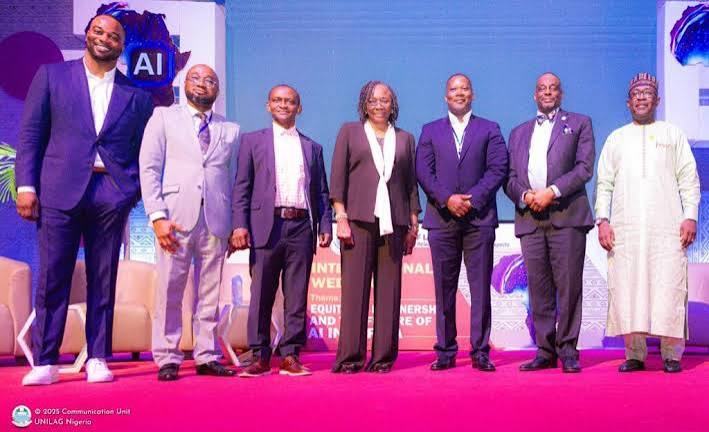
At UNILAG's International Week, leaders from the University of Ghana, UNILAG and UNDP argued that AI makes memorisation-based teaching obsolete and urged universities to reform curricula, assessment and incentives to reward critical thinking and innovation.
 Tech & Education
Otti’s Wife Supports 1,000 Abia Pupils With School Materials
The wife of the Abia State Governor, Mrs. Priscilla Otti, has distributed back-to-school materials to 1,000 indigent pupils from 50 public schools across the state's 17 local government areas, declaring that a child's background should never be a barrier to greatness. The intervention, organised by the Safe Tent Care Initiative in collaboration with the Abia State Universal Basic Education Board, is designed to support families struggling to provide essential educational materials for their chil
 Tech & Education
AI Era: Experts Warn Nigerian Graduates Face Skills Gap
Education experts have warned that Nigerian universities risk producing graduates who are ill-prepared for an AI-driven global job market unless curricula are urgently overhauled. At the StudyIn Global Study Conference 2026 in Lagos, stakeholders called for proactive curriculum reform, ethical AI adoption, and a shift from producing AI users to nurturing AI innovators who can solve real-world problems.
 Tech & Education
YABATECH, Threatremeter Launch Filmmaking Centre
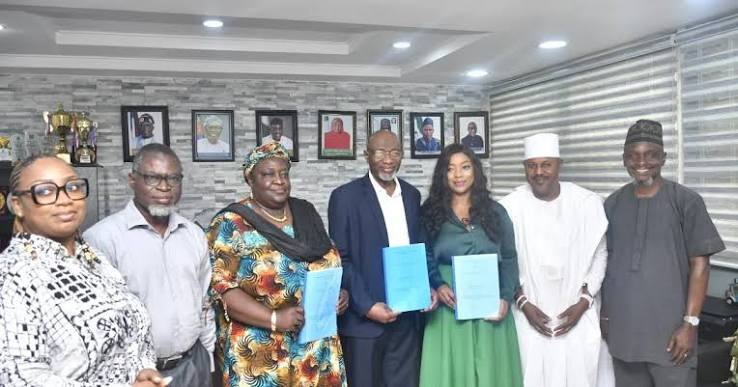
Yaba College of Technology has signed a partnership with Threatremeter Nigeria Limited to establish a Centre for Filmmaking and Production, offering certified training in acting, directing and film production for students and the public.
Comments (0)
Leave a comment
All comments are moderated before publishing. Your email is never published.