
Nigeria Must Urgently Reform Healthcare System to Avert Workforce Crisis, Says Ijadunola
Professor Thaddeus Ijadunola warns that Nigeria’s health sector is nearing breaking point as a deepening workforce crisis, driven by mass migration and retirements, threatens national health security. He says only bold, system‑wide reforms on leadership, financing, working conditions and innovation can prevent further collapse.

Nigeria must urgently overhaul its healthcare system or risk a full‑blown workforce collapse that could undermine national health security, Professor Thaddeus Ijadunola has warned. The community‑medicine expert from Obafemi Awolowo University says the country is facing an unprecedented health‑worker crisis that “shows no signs of abating,” with thousands of doctors, nurses and other professionals leaving for better opportunities abroad while many experienced personnel head into retirement.
Speaking at a recent lecture on “Reimagining the Nigerian Healthcare System: Leadership, Research, and Innovation for the Future,” Ijadunola described the situation as a “double depletion” of manpower. On one side, younger professionals are emigrating in large numbers; on the other, older, highly skilled staff are exiting the system due to age or burnout. The result, he argued, is a simultaneous weakening of day‑to‑day service delivery and the sector’s future leadership capacity, leaving hospitals and clinics increasingly fragile.
He linked this crisis to broader system failures, including poor funding, weak governance and inadequate investment in human capital. Nigeria still relies heavily on out‑of‑pocket payments, has low health‑insurance coverage and struggles with uneven distribution of health facilities, all of which make it difficult to retain staff or provide consistent, quality care. In his view, trying to plug workforce gaps without fixing the underlying system will only produce short‑term gains.
Ijadunola also cautioned against relying on punitive or restrictive measures to stem the “japa” wave of health‑worker emigration. He has previously argued that legislative attempts to force newly trained professionals to remain in the country for a set number of years will not solve the problem, because it ignores the real drivers,poor pay, stressful working conditions and an absence of clear career pathways. Globally, he noted, health systems are competing for talent, and Nigeria must offer credible reasons for its workers to stay.
Instead, he called for bold, equity‑driven reforms focused on four pillars:
- Leadership and governance: Competent, accountable leadership that can drive long‑term reforms rather than short political cycles.
- Financing and insurance: Expanding health‑insurance coverage, enforcing mandatory enrolment and shifting from fragmented, treatment‑heavy funding to models that support prevention and continuity of care.
- Workforce welfare and retention: Better remuneration, safer work environments, extended retirement options where appropriate, and structured opportunities for training and career progression.
- Research and innovation: Using data, digital tools and implementation research to understand what works, track performance and scale up successful models, especially in primary healthcare.
His warning echoes a growing consensus among health‑sector stakeholders who have been calling for urgent reforms across primary care, hospital management and health financing. Experts at recent forums have described Nigeria’s current financing model as unsustainable and urged innovative mechanisms—such as blended finance, outcome‑based payments and digital claims platforms—to close funding gaps and improve efficiency. Medical associations, meanwhile, have pressed for better wages, higher budget allocation (including moving towards the 15 percent Abuja target) and stronger support for frontline facilities.
Underlying these debates is a stark reality: Nigeria’s health system carries a heavy and often avoidable human cost. Analyses of hospital care have found high rates of medical error and systemic failures, with too many patients dying not because their conditions are incurable but because routine care breaks down at critical moments. Ijadunola argues that a workforce stretched thin by migration and retirement only increases the risk of such failures, making reform not just an economic issue but an urgent safety imperative.
He emphasised that the solution will require coordinated action across all levels of government, professional bodies, teaching institutions and development partners. Piecemeal measures—such as isolated recruitment drives or ad‑hoc bonuses,will not be enough. Instead, Nigeria needs a coherent, long‑term reform agenda that strengthens primary care, rebalances hospital networks, modernises training and embeds innovation into everyday practice.
For Ijadunola, the choice is clear: either Nigeria treats the workforce crisis as an existential threat and responds with serious structural change, or it risks watching its health system slide further into a state he has described as being “at breaking point.” In his framing, reform is no longer a matter of incremental improvement, but of safeguarding the country’s ability to care for its citizens in the years ahead.
Related stories
 Health
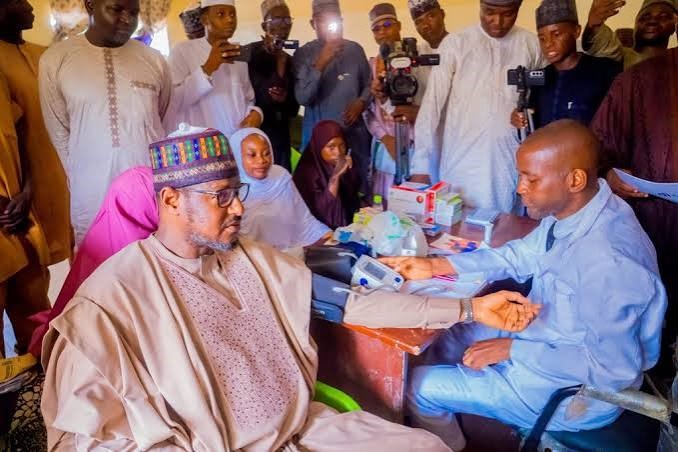
Katsina Health Insurance Enrolment Hits 583,460 Beneficiaries
Katsina State’s health insurance enrolment has risen from 355,000 beneficiaries in 2023 to 583,460 in 2026, while Governor Dikko Radda has made coverage compulsory for participants in government employment programmes.
 Health
Nigerian Army CMD: Medical Corps Is Army's 'Eye' on Health, Cleanliness in Barracks
Brig-Gen. Godwin Ogoh, CMD of 44 Nigerian Army Reference Hospital Kaduna, says the Medical Corps serves as the Army's watchdog on hygiene and preventive healthcare, as the hospital hosts a Barracks Health Committee sensitisation programme.
 Health
Japanese Doctors Shield Patient with Their Bodies as 7.1 Magnitude Earthquake Hits Mid-Surgery
Newly released hospital security footage shows medical staff at Kumamoto General Hospital in Japan shielding a patient with their bodies as a powerful earthquake shook the operating theatre, with all four ongoing surgeries successfully completed.
 Health
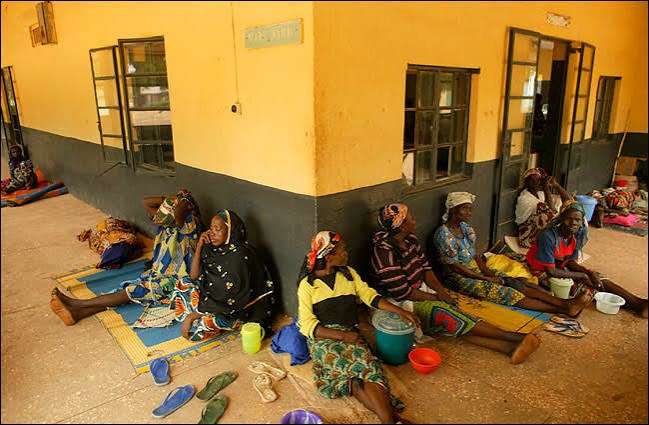
Sick Health Centres Keep Rural Dwellers in Agony as Nigeria’s PHCs Struggle
Nigeria’s primary healthcare centres are facing poor infrastructure, staff shortages, inadequate equipment and hidden charges, leaving rural residents to travel long distances or depend on unqualified providers for basic medical care
Comments (0)
Leave a comment
All comments are moderated before publishing. Your email is never published.