
Nearly 9,000 Benue Farmers Benefit from Sasakawa Agricultural Extension Project
The Sasakawa Africa Association, with support from the Nippon Foundation, has reached 8,950 smallholder farmers across eight Benue LGAs with climate-smart farming training, improved crop varieties, and a new cassava processing centre.

No fewer than 8,950 smallholder farmers across eight Local Government Areas of Benue State have benefited from agricultural extension and farmer development interventions by the Sasakawa Africa Association (SAA), with support from the Nippon Foundation.
The project is being implemented in Gwer East, Gboko, Tarka, Guma, Ushongo, Vandeikya, Buruku, and Konshisha Local Government Areas, in collaboration with the Benue State Ministry of Agriculture through the Benue State Bureau of Agricultural Development and Mechanisation. The intervention focuses specifically on helping farmers transition from subsistence production to commercial, market-oriented agriculture, with particular emphasis on soybean, maize, rice, and horticultural crops.
Speaking on Monday during a visit to some of the project sites, Nathaniel Otene, Technical Coordinator for Climate-Resilient and Sustainable Agri-Food Systems (CRAS), who also represented Country Director Godwin Atser in Gwer East and Gboko LGAs, said the programme was actively promoting climate-smart and regenerative farming practices among participating smallholder farmers.
According to Otene, farmers are being trained to produce compost using limited animal manure combined with green materials such as leaves, a technique designed to improve soil health while reducing dependence on inorganic fertilisers. He explained that the programme has also introduced improved and climate-resilient crop varieties, appropriate plant spacing, crop rotation, strip cropping, and the integration of legumes such as soybean to naturally replenish soil nutrients over time.
Otene noted that community members provide land and labour for demonstration plots, while SAA supplies technical support and selected farm inputs, with the ultimate goal of ensuring that farmers adopt these technologies permanently and continue applying them even after the project concludes. He explained that the programme operates through farmer learning platforms, with extension agents supporting community demonstration plots and groups of smallholder farmers across all eight participating local government areas.
At Cheedu in Gwer East, the visiting team also inspected an improved cassava agro-processing centre established by SAA with support from the Nippon Foundation, following a community assessment that identified a clear need for local processing facilities in the area. Dr Moshood Suleiman, Programme Officer for Safe, Adequate and Nutritious Food Production and Utilisation, explained that the centre is equipped with a cassava grater, two pressers, two cassava fryers, and a solar-powered borehole to ensure a reliable water supply for processing activities.
Beneficiaries who spoke during the visit, including Mary Ukamave and Richard Kwaghngu Aondofa from Gwer East, along with Ronald Gbatar from Luga in Gboko, commended SAA for exposing them to modern farming methods, improved crop varieties, organic manure production techniques, and better marketing strategies, all of which they said had increased both their yields and their earnings.
Aondofa, a farmer from Cheedu, said the training had transformed their farming practices and improved their prospects of producing more food for the market, stressing that farmers were now actively applying the knowledge gained on their own individual farms rather than only at the demonstration plots.
The visiting team also toured two community demonstration plots at Cheedu, where high-yielding maize and soybean varieties had been planted, with beneficiaries expressing optimism that the interventions would go on to improve agricultural productivity, household livelihoods, and overall food security within their communities.
The Sasakawa Africa Association has, over the years, positioned itself as a key technical partner supporting smallholder farmer development across several African countries, with its programmes typically emphasising climate-smart agriculture, improved crop varieties, and structured extension services designed to help farmers move beyond subsistence farming toward more commercially viable production. For Benue State, often referred to as Nigeria's "food basket" given its agricultural output, the intervention adds to a broader push by both state authorities and development partners to strengthen farmer productivity and resilience against the twin pressures of climate variability and market access challenges that have historically constrained smallholder agriculture across the state.
Sponsored

Related stories
 Agriculture
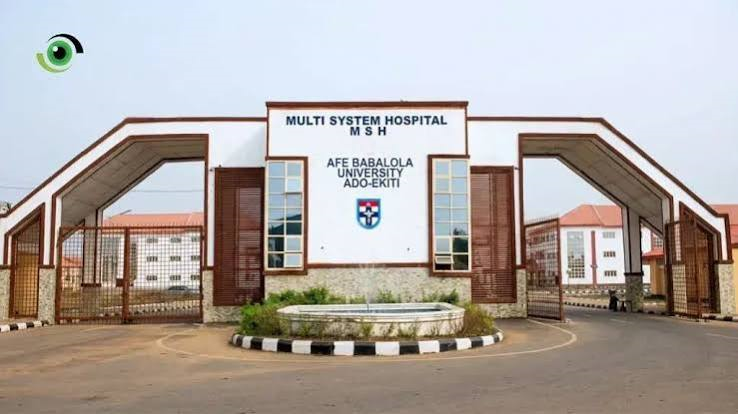
Babalola’s Farmer Support Hits N98m
Legal icon Aare Afe Babalola has disbursed N11.2 million to 81 outstanding farmers across Ekiti State's 16 local government areas, bringing total awards under his annual agricultural scheme since 2015 to N98 million.
 Agriculture
FG Launches African Swine Fever Control Campaign in Southwest
The Federal Government has launched a major African Swine Fever control and biosecurity campaign at the Oke-Aro Pig Farm Estate, distributing protective kits to farmers and pledging comprehensive training to prevent future outbreaks. The intervention by the Livestock Productivity and Resilience Support Project (L-PRES) targets one of Nigeria's largest pig production clusters, which has suffered devastating losses from the highly contagious disease in the past.
 Agriculture
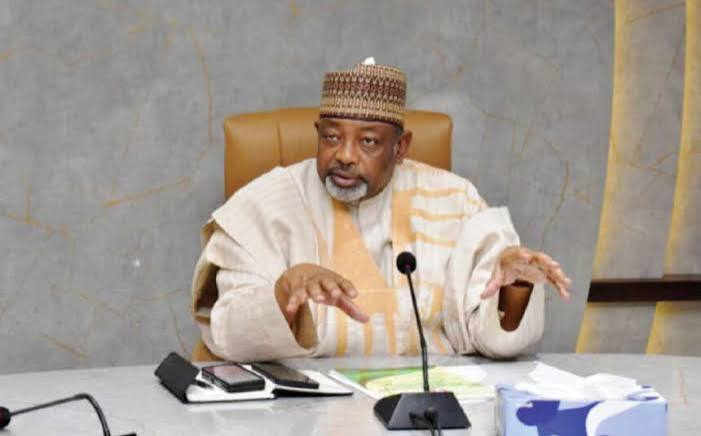
Kyari: More Farmland Won’t Feed 400 Million Nigerians
Agriculture Minister Abubakar Kyari says Nigeria must treat agricultural extension as critical infrastructure, disclosing that over 100,000 farmers already receive weekly digital advisories as the country's population heads toward 400 million by 2050.
 Agriculture
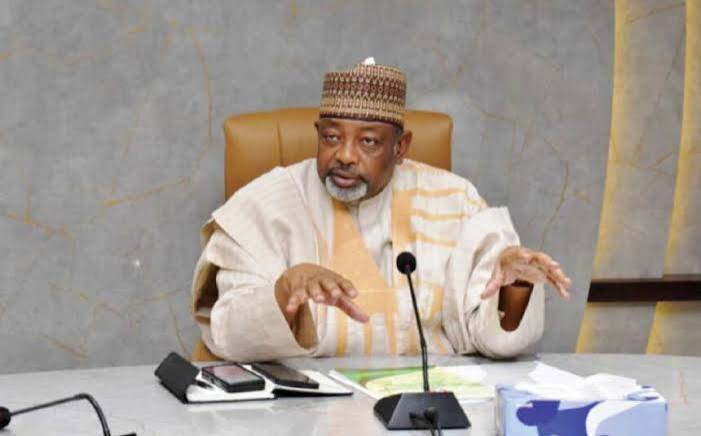
Farmland Expansion Alone Won’t Feed Nigeria
Agriculture Minister Abubakar Kyari says Nigeria must shift to demand-driven, AI-enabled agricultural extension services to boost farm yields, warning that expanding farmland alone can no longer feed the country's growing population.
Comments (0)
Leave a comment
All comments are moderated before publishing. Your email is never published.