
NASENI Deploys Solar Irrigation Systems to Boost Farming in Kano's Gabasawa, Kumbotso
NASENI has introduced solar-powered irrigation systems in Gabasawa and Kumbotso local government areas of Kano State, aiming to cut farmers' fuel costs and expand year-round agricultural activity.

The National Agency for Science and Engineering Infrastructure (NASENI) has introduced solar-powered irrigation systems in the Gabasawa and Kumbotso Local Government Areas of Kano State, aimed at reducing farmers' production costs and boosting year-round agricultural activities in the state.
The initiative, implemented in collaboration with the International Water Management Institute (IWMI), was demonstrated at the Fadamar Ruwan Tsamiya irrigation site in Zakirai, within Gabasawa LGA, and at Tudun Kaba, located near the river in Kumbotso LGA.
Speaking during the demonstration, the Executive Vice Chairman of NASENI, Khalil Halilu, represented by the Director of Technical Services, Emmanuel Ajani, said the project was specifically designed to reduce farmers' dependence on petrol- and diesel-powered irrigation pumps. Halilu explained that the rising cost of fuel had significantly increased farmers' production expenses in recent years, stressing that the newly deployed solar-powered technology would provide a cheaper, more reliable, and environmentally friendly alternative for accessing irrigation water.
A representative of the project's implementing partner identified in reports simply as Oke said the initiative was designed to promote the broader adoption of sustainable irrigation technologies, particularly within communities where access to affordable energy has remained a persistent challenge for farmers seeking to expand production beyond the traditional rainy season.
Reacting to the demonstration, a Kano Agricultural and Rural Development Authority (KNARDA) official in Kumbotso, Musa Yahaya, welcomed the initiative, describing it as a significant intervention capable of strengthening agricultural production across the state. Yahaya added that the Kano State Government remained ready to support similar initiatives aimed at improving farmers' productivity and reducing their overall production costs.
Farmers who witnessed the demonstration exercise expressed optimism that the new solar-powered technology would reduce their dependence on fuel and meaningfully lower their farming expenses going forward, particularly as fuel price volatility has continued to weigh heavily on the operating costs of Nigerian smallholder farmers in recent years.
The Kano rollout forms part of a broader, nationwide push by NASENI to scale up its proprietary solar irrigation pump technology, following the National Economic Council's (NEC) endorsement of the pumps for nationwide rollout ahead of the 2025 dry season. That endorsement, given at the NEC's 152nd meeting at the Presidential Villa, Abuja, and chaired by Vice President Kashim Shettima, positioned the solar pumps as a central component of the Federal Government's food security strategy under the Renewed Hope Agenda. Officials at the time highlighted the pumps' advanced features, including GPS tracking, mobile app dashboards, usage monitoring, and pay-as-you-go integration, alongside their potential to unlock carbon credit opportunities for participating farmers.
The broader initiative forms part of NASENI's Irrigate Nigeria Project, developed in partnership with the Renewed Hope Infrastructure Development Fund (RHIDF), which aims to expand Nigeria's historically underutilised irrigation potential. Despite possessing more than three million hectares of irrigation potential nationwide, less than 10 per cent has traditionally been put to use, leaving the bulk of Nigerian farming dependent on unpredictable rainfall patterns. By eliminating fuel overheads associated with traditional pumps, NASENI's solar irrigation technology is designed to enable more consistent dry-season farming, with officials suggesting the shift could significantly boost annual harvest volumes and help stabilise seasonal food prices.
The Kano deployment adds to a growing pattern of solar irrigation adoption across Nigeria's agricultural regions, with separate Dutch-funded interventions having already introduced similar systems to more than 2,000 farmers across Ogun, Oyo, Kaduna, and Kano states in recent years. Farmers who have adopted such systems elsewhere in Kano State have previously described the shift away from costly diesel and petrol-powered pumps as transformative for their ability to expand cultivation and improve returns from their land.
With NASENI's Gabasawa and Kumbotso deployment now under way, attention is likely to turn toward how quickly the technology can be scaled up further across Kano State and other parts of Northern Nigeria, as both the Federal Government and state authorities continue positioning solar-powered agricultural technology as a central pillar of the country's broader food security and rural economic development strategy.
Sponsored

Related stories
 Agriculture
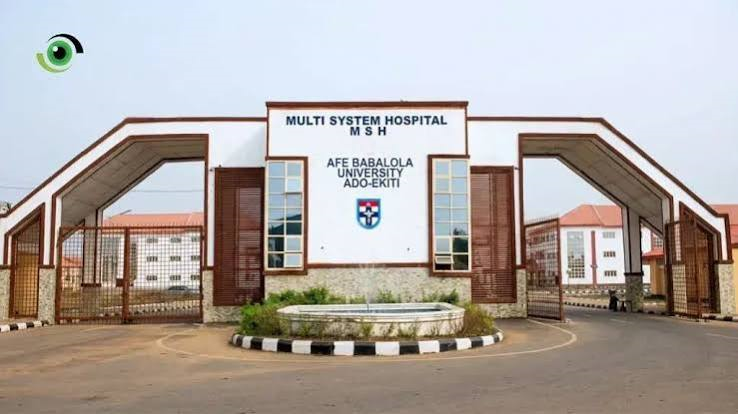
Babalola’s Farmer Support Hits N98m
Legal icon Aare Afe Babalola has disbursed N11.2 million to 81 outstanding farmers across Ekiti State's 16 local government areas, bringing total awards under his annual agricultural scheme since 2015 to N98 million.
 Agriculture
FG Launches African Swine Fever Control Campaign in Southwest
The Federal Government has launched a major African Swine Fever control and biosecurity campaign at the Oke-Aro Pig Farm Estate, distributing protective kits to farmers and pledging comprehensive training to prevent future outbreaks. The intervention by the Livestock Productivity and Resilience Support Project (L-PRES) targets one of Nigeria's largest pig production clusters, which has suffered devastating losses from the highly contagious disease in the past.
 Agriculture
Kyari: More Farmland Won’t Feed 400 Million Nigerians
Agriculture Minister Abubakar Kyari says Nigeria must treat agricultural extension as critical infrastructure, disclosing that over 100,000 farmers already receive weekly digital advisories as the country's population heads toward 400 million by 2050.
 Agriculture
Farmland Expansion Alone Won’t Feed Nigeria
Agriculture Minister Abubakar Kyari says Nigeria must shift to demand-driven, AI-enabled agricultural extension services to boost farm yields, warning that expanding farmland alone can no longer feed the country's growing population.
Comments (0)
Leave a comment
All comments are moderated before publishing. Your email is never published.