
NALDA Plans to Convert Degraded Forests Into Farm Estates, Launches Green Hope Horticulture Project
The National Agricultural Land Development Authority (NALDA) has announced plans to convert degraded forest reserves into large-scale agricultural estates and launched the Green Hope horticulture project to boost Nigeria's food production.

Executive Secretary of the National Agricultural Land Development Authority (NALDA), Cornelius Adebayo, has disclosed that the agency is partnering with state governments to rehabilitate degraded forest reserves and prepare them for large-scale commercial farming, describing it as a critical step toward achieving Nigeria's food security and economic diversification goals.
NALDA has disclosed plans to partner state governments to convert degraded forest reserves into large-scale agricultural estates as part of the Federal Government's broader effort to improve food production and create wealth for farmers.
Restoring such reserves for farming, Adebayo said, will not only increase the area under cultivation but also reclaim areas that have become hideouts for criminal activity. He described the initiative as a twin solution — one that simultaneously addresses food insecurity and the security challenge posed by ungoverned spaces.
NALDA is already working with the Kwara State Government to rehabilitate degraded forest reserves, prepare the land and allocate it to members of the Cashew Processors Association of Nigeria (CAPAN) for commercial cashew cultivation.
The initiative would allow processors to establish plantations capable of supplying raw materials directly to their factories while restoring degraded land and improving security in previously abandoned areas.
Discussions are also ongoing with the governments of Enugu and Bayelsa States to ensure the South-East and South-South are adequately represented in the Mega Farm Estate initiative.
The initiative forms part of the Renewed Hope Mega Farm Estate Programme, which seeks to establish farming clusters of at least 5,000 hectares in different locations across the country.
NALDA has established the Renewed Hope Mega Farm Estate in Ekiti, Kwara, Bauchi and Plateau states to improve service delivery to farmers across the country.
Concentrating farmers within designated clusters would enable government and private investors to provide essential infrastructure such as irrigation systems, mechanisation services, security, access roads and financial services more efficiently.
Unlike traditional agricultural support programmes that allocate very small plots of land, NALDA has decided that each beneficiary should receive five hectares. Economic projections indicate that such land size provides farmers with a realistic opportunity to earn between ₦12 million and ₦14 million per production cycle.
The Nigerian Police Trust Fund is partnering with NALDA to construct police stations within the farm estates, while NALDA is also collaborating with security agencies, including Agro-Rangers of the Nigeria Security and Civil Defence Corps (NSCDC), as well as engaging vigilantes to support security operations in the estates.
In Kwara alone, more than 20 vigilantes have already been deployed, with plans to increase the number as the estates expand.
Adebayo said the agency is "building the sector for private-sector participation. These solutions can sustain themselves because it is not government-based or government-focused alone. We are only providing the enabling environment, while the anchor of the cluster will be private-sector aggregators."
He stressed that NALDA does not acquire land for commercial ownership but develops it for the benefit of local communities.
Beyond crop production, NALDA is implementing the Green Hope Project, a horticulture programme combining open-field farming with greenhouse technology to decentralise vegetable production across the country. The project consists of three components: open-field cultivation, conventional greenhouses and high-tech climate-controlled greenhouses.
The Authority had commenced implementation of the first two phases, with facilities already established in Giri, Abuja, and Shagamu, Ogun State, to supply vegetables to Abuja, Lagos and neighbouring communities. Thirty greenhouses have already been constructed in Lagos with plans to increase the number by 50, while Abuja currently has 20 greenhouses, with an additional 60 planned.
NALDA has also established 38 open-field horticulture sites nationwide, each covering at least 500 hectares, with the first phase expected to benefit about 4,000 women.
Each beneficiary under the open-field programme would receive approximately 1,000 square metres of irrigated farmland supported by solar-powered irrigation systems, storage facilities, kitchens, restrooms and other welfare amenities designed to improve productivity.
NALDA is partnering with the Agricultural and Rural Management Training Institute (ARMTI) and the National Horticultural Research Institute (NIHORT) to provide technical training, inputs and market linkages. NIHORT would supply the initial production inputs, while an aggregation system would ensure harvested produce is collected and distributed efficiently to minimise waste.
The Giri greenhouse project is nearing completion and, alongside the Shagamu facility and selected open-field sites, is expected to be commissioned in September.
NALDA's interventions align with President Bola Tinubu's Renewed Hope Agenda by prioritising land development, mechanisation and rural infrastructure to drive agricultural transformation. "We are focused on providing the infrastructure needed to unlock Nigeria's agricultural potential. Land clearing, mechanisation and proper farm infrastructure are essential if we must maximise the benefits of the tractors being deployed across the country," Adebayo said.
Nigeria's agricultural sector, which contributes over 24 per cent of the country's GDP, has been identified as a priority sector for diversification away from oil dependence, particularly as the country battles high food inflation and a widening trade deficit in agricultural commodities.
Sponsored

Related stories
 Agriculture
Babalola’s Farmer Support Hits N98m
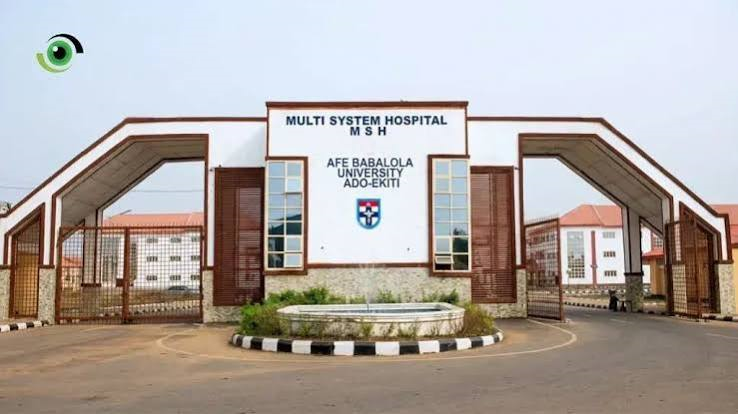
Legal icon Aare Afe Babalola has disbursed N11.2 million to 81 outstanding farmers across Ekiti State's 16 local government areas, bringing total awards under his annual agricultural scheme since 2015 to N98 million.
 Agriculture
FG Launches African Swine Fever Control Campaign in Southwest
The Federal Government has launched a major African Swine Fever control and biosecurity campaign at the Oke-Aro Pig Farm Estate, distributing protective kits to farmers and pledging comprehensive training to prevent future outbreaks. The intervention by the Livestock Productivity and Resilience Support Project (L-PRES) targets one of Nigeria's largest pig production clusters, which has suffered devastating losses from the highly contagious disease in the past.
 Agriculture
Kyari: More Farmland Won’t Feed 400 Million Nigerians
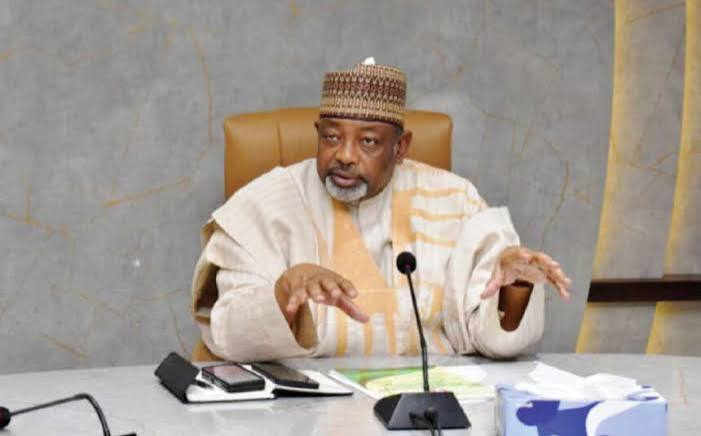
Agriculture Minister Abubakar Kyari says Nigeria must treat agricultural extension as critical infrastructure, disclosing that over 100,000 farmers already receive weekly digital advisories as the country's population heads toward 400 million by 2050.
 Agriculture
Farmland Expansion Alone Won’t Feed Nigeria
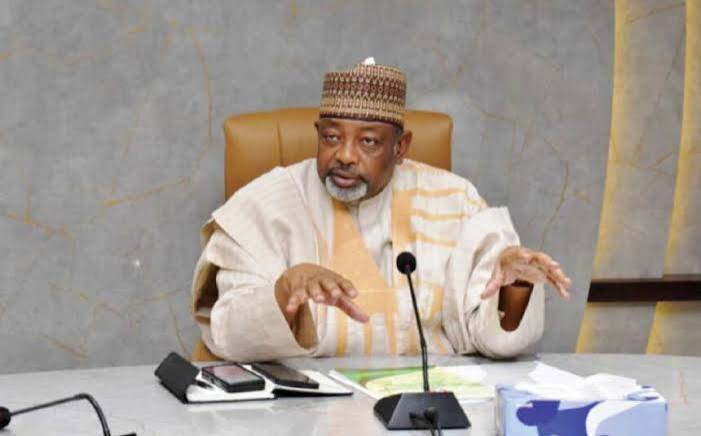
Agriculture Minister Abubakar Kyari says Nigeria must shift to demand-driven, AI-enabled agricultural extension services to boost farm yields, warning that expanding farmland alone can no longer feed the country's growing population.
Comments (0)
Leave a comment
All comments are moderated before publishing. Your email is never published.