
NADF Supports Flood-Affected Akwa Ibom Farmers with Fertiliser, Pesticides
The National Agricultural Development Fund has distributed fertiliser, pesticides, herbicides, and ammonia to farmers devastated by the 2026 floods in Akwa Ibom State, in an intervention designed to restore confidence, revive livelihoods, and keep the South-South rice belt productive. NADF boss Mohammed Ibrahim says the warning signs were clear long before the floods hit, and the response is part of a broader mandate to build climate resilience into Nigerian agriculture.
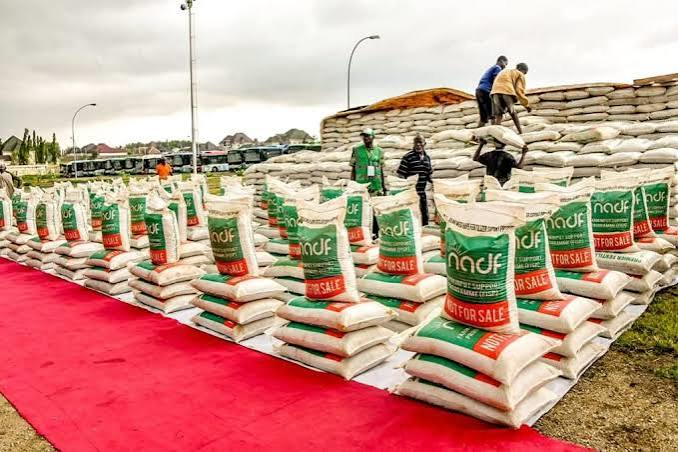
The Federal Government has moved to pull flood-hit farmers in Akwa Ibom State back from the brink, distributing farm inputs to those whose farmlands and crops were ravaged by the 2026 floods, in an intervention aimed at restoring confidence in agricultural enterprise and safeguarding food production in the South-South.
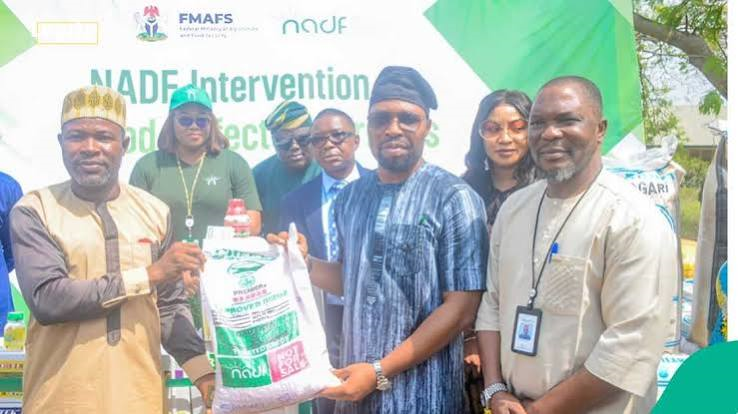
The distribution, which took place in Uyo on Thursday, November 26, 2026, was overseen by the National Agricultural Development Fund (NADF), the agency at the centre of the Federal Government's agricultural financing and resilience architecture. Items handed to the affected farmers included bags of fertiliser, pesticides, herbicides, ammonia, and other essential farm inputs.
Mohammed Abu Ibrahim, Executive Secretary and Chief Executive Officer of NADF, said the intervention was designed to alleviate the plight of farmers whose livelihoods were upended by the floods and to strengthen their capacity to return to production. Represented by Dr Hosea Yakubu, Ibrahim said the support was intended to restore farmers' confidence in agricultural enterprise and to keep the country on track towards food sufficiency under President Bola Ahmed Tinubu's Renewed Hope Agenda.
The NADF's intervention was not a reaction to an unforeseen disaster. Ibrahim recalled that the 2026 floods were predicted well before they struck. The 2026 Annual Flood Outlook issued by the Nigeria Hydrological Services Agency had identified thousands of communities across the country as facing high or moderate flood risks, while the Nigerian Meteorological Agency projected significant rainfall variability with heightened flood threats. In July, the National Emergency Management Agency listed Bayelsa, Akwa Ibom, Ogun, Ekiti, Benue, and Kogi States among locations facing elevated flash-flood risks.
"The warning signs were evident long before the floods occurred," Ibrahim said. "We gather in solidarity with those whose farms, livelihoods, and aspirations have been impacted by the floods of 2026, and to demonstrate that, even in the face of adversity, hope, recovery, and progress remain within reach". He framed the distribution as a direct expression of the NADF's mandate, which includes improving access to agricultural finance, increasing food production, strengthening farmer resilience, and promoting climate-smart agriculture.
The NADF's intervention in Akwa Ibom is part of a broader South-South programme that will also support rice farmers in Bayelsa State. The choice of rice farmers is significant. Rice is a staple crop with immense food security implications, and the South-South has the potential to contribute substantially to domestic production if farmers are supported through climate shocks. The distribution of ammonia alongside fertiliser, pesticides, and herbicides suggests a package designed not just to replace lost inputs but to enhance soil fertility and protect the next harvest from pests and disease.
Akwa Ibom State Commissioner for Agriculture, Dr Offiong Offor, welcomed the intervention and acknowledged the climate reality behind the disaster. She noted that rainfall has increased in the South-South in 2026 due to climate change and thanked the Federal Government for the support, which she said would assist in maintaining food production in the state. Offor, however, issued a firm warning to beneficiaries: the inputs must not be sold. They must be used to rebuild agricultural businesses and strengthen the state's food production capacity. She also acknowledged other federal agricultural interventions in the state, including improved seedlings and strengthened extension services.
For the beneficiaries, the intervention is a lifeline. Mrs Mary Okon, a farmer in Uyo, commended the Federal Government for coming to their rescue after the flood. "Let's thank President Tinubu for the intervention. It would help us to bring back our farms," she said. Her words capture the stakes involved. For smallholder farmers, a flood is not merely an agricultural setback. It is the destruction of savings, the loss of a season's income, and the erosion of the capital needed to try again. An input distribution, timed correctly, is the difference between abandonment and recovery.
Ibrahim closed with a message that framed the intervention as a model of what can be achieved when government, communities, and stakeholders work together. "Let this intervention serve as a reminder that when government, communities, and stakeholders work together, no flood, no disaster, and no setback can diminish the determination of Nigerian farmers or the promise of Nigerian agriculture," he said.
For Akwa Ibom's flood-affected farmers, the test now is whether the inputs translate into a successful planting season and a restored livelihood. For the NADF, the test is whether this intervention is the beginning of a sustained commitment to climate resilience in Nigerian agriculture, or a one-off response to a predictable disaster. The warning signs were clear in 2026. The next flood season will reveal whether the system is better prepared.
Sponsored

Related stories
 Agriculture
FG Supports 4,000 Flood-Affected Ogun Farmers Through NADF
The Federal Government, through the National Agricultural Development Fund (NADF), has launched an emergency agricultural intervention for 4,000 smallholder farmers devastated by the 2026 rainy season floods in Ogun State. With 2,800 maize farmers and 1,200 rice farmers receiving fertilisers, herbicides, and pesticides, the programme is designed to prevent a short-term disaster from becoming a long-term food security crisis, and it comes with a blunt warning: without timely intervention, a disas
 Agriculture
Tinubu Unveils ₦450bn Agricultural Plan Targeting 500,000 Farmers
President Bola Tinubu has committed ₦450 billion to agriculture in a sweeping intervention targeting 500,000 farmers across Nigeria—part of a broader ₦4.7 trillion food security package aimed at tackling hunger, stabilising prices, and weaning the country off food imports. But with food inflation still biting and implementation gaps plaguing past programmes, the question is whether this is the turning point Nigerian farmers have waited for—or another well-funded announcement destined for the she
 Agriculture
Abiodun Deploys 39 Tractors to Boost Mechanised Farming in Ogun
Farmers across Ogun State’s settlements have praised Governor Dapo Abiodun after the government distributed 39 tractors and a suite of modern implements,ploughs, harrows, trailers, grain planters, boom sprayers, cassava planters, and harvesters,at the Cultural Centre, Kuto, Abeokuta. The intervention, part of the World Bank-backed OGSTEP and SAPZ programmes, is designed to end the tyranny of manual labour, accelerate planting after rainfall, and crash food prices. But farmers are already asking
 Agriculture
China’s Smart Farming Revolution Offers Lessons for Nigeria
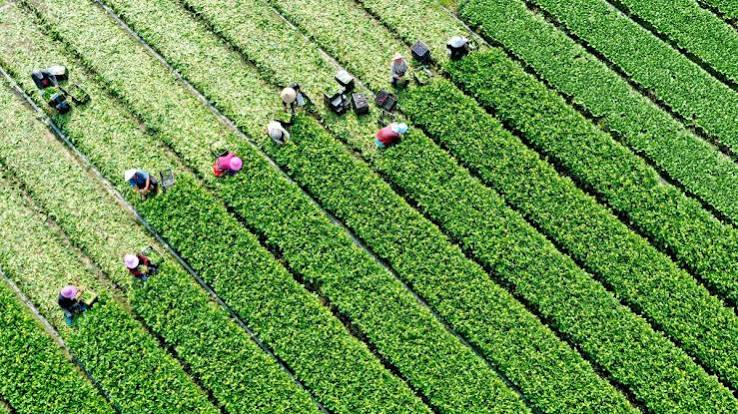
While China’s high-speed trains and skyscrapers dominate headlines, a quieter revolution is unfolding in its fields—one that Nigeria cannot afford to ignore. A visit to Yangling, Shaanxi Province, reveals a farming future built on data-driven greenhouses, spraying drones, and seed research, offering a stark contrast to Nigeria’s vast but underperforming agricultural sector. The lessons are practical, urgent, and within reach—if only the political will exists to act on them.
Comments (0)
Leave a comment
All comments are moderated before publishing. Your email is never published.